
Share this post:
Quick summary: Small Home Offices Ideas
If you’re looking for Small Home Offices Ideas that actually work day-to-day, start with the basics: pick the quietest spot, plan the layout before you buy furniture, and prioritise light, storage and cable management. For many UK homes, the “best” solution is either a space-saving workstation indoors or a garden room office that keeps work separate from family life.
- Small space wins: wall-mounted desks, corner setups, floating shelves, and slimline storage.
- Garden room option: great for focus and calls, but check permitted development, neighbours, and building regulations early.
- Comfort matters: decent chair, screen height, task lighting and ventilation make a bigger difference than “Pinterest styling”.
- Don’t get caught out: electrics, heating and insulation need planning (and often Building Control) if the space is more than a occasional hobby room.
Below, we’ll walk you through practical layouts (including two-person setups), budget upgrades, and when it’s worth going for a garden room so you don’t end up with a cramped desk that you hate using.
Not sure if a garden office is the right move?
Tell us what you’re thinking — we’ll help you sense-check whether a garden room office is likely to fall under permitted development and what drawings you might need.
Quick summary: Small Home Offices Ideas
The best Small Home Offices Ideas are the ones that fit your home and your routine — not just a pretty photo. In most UK properties, you’ll get the biggest improvement by (1) choosing the right location, (2) using vertical storage, and (3) keeping the desk zone visually “clean” with hidden cables and closed storage.
If you need peace and proper separation, a garden room office can be a brilliant solution — but it’s worth checking planning permission, permitted development, and building regulations early so you don’t redesign late in the process.
What makes small home office ideas work (in real UK homes)
Most homeowners start by searching for “small office ideas for home” and get flooded with images. The problem is that many of those setups ignore the practical bits — glare on screens, nowhere to store paperwork, or a chair that hurts after an hour.
A good small home office feels simple, calm, and easy to maintain. To get there, focus on five fundamentals:
- Light (natural light if you can, with a proper task lamp for evenings)
- Ergonomics (screen height, chair support, and elbow-friendly desk depth)
- Storage (closed storage to reduce visual clutter)
- Noise control (soft furnishings, door seals, and “call-friendly” positioning)
- Cable discipline (power, data and chargers managed from day one)
Small home office ideas for small spaces
If you’re working with a box room, landing nook, or living room corner, the goal is to make the workspace feel intentional — like it belongs — while using as little floor space as possible.
1) Corner desk ideas for awkward gaps
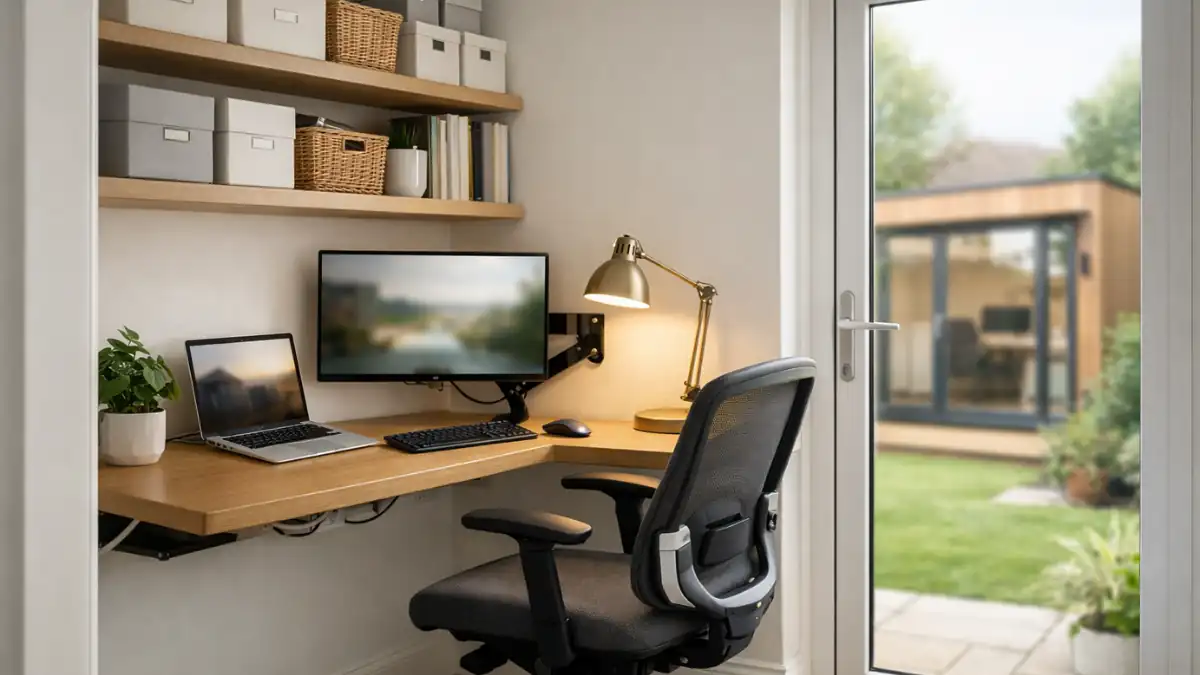
A corner desk setup is often the easiest win in smaller UK homes. It uses dead space, gives you more desk surface, and creates a clear “work zone”.
- Use a shallow desk (45–55cm depth) if your room is tight.
- Add a monitor arm so the screen doesn’t steal desk space.
- Fit floating shelves above for printers and storage baskets.
2) Wall-mounted desks for truly tiny rooms
If you need the space to do double-duty, consider a wall-mounted or fold-down desk. Done well, it looks tidy and makes the room feel bigger.
3) Bookshelves that do “office” and “storage” together
One of the most underrated Small Home Offices Ideas is combining desk + shelving into a single built-in wall. It keeps everything vertical and reduces the need for bulky drawers.
- Keep frequently used items at arm height.
- Use boxes/baskets for messy bits (cables, stationery, adapters).
- Leave some breathing space — overfilling shelves makes a small room feel cramped.
Small home office layout ideas (including for 2 people)
Layout matters more than furniture. A great chair won’t help if you’re constantly twisting around to reach storage, or your screen is blasted by sun all afternoon.
Layout idea: “desk to wall” for focus
- Desk against the wall, shelves above.
- Best for: deep focus, minimal distractions, compact rooms.
- Watch out for: feeling boxed-in — soften it with a pinboard, art, or warm lighting.
Layout idea: “desk to window” for daylight
- Desk facing the window.
- Best for: natural light, mood, and daytime working.
- Watch out for: glare — use blinds and position the screen slightly off-axis.
Small home office ideas for 2 people
If two of you work from home, you need to plan for noise, meetings, and storage — not just desk width.
- Back-to-back desks work well if you can keep chair space clear.
- One long “bench” desk looks tidy, but add separation (a shelf, plants, or acoustic panel).
- Staggered schedules: consider a quiet second spot (even a laptop perch) for calls.
Small home office ideas on a budget
You don’t need a full refit to make a small office feel better. The trick is spending on the items that change comfort and function first.
Quick costs snapshot – budget upgrades that matter
- Chair upgrade: often the best value improvement for comfort.
- Monitor + arm: reduces neck strain and frees desk space.
- Task lighting: makes evening work less tiring.
- Cable tray + trunking: makes the whole setup feel calmer and “finished”.
- Rug/curtains: helps with echo and makes calls sound better.
If you’re planning a garden room office instead of a corner desk, costs vary massively depending on insulation, electrics, glazing, foundations and heating — so it’s worth deciding early whether it’s a “summer room” or a year-round workspace.
Standing desk ideas (without taking over the room)
If you want to work standing sometimes, you don’t necessarily need a huge sit-stand desk. In small spaces, a compact sit-stand frame or a desktop riser can be enough.
- Make sure your screen reaches eye level when standing.
- Allow space for a stool so you can perch during calls.
- Plan cable slack so the desk can move safely.
Garden room home office ideas (and the planning reality)
For many families, the best “small home office” is actually not in the house. A garden room creates separation, reduces noise, and lets you finish work and shut the door.
However, once you move into “garden office” territory, you’re no longer just thinking about décor — you’re thinking about outbuilding rules, neighbours, and compliance.Your starting point should be our pillar guide:outbuildings and what you can build without permission.
Garden room layout ideas that feel spacious
- Desk facing the garden (best for wellbeing and natural light).
- Storage wall behind you (great background for video calls, hides clutter).
- Zoned layout: desk + a small chair/sofa so it’s usable beyond work hours.
- Printer/cable cupboard: even a slim tall cabinet helps keep it calm.
If you’re leaning towards a garden workspace, these guides will help you avoid common headaches:
- Do Garden Rooms Need Planning Permission? UK Rules & Council Quirks
- Garden room planning rules and when full permission is needed
- Garden office permission rules explained (PD vs full planning)
- Building regulations for garden rooms (what changes if you heat it)
- Heating options for a garden room (comfort and running costs)
Thinking about a garden room office?
We’ll help you work out what’s realistic for your garden, whether permitted development is likely to apply, and what drawings you’ll need to keep the council (and Building Control) happy.
Step-by-step: set up a workspace that feels bigger than it is
Whether you’re working in a box room or planning a garden room, this simple process helps you avoid wasted purchases and awkward layouts.
Step-by-step checklist: planning your small home office
- Choose the quietest workable spot. Prioritise focus and call quality over convenience.
- Measure properly. Note wall lengths, radiator positions, window openings and door swings.
- Decide your “must-haves”. For example: second screen, printer, standing option, lockable storage.
- Plan power and lighting. Avoid daisy-chained extensions; plan sockets and task lighting early.
- Set a storage rule. Closed storage for clutter; open shelves only for the tidy stuff.
- Control glare and echo. Blinds + soft furnishings make working more comfortable.
- If going outdoors, check permissions early. Start with the outbuildings guide and then check garden room rules before you commit to a design.
Related comparisons (to help you decide)
- Home office in a spare room vs garden room office: spare room is cheaper; garden room offers separation and focus.
- Built-in desk vs freestanding furniture: built-in looks cleaner but needs planning; freestanding is flexible.
- “Summer room” garden office vs year-round workspace: year-round needs better insulation, heating and often more compliance checks.
Common pitfalls with small home office ideas (and how to avoid them)
- Buying furniture before measuring — leads to cramped chair space and blocked doors.
- Ignoring ventilation — small rooms get stuffy fast, which affects concentration.
- No cable plan — a messy desk makes the whole space feel chaotic.
- Garden room “scope creep” — adding heating, plumbing or sleeping use changes what’s required.
FAQs: Small Home Offices Ideas, garden rooms and permissions
What are the best small home office ideas for small spaces?
Start with a wall-mounted or shallow desk, add vertical storage (floating shelves or tall cabinets), and keep the desktop as clear as possible. In tight rooms, a monitor arm and closed storage make the biggest difference because they reduce clutter and free up working space.
How do I set up a small home office for 2 people?
Plan for noise and calls first. Back-to-back desks or a long bench desk can work, but you’ll want some separation (a shelf, plant divider or acoustic panel) and good ventilation. If both of you take meetings, it’s worth having a second “overflow” spot for quieter calls.
Are garden rooms a good option for a home office?
Yes — they’re often the best way to get separation and focus, especially in busy family homes. The key is deciding whether you need a year-round insulated workspace (with heating and proper electrics) or a more occasional room, because that affects design, cost and compliance.
Do I need planning permission for a garden office?
Sometimes yes, sometimes no. Many garden offices can fall under permitted development, but it depends on size, height, location in the garden, and local constraints such as conservation areas. If you want certainty, we often recommend considering a Lawful Development Certificate. Our guide ongarden room permission rulesexplains the typical tripwires.
Do garden room offices need Building Regulations approval?
It depends on how it’s built and how you intend to use it. As soon as you move towards a fully insulated, heated year-round workspace (especially with more complex electrics), it’s wise to check early. This is exactly where good advice can prevent expensive changes later. Our guide onbuilding regs for garden roomsbreaks it down in plain English.
What’s the biggest mistake people make with small home office décor?
Designing for looks before function. A stylish desk is pointless if you can’t sit comfortably, your screen is at the wrong height, or you’ve got nowhere to store papers. Prioritise comfort, lighting and storage first — then make it pretty.
Want a clear answer before you build?
If you’re deciding between an indoor setup and a garden room office, we can help you choose the route that fits your home, budget, and the rules in your area.
Next steps & useful guides
If your small home office plans are heading towards a garden room or outbuilding, these guides will help you plan properly (and avoid late-stage surprises):
- Outbuildings Explained – What You Can (and Can’t) Build Without Permission
- Outbuildings planning permission: when you need to apply
- Outbuildings building regulations: what homeowners need to know
- Planning rules for garden rooms (size, height and boundaries)
- Building Control: what it is and how inspections work
- Building Regulations: complete homeowner’s guide
- Planning permission: the complete homeowner’s guide
- Best space-saversCorner desks, wall-mounted desks, monitor arms, and vertical storage (shelves/tall cabinets).
- Biggest comfort upgradesA supportive chair, correct screen height, task lighting, and better ventilation.
- Two-person setupsPlan for calls and noise first; consider separation and an “overflow” quiet spot.
- Garden room advantageBetter focus and separation — often the best long-term solution if you WFH regularly.
- Planning realitySome garden offices can be permitted development, but size/height/location and local constraints can change the answer.
- Building regs realityA year-round heated workspace needs careful compliance planning — especially electrics, insulation and safety.
Want to get it right first time? Talk to Plans Made Easy and we’ll help you plan a home office space that’s practical, compliant, and stress-free.
Official guidance
For the most reliable up-to-date guidance on planning rules, always cross-check the official sources:
- Planning Portal – national guidance on planning and applications
- GOV.UK – planning permission in England and Wales
How Plans Made Easy can help
The right Small Home Offices Ideas should make your day easier — not create a constant battle with clutter, noise or comfort. If you’re keeping things inside the house, we can help you think through layouts and practical constraints. If you’re considering a garden room office, we’ll help you understand what’s likely to be acceptable, what drawings you’ll need, and how to avoid council delays.
Ready to move your project forward?
Plans Made Easy can prepare compliant plans, manage submissions, and guide you from idea to approval.

Performance Verified ✅
This page meets PME Optimisation Standards — achieving 95+ Desktop and 85+ Mobile PageSpeed benchmarks. Verified on

