
Share this post:
Quick summary: Loft Conversion Planning Permission
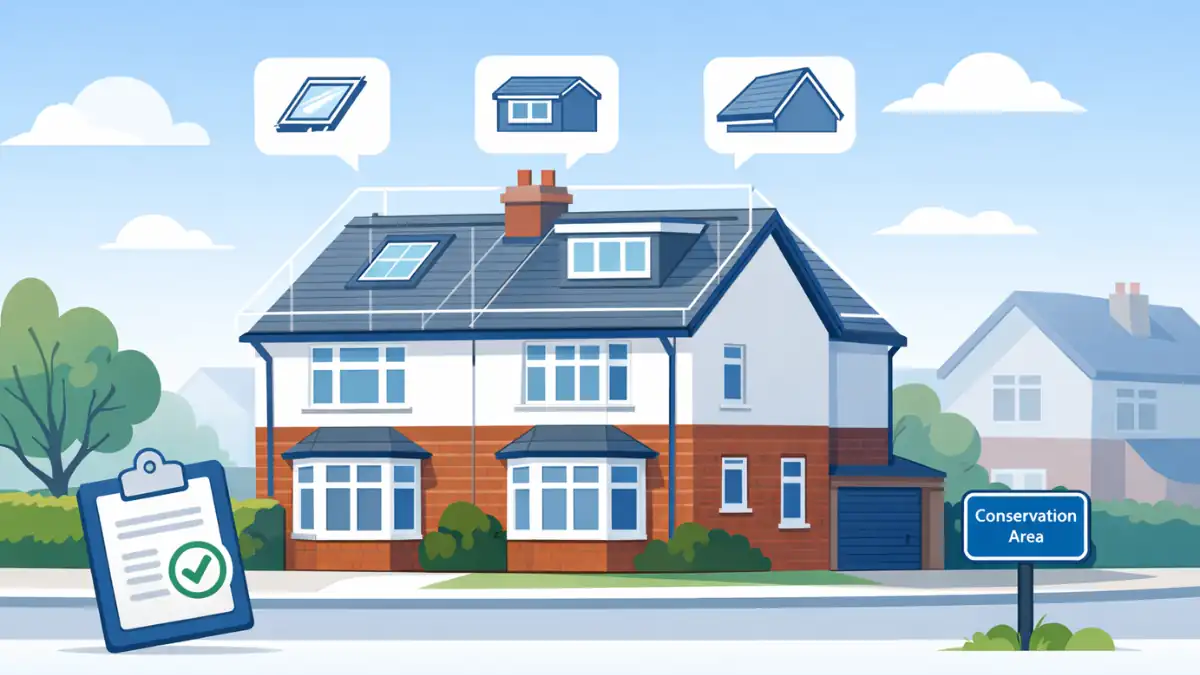
Loft Conversion Planning Permission is not always needed in the UK — many loft projects can be done under Permitted Development.However, the details matter. The moment you add a large dormer, raise the roof, alter the front roof slope, or your home is in a conservation area (or has an Article 4 direction), you may need to apply.
- Often no planning permission: simple rooflight/Velux-style conversions that stay within PD limits.
- More likely to need permission: bigger rear dormers, roof lifts, hip-to-gable changes, and any front-facing changes.
- Conservation areas/listed buildings: expect tighter rules and extra consents.
- Building Regulations still apply even if planning permission is not required.
If you’re unsure, it’s usually worth getting a quick check against PD rules and your local council constraints — it can save weeks of delays later.
Not sure if your loft needs planning permission?
Tell us what you’re doing (rooflights, dormer, hip-to-gable, roof lift) and we’ll sense-check whether it’s likely to be Permitted Development or needs a planning application.
Quick summary: Loft Conversion Planning Permission
Loft Conversion Planning Permission is often not needed if your design fits Permitted Development rules (common for many rooflight and smaller dormer conversions).That said, councils can be strict where there are constraints — for example conservation areas, flats/maisonettes, Article 4 directions, or major roof alterations.
In this guide we’ll walk you through what typically triggers permission, how to check your risk early, and how to avoid the usual reasons loft applications get delayed or refused.
When loft conversions need planning permission (and when they don’t)
Most homeowners start in the same place: “Do I need planning permission for a loft conversion?”The honest answer is: sometimes. Many loft conversions can be done under Permitted Development (PD), but only if your property and design meet the criteria.
In plain terms, you’re usually in the “PD-friendly” zone if:
- you’re keeping changes mostly to the rear roof slope,
- you’re not raising the roof height,
- you’re not on a property type where PD is restricted (e.g. flats), and
- there aren’t additional planning constraints (like Article 4 or conservation status).
You’re more likely to need a full planning application if the proposal affects the street scene, changes the roof shape significantly, or sits in a sensitive area.
Loft conversion permitted development: the practical checklist
“Permitted Development” sounds simple, but the reality is that small details can push you from PD into full planning.Use this checklist as a quick first pass.
PD checklist (quick homeowner version)
- Property type: PD rights are generally for houses — flats/maisonettes often have different rules or restricted rights.
- Roof height: if you’re raising the ridge or changing the roof profile significantly, planning permission is more likely.
- Front roof slope: front-facing dormers or major front alterations commonly trigger planning scrutiny.
- Materials and appearance: designs that look out of keeping can invite refusal, even where PD might be arguable.
- Conservation area / Article 4: extra restrictions are common — always check early.
If you want a “belt and braces” approach, consider applying for a Lawful Development Certificate to confirm your loft is lawful under PD before building starts.
Dormers, hip-to-gable and roof lifts: what usually triggers permission
The type of loft conversion makes a big difference to whether you need permission.Below is the practical, real-world pattern we see most often.
Dormer loft conversion planning permission
Rear dormers are common and can sometimes be PD, but planning permission becomes more likely when the dormer is large, dominant, or impacts neighbours (overlooking and perceived bulk are frequent objections).
Hip to gable loft conversion planning permission
A hip-to-gable conversion changes the roof shape, so it tends to attract more scrutiny.In many areas it can be acceptable, but it may need planning permission depending on the property type, position in the street, and local constraints.
Roof lift loft conversion planning permission
A roof lift (raising the ridge or altering the roof profile significantly) is one of the most common reasons a loft conversion needs full planning permission.Councils often assess roof lifts carefully because of their visual impact.
Conservation areas, Article 4 and listed buildings
Sensitive areas are where loft projects most often get tripped up.Even if your friend down the road did a similar conversion, your home may have different constraints.
Loft conversion planning permission in a conservation area
In a conservation area, councils usually focus heavily on what can be seen from the public realm.Front rooflights, front dormers, and prominent roof changes are more likely to be restricted — and you may be pushed towards a more discreet design.
Article 4 directions
Article 4 directions can remove certain Permitted Development rights.That means a loft conversion that might normally be PD could require full planning permission in an Article 4 area.
Listed buildings
Listed buildings are a different level of constraint. In many cases, you may need Listed Building Consent as well as (or instead of) planning permission.The detail of what you change — even internally — can matter.
Helpful PME guides if your home has constraints:conservation area rules explained andwhat listed building controls mean in practice.
Costs, timelines and what to expect from the council
Even when your design is straightforward, planning takes time.It helps to separate council fees from professional drawings and the wider build cost.
Quick costs snapshot (planning stage only)
- Council planning fee: paid to the local authority (separate from drawings).
- Drawings & support: varies depending on complexity, survey needs, and revisions.
- Specialist reports: sometimes needed (e.g. heritage/design statements in sensitive areas).
For a wider view of what people typically spend at planning stage, see our guide tooverall planning costs for homeowners.
How long does planning permission take for a loft conversion?
The core decision period for many householder applications is often around 8 weeks, but timelines can stretch if drawings are unclear,neighbours object, or the council asks for amendments.If timing is critical, it’s worth reading our guide onwhat affects planning timelines.
Not sure if your idea fits Permitted Development?
We’ll check your project against PD rules and let you know if you need a full planning application.
Step-by-step: how to get your loft approved (without stress)
If you want to keep the process smooth, the goal is to confirm the planning route early, then submit a clean, consistent set of drawings.Here’s a simple step-by-step that works well for most homeowners.
Step-by-step process (homeowner-friendly)
- Start with the constraints check. Confirm if your home is in a conservation area, Article 4 zone, or listed.
- Decide the conversion type. Rooflights only? Rear dormer? Hip-to-gable? Roof lift? This choice often determines planning route.
- Confirm PD vs planning. If PD looks plausible, consider a Lawful Development Certificate for certainty.
- Get measured survey + drawings. Accurate existing plans reduce rework and help avoid mismatched dimensions.
- Submit the right package. Ensure site/location plans, existing/proposed drawings, and any supporting notes are complete.
- Respond quickly to queries. If the case officer asks for clarifications, fast replies can keep the clock moving.
- After approval, move to Building Regulations. Don’t treat planning as “the finish line” — Building Control sign-off is essential.
HowTo checklist table (keep this next to your project file)
| Item | Why it matters | Done? |
|---|---|---|
| Constraints check (conservation/Article 4/listed) | Sets the correct route and prevents “surprise” restrictions later. | ☐ |
| Decide conversion type (rooflight/dormer/hip-to-gable/roof lift) | Different types have different planning risk profiles. | ☐ |
| Measured survey | Avoids drawing errors, builder disputes and council questions. | ☐ |
| Planning drawings package | The council must be able to assess size, appearance and impact clearly. | ☐ |
| Plan the Building Regulations route | Structure, stairs, insulation and fire safety must be signed off. | ☐ |
If you want a broader “start to finish” planning overview, our complete homeowner guide is here:see the full planning process explained simply.For the drawing side, this guide helps:what your planning drawings should include.
Common pitfalls & gotchas (and how to avoid them)
Loft projects go wrong at planning stage for predictable reasons.A little prep avoids most of them.
Other common issues we see
- Front-facing changes that alter the street scene (often a red flag).
- Overly bulky dormers that look dominant and out of keeping.
- Missing clarity in drawings (heights, roof form, or boundary context not shown clearly).
- Forgetting Building Regulations (especially fire safety and stairs layout) until late in the process.
Loft conversions and Building Regulations (what you must plan for)
Even if you don’t need planning permission, you still need to comply with Building Regulations.For lofts, the big topics are usually:
- Structure (Part A) — new floor joists/steelwork and load paths.
- Fire safety (Part B) — protected escape route, doors, alarms, and sometimes windows/sprinklers depending on layout.
- Stairs safety (Part K) — pitch, headroom, guarding and landing arrangements.
- Insulation/energy (Part L) — roof build-ups, thermal bridging and ventilation strategy.
- Ventilation (Part F) — especially important when making roof spaces habitable.
If you want the Building Control side explained simply, these guides help:how Building Regulations work for homeowners andwhat Building Control actually checks.For planning your technical drawings, see:what Building Regulations drawings include.
FAQs: Loft Conversion Planning Permission
Do you need planning permission for a loft conversion?
Not always. Many loft conversions can be done under Permitted Development, particularly rooflight/Velux-style projects and some rear dormers.Planning permission is more likely if you are significantly altering the roof shape, adding a large dormer, changing the front roof slope, or your home has constraints such as a conservation area or Article 4 direction.
Does loft conversion need planning permission in the UK?
In the UK, the planning route depends on where you live and what you’re building. England often allows loft conversions under Permitted Development if the design meets the rules.Scotland, Wales and Northern Ireland can differ, so it’s worth checking local guidance if you’re outside England.
Are loft conversions permitted development?
They can be. The safest approach is to confirm your property type and constraints first, then assess the design.If you want certainty before building starts, a Lawful Development Certificate can confirm the work is lawful under PD.
Can you do a loft conversion under permitted development?
Often yes, particularly for modest changes that don’t raise the roof and don’t add front-facing dormers.However, if your design is more extensive (hip-to-gable, roof lift, large dormer), or your home sits in a restricted area, planning permission may be required.
Dormer loft conversion planning permission: when is it needed?
A dormer may be allowed under PD in some cases, but permission becomes more likely where the dormer is large, visually dominant, or affects neighbours (for example, overlooking concerns).Councils also look at whether the dormer is in keeping with the street and roofscape.
Hip to gable loft conversion planning permission: do you usually need it?
Hip-to-gable conversions change the roof form, so they often attract closer planning scrutiny.In some areas they can be acceptable (and sometimes PD may be possible), but it depends heavily on local constraints and street character.
Loft conversion planning permission and building regulations: do I need both?
Building Regulations approval is effectively always required for a loft conversion because you’re creating habitable space and changing structure, insulation, stairs and fire safety.Planning permission may or may not be required depending on whether your design qualifies as PD and whether there are local restrictions.
How long does planning permission take for a loft conversion?
Many householder applications have a target decision period of around 8 weeks, but it can take longer if amendments are requested, neighbours object, or your submission is missing information.Clear drawings and a policy-aware design usually help keep things moving.
Want a quick “yes/no” before you spend money on drawings?
We can review your loft proposal and flag planning risks early — especially if you’re considering dormers, hip-to-gable, or any roof height changes.
Next steps & useful guides
If you’re moving forward with a loft conversion, these guides will help you plan properly and avoid delays:
- Start here: a simple checklist to confirm whether you need permission
- What to include in planning drawings (and why councils reject unclear sets)
- How to plan a home project properly (scope, drawings, approvals, timing)
- How long planning takes (and the common reasons it drifts)
- Building Regulations explained simply for homeowners
- What Building Control checks during a conversion
- When you’ll need structural calculations (and why they matter)
- Fire safety basics for domestic conversions (Part B)
- Permission sometimes neededMany lofts can be Permitted Development, but roof profile changes, large dormers, and front alterations often push you into a full planning application.
- High-risk typesHip-to-gable, roof lifts, prominent dormers, and any design that changes the street-facing roofscape.
- Constrained propertiesConservation areas, Article 4 zones, flats/maisonettes, and listed buildings often have tighter rules and extra consent requirements.
- Building RegulationsBuilding Regulations approval is still required for loft conversions (structure, fire safety, insulation, stairs, ventilation), even where planning permission is not.
- Best “low stress” moveConfirm the route early (PD vs planning) and consider a Lawful Development Certificate if you want certainty before building begins.
- Common reason for delaysUnclear drawings, design that looks out of keeping, and late discovery of constraints (Article 4 / conservation rules).
Want a fast sense-check? Message Plans Made Easy with your roof type and proposed changes and we’ll point you to the safest route.
Official guidance
For national guidance and the most up-to-date rules, check:
- Planning Portal – national planning guidance and application information
- GOV.UK – planning permission in England and Wales
How Plans Made Easy can help
Loft projects are one of the best ways to add space, but the planning route can turn stressful if you discover constraints late.The smoothest outcomes come from confirming whether you’re in PD territory, designing within local expectations, and submitting a clean drawing package first time.
Our team helps homeowners by preparing compliant drawings, guiding the planning route (including PD checks and Lawful Development Certificates),and supporting Building Regulations information so your project can move forward with confidence.
Ready to move your project forward?
Plans Made Easy can prepare compliant plans, manage submissions, and guide you from idea to approval.
Performance Verified ✅
This page meets PME Optimisation Standards — achieving 95+ Desktop and 85+ Mobile PageSpeed benchmarks. Verified on

