
Share this post:
Extension Loft Conversion projects are one of the most popular ways to add space without moving — but the “right” option depends on your roof shape, budget, planning risk, and how you want the home to function day-to-day.
Quick summary: Extension Loft Conversion
- If you need one extra bedroom + bathroom, roof space work is often the most space-efficient route.
- If you need a bigger kitchen / family space, a ground-floor build can feel more “life-changing” (but it may cost more overall).
- Many homes benefit most from a combined approach: a modest ground-floor build plus a simpler roof space layout.
- Planning depends heavily on your street, roof form, and constraints (conservation area, Article 4, flats, previous additions).
- Either way, Building Regulations nearly always apply — especially for structure, insulation and fire safety.
Key facts snapshot
- Typical decision point: do you need better “everyday living” space, or extra bedrooms?
- Common approval pinch points: overlooking, roof bulk/appearance, neighbours, highways-facing roof slopes.
- Best stress-reducer: confirm the planning route early (including whether a Lawful Development Certificate is sensible).
If you’re weighing up an Extension Loft Conversion approach, you’re in the same boat as many UK homeowners: you want more space, but you don’t want planning headaches, spiralling costs, or a layout that feels awkward once you’ve moved back in.
In this guide, we’ll walk you through what an Extension Loft Conversion typically means in practice, how it compares to other ways of adding space, what usually triggers planning permission, and how to keep Building Regulations and Building Control on your side from day one.
Note: We assume England. Rules can vary for conservation areas, Article 4 directions, listed buildings, flats/maisonettes, and some newer estates with planning conditions. If you’re unsure, we can sense-check your route before you commit.
What we mean by “Extension Loft Conversion”
Homeowners use the phrase Extension Loft Conversion in a few different ways. Most commonly, it refers to one of these:
- A roof space layout that “extends” outwards (for example, a rear dormer or a fuller-width rear build-out).
- A roof lift / change in roof form (often more design-led and more likely to need planning input).
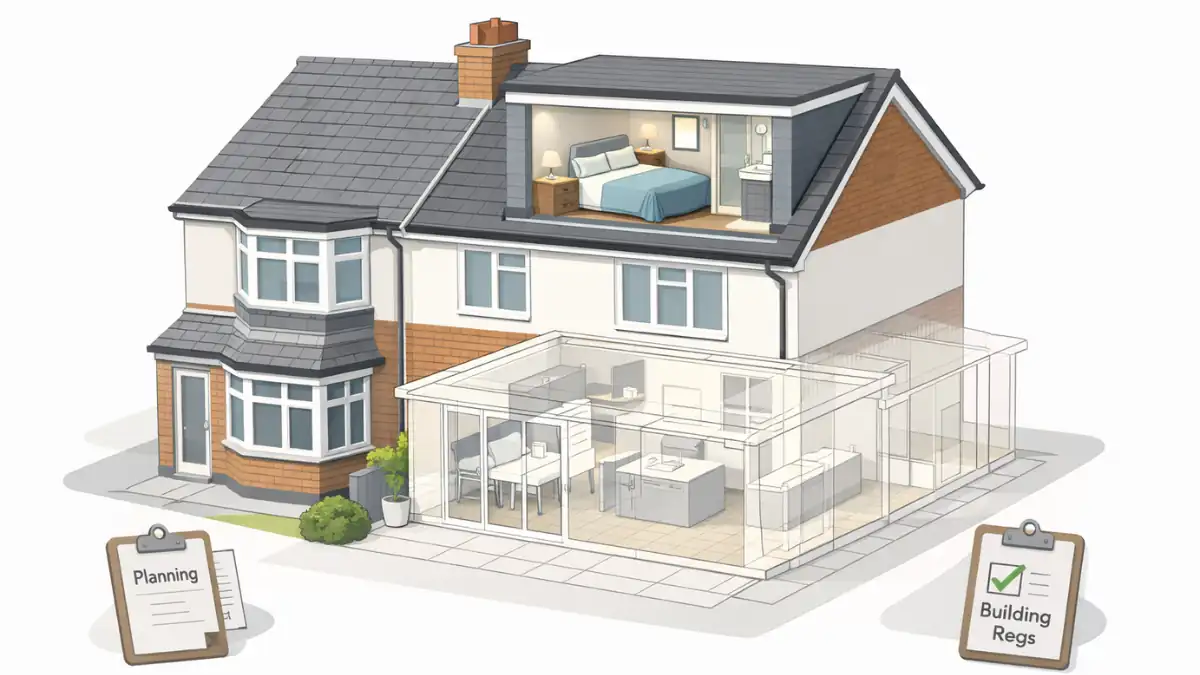
- A combined project: roof space work plus a modest ground-floor build, planned together so the home works as one coherent design.
The best option depends on your existing roof shape, head height, where the stairs can realistically go, and how sensitive your street scene is to roof changes.
On this page
- Is it cheaper to build up or build out?
- Costs and budget planning (real-world factors)
- Planning permission: what usually triggers it
- Design ideas that make the space feel “worth it”
- Step-by-step process (how to avoid delays)
- FAQs: Extension Loft Conversion
- Key facts snapshot
Extension Loft Conversion vs building out: what’s usually cheaper?
The honest answer is: it depends what you’re trying to achieve. If you only need one extra bedroom and a shower room, using the roof space can be cost-effective because you’re not typically paying for a full new foundation, a large roof area, and major drainage changes.
However, if your roof is low, complex, or needs significant structural changes, a roof space project can stop being “the cheaper option” very quickly.
When a roof space route is often better value
- You have a decent roof pitch and usable head height.
- You can position the stairs without ruining the first-floor layout.
- You want bedrooms rather than a bigger kitchen / family room.
- You can achieve the layout with a relatively simple rear build-out rather than a full roof redesign.
When a ground-floor build can be the smarter spend
- Your main pain point is the size/function of the kitchen-diner or family space.
- You need step-free space for longer-term living (or future-proofing).
- Your roof constraints make the top-floor layout compromised (tiny rooms, awkward eaves, poor stair position).
Tip: A quick way to decide is to write down the “one thing” you want the project to change. If it’s everyday living space, building out often wins. If it’s bedrooms, building up often wins.
Extension Loft Conversion costs: what actually drives the budget?
It’s tempting to compare projects purely by headline prices. In reality, the biggest budget swings usually come from complexity rather than the label on the project.
Cost drivers for an Extension Loft Conversion approach
- Roof form and structure: trussed roofs, steel requirements, and complex shapes often cost more.
- Stair placement: difficult stair solutions can trigger knock-on changes across the first floor.
- Bathrooms and plumbing runs: adding a shower room in the roof space can be straightforward, or surprisingly involved.
- Fire safety upgrades: protected escape routes, upgraded doors, alarms, and sometimes more.
- Insulation standard: higher performance specs can cost more up front but reduce future headaches (and heat loss).
- Finish level: roof windows vs larger glazed openings, bespoke joinery, storage, and lighting design.
Cost drivers for a ground-floor build
- Groundworks: foundations, drains, tree influence, and difficult access to the rear.
- Steelwork / openings: removing rear walls and creating large openings can be a major structural package.
- Kitchens and glazing: these can dwarf the “build cost” if you go premium.
- Party wall and neighbour impacts: often more direct at ground level, especially near boundaries.
If you want a deeper budgeting breakdown (including professional fees and typical hidden extras), use our pricing guides:
Planning permission for an Extension Loft Conversion: what usually triggers it?
Some roof space projects and some ground-floor projects can fall under permitted development, but the conditions matter. Councils can also treat very similar proposals differently depending on the street scene, previous additions, and local policy.
Roof space: common planning triggers
- Changes to the principal roof slope that faces a highway (often sensitive visually).
- Exceeding permitted development limits, including volume allowance and previous roof additions.
- Designated areas (conservation areas, listed buildings, some Article 4 locations).
- Flats/maisonettes (different rules and often no standard PD route).
Ground-floor: common planning triggers
- Two-storey or side builds where scale and neighbour impact are more contentious.
- Building close to boundaries (overlooking, overbearing impact, daylight concerns).
- Larger rear builds that require the neighbour consultation / “prior approval” route.
- Designated areas with tighter controls on materials and form.
Important: Even when a project is likely to be permitted development, many homeowners still choose to apply for a Lawful Development Certificate. It can reduce risk later — especially when you sell or remortgage.
If you want a simple “do we need a full application?” route check, start here:use our quick permissions checklistand then follow up with:our guide to common approval triggers.
Building Regulations: what most homeowners forget to plan for
Whether you build up or build out, Building Regulations are usually where projects succeed or struggle. The common pain points are fire safety, structure, insulation/energy performance, ventilation, electrics, and stairs.
Typical Building Regs “gotchas” in roof space projects
- Stairs: headroom, pitch, guarding, and how the stair affects the floor below.
- Fire safety: protected escape route, smoke alarms, and sometimes door upgrades.
- Structure: steelwork, new floor joists, and how loads transfer down to foundations.
- Insulation: meeting Part L without losing too much usable space.
Typical Building Regs “gotchas” in ground-floor projects
- Drainage: moving or connecting to existing runs, manholes, and build-over agreements.
- Openings and steels: making large openings safe and buildable.
- Thermal bridging: cold spots around junctions if details are not thought through.
Helpful next reads:
- Understand the Building Regulations basics
- Know what Building Control actually checks
- When you’ll need structural input
- What fire safety rules tend to affect layouts
Design ideas that make an Extension Loft Conversion feel “worth it”
The best projects don’t just add square metres — they add useful space. Here are design moves that typically improve how the home feels after completion.
1) Plan the stairs first (not last)
Stair position decides whether the new floor feels integrated or like an afterthought. A good stair solution protects the existing first-floor layout and avoids tiny “leftover” rooms.
2) Make storage part of the design
Roof spaces create awkward eaves areas. Built-in storage can turn those into a benefit, not a compromise.
3) Use daylight strategically
- Roof windows give excellent light for the cost.
- Larger rear openings can create a bigger-feeling bedroom or studio space.
- Consider privacy early: side-facing glazing can be sensitive in tighter streets.
4) Think about the whole home layout
A combined Extension Loft Conversion approach often works best when you design the home as one plan: bedrooms where they function best, and living space where it gets the most daylight and garden connection.
Note: If you’re changing both the roof and the ground floor, getting the drawings right up front matters even more — it reduces redesign, avoids mismatched structure, and keeps builders’ quotes more consistent.
Step-by-step: how to plan an Extension Loft Conversion without delays
- Clarify your “must-haves”. Bedrooms? Bigger kitchen? Home office? Make the priority explicit.
- Check constraints early. Conservation area, Article 4, previous roof additions, flats, covenants, tricky access.
- Choose the right permission route. If you’re relying on permitted development, decide whether a certificate is sensible.
- Get proper measured information. Accurate existing dimensions save rework later.
- Draw and test the staircase + layout. This is where many projects are won or lost.
- Plan Building Regs alongside the design. Especially fire safety, insulation, and structure.
- Keep neighbour impact in mind. Overlooking and bulk are common reasons for objections.
- Build in a contingency. Time and budget buffers reduce stress when changes happen.
If you want a clear overview of what drawings are typically needed (and why councils reject “almost right” submissions), these guides help:
FAQs: Extension Loft Conversion
Is it cheaper to do a roof space project than a ground-floor build?
Often, yes for straightforward homes — especially if you can achieve the layout with a simple rear build-out and sensible stair position. However, complex roofs, structural changes, and higher-spec finishes can narrow the gap quickly. The best comparison is always based on a like-for-like brief: the same number of rooms, similar finish level, and realistic structural assumptions.
Do you always need planning permission?
Not always. Some projects can fall under permitted development, but conditions apply — and they vary by property type and location. Designated areas and flats often need a different approach. If you’re unsure, it’s usually cheaper to confirm the route early than to redesign after a refusal.
How long does an Extension Loft Conversion typically take?
Timelines vary, but most projects have two “clocks”: the approvals/design period and the build period. Build time is heavily influenced by complexity, access, and how much of the home you’re altering at the same time. We recommend planning for disruption realistically — then choosing a scope that fits your household tolerance.
Can you combine a modest ground-floor build with a roof space project?
Yes — and it’s often a strong option where you want better living space downstairs and a bedroom/bathroom upstairs. The key is designing them together so structure, drainage, and layout work as one coherent plan (rather than two separate projects stitched together).
What are the most common reasons councils push back on roof changes?
Visual bulk, street character, and privacy are the big three. Councils can also be sensitive to changes on roof slopes that face the road, and to designs that feel out of keeping with neighbouring homes. Good drawings and a clear design rationale reduce back-and-forth.
Do Building Regulations apply even if planning permission isn’t needed?
In most cases, yes. Building Regulations deal with safety and performance — structure, fire safety, insulation, ventilation, electrics, and more. It’s completely normal for a project to avoid a full planning application but still need Building Control involvement.
Next steps & useful guides
- Start with our complete “where do I begin?” guide
- Read our roof-space guide for layouts, pitfalls and process
- Understand when permission is likely to be triggered
- Know what inspections typically look like
- Avoid neighbour stress with the right notices
Key facts snapshot
- Best for extra bedrooms: roof space projects (when the roof form allows it).
- Best for everyday living space: ground-floor builds (especially kitchen/family layouts).
- Most common planning sensitivities: street character, overlooking, and visual bulk.
- Most common Building Regs sensitivities: stairs, fire safety, insulation, and structure.
- Smartest early decision: confirm the permission route and drawing scope before spending heavily.
Official guidance
How Plans Made Easy can help
Choosing an Extension Loft Conversion route is rarely just a design decision — it’s a planning decision, a Building Regulations decision, and a “how much disruption can we handle?” decision.
Our team helps homeowners get the route clear early, produce council-ready drawings, and avoid the common mistakes that lead to delays, redesigns, or awkward layouts. If you tell us what you’re trying to achieve (bedrooms, living space, budget comfort, and timescales), we’ll steer you towards the most realistic option for your house and area.

Performance Verified ✅
This page meets PME Optimisation Standards — achieving 95+ Desktop and 85+ Mobile PageSpeed benchmarks. Verified on

