
Share this post:
Quick summary: Building Regulations Part H
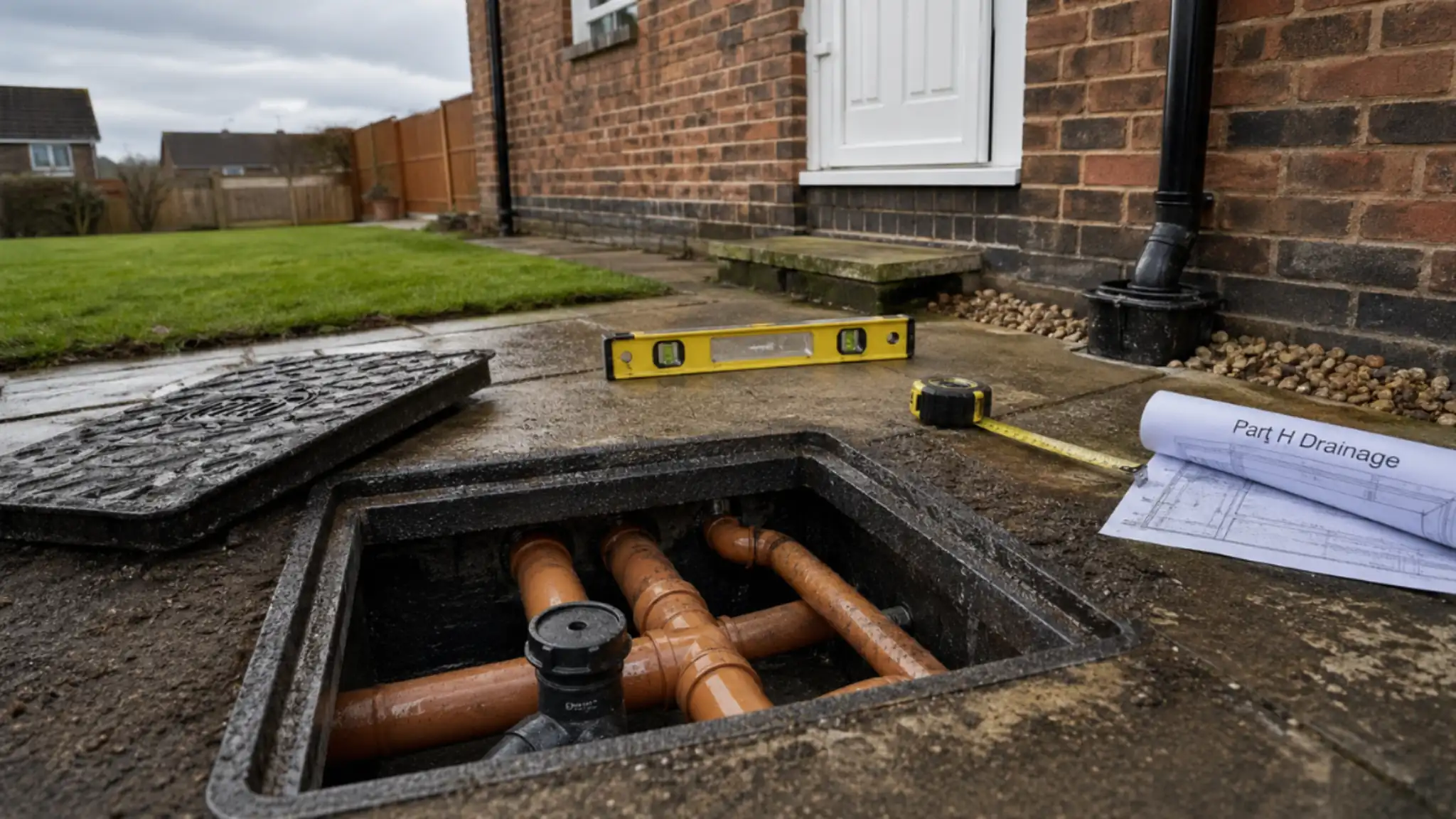
Building Regulations Part H covers drainage and waste disposal in homes — everything from foul water pipework (toilets, sinks, showers) to rainwater disposal, soakaways, and rules about building near or over sewers.
- Most common “Part H” triggers: adding a WC, moving a soil stack, new kitchen/utility drainage, new rainwater runs, or extending near a manhole.
- Key goal: safe, hygienic drainage you can maintain (with access points like rodding eyes and manholes where needed).
- Where homeowners get caught out: incorrect pipe falls, no access for maintenance, building over a public sewer without permission, and unclear drawings for Building Control.
If you’re unsure what your project needs, our team can sense-check your drainage layout, highlight common “gotchas”, and help you get Building Control sign-off with less stress.
Not sure if your drainage changes will pass Building Control?
Tell us what you’re changing (new WC, moved soil stack, extension near a manhole) and we’ll point out what Building Control will expect under Part H.
Quick summary: Building Regulations Part H
Building Regulations Part H is the part of the Approved Documents that deals with drainage and waste disposal for homes in England (and closely aligned guidance for Wales). In practice, it’s about making sure foul water and rainwater are carried away safely, don’t pollute, and can be maintained without ripping up your extension later.
If your project adds or moves drainage (even “just” a new WC), it’s worth thinking about Part H early — because Building Control may ask for drainage details, access points, build-over permissions, and evidence of how rainwater is dealt with.
What Building Regulations Part H covers (plain English)
Homeowners usually first come across Part H when a builder says, “Building Control will want to see the drainage.” That’s because Part H sits behind the rules for how your home deals with:foul water (from toilets, sinks, showers, appliances) and rainwater (gutters, downpipes, soakaways and surface water connections).
In everyday projects, Part H tends to matter most when you’re:
- adding a downstairs WC, en-suite or utility,
- moving a soil stack or relocating a bathroom,
- building an extension close to an existing manhole or drain run,
- altering rainwater goods (new roof area, new downpipes),
- building near or over a public sewer, or
- installing or changing a private treatment system (where mains drainage isn’t available).
Part H vs “general plumbing” – what Building Control actually checks
A lot of drainage work looks like “just plumbing”. However, Building Control is normally checking a few practical outcomes:
- Hygiene: waste is removed safely without leaks, smells, or contamination.
- Flow: pipe sizes, gradients (falls) and layouts support proper drainage and reduce blockages.
- Access: there are rodding points / inspection points so issues can be cleared.
- Protection: pipes are protected where they pass under floors, foundations, or driveways.
- Flooding and pollution control: rainwater is dealt with properly and doesn’t overwhelm systems.
Building Control routes for drainage work (Full Plans vs Building Notice)
Part H compliance is usually assessed through Building Control, either with your local authority team or a registered approver. For most homeowner projects, you’ll come across two main routes:
Full Plans (recommended for anything with drainage complexity)
- You submit drawings/specifications for checking before work starts.
- You get clearer feedback early (helpful when drains, sewers, or inspections are involved).
- Better for extensions, conversions, and anything near manholes or public sewers.
Building Notice (faster start, but more risk on site)
- Less upfront detail, but the inspector will assess on site as you build.
- Can be fine for simple work, but “drainage surprises” can cause delays and rework.
If you’re choosing between routes, our guide here explains when each route makes sense:Choosing the right Building Control route for your project.
What good Part H drawings and information usually include
Building Control doesn’t need a novel — but they do need enough information to understand what you’re changing and whether it’s maintainable.For typical home projects, a strong drainage pack often includes:
- Existing and proposed drainage layout (even a clear schematic can help),
- Manhole / inspection chamber locations and confirmation of access after the build,
- Pipe routes and pipe sizes (where relevant),
- Basic notes on falls/gradients and ventilation (soil stack / venting approach),
- Rainwater disposal approach (existing connection, soakaway, other route),
- Build-over considerations if you’re near a sewer, and
- Any specialist evidence if you’re using infiltration (for example soakaway testing) or non-mains treatment.
If you’re not sure what level of drawings is expected, these guides can help:What “technical drawings” usually need to show andWhat Building Regulations plans are (and why they matter).
Costs and timelines you should allow for (typical add-ons)
Part H itself isn’t a “fee”, but drainage-related jobs often bring additional checks and practical work that can affect budget and timing.It’s smart to allow for the common extras below — especially for extensions.
Quick costs snapshot (common drainage-related add-ons)
- CCTV drain survey: often requested by builders/water authorities if you’re building near existing drains (cost varies by area and access).
- Build-over sewer permission: may be needed if you’re close to a public sewer (your water authority sets requirements).
- Soakaway testing / infiltration evidence: sometimes needed when you’re proposing a soakaway or changing surface water strategy.
- Extra inspection visits: drainage can trigger additional inspection stages.
Costs depend heavily on site constraints, access, and whether drains are public/shared. If you suspect you’re near a sewer, check early — it’s one of the easiest ways to avoid delays.
Want us to sanity-check your drainage plan before you build?
We can review your layout, flag access/manhole issues, and help you prepare a clear set of notes for Building Control — so you’re not guessing on site.
Step-by-step: how to plan a Part H-compliant drainage change
If you keep this process simple and documented, Part H usually becomes straightforward — even for extensions and conversions.
HowTo checklist: getting drainage ready for Building Control
| Step | What you do | Why it matters |
|---|---|---|
| 1 | Identify what’s changing (new WC, moved kitchen, extension connection, rainwater changes). | Part H is about the change — clarity avoids guesswork later. |
| 2 | Locate existing manholes/inspection points and note whether they’ll remain accessible. | Blocked access is a common inspection failure point. |
| 3 | Confirm whether you’re near a public/shared sewer (and if build-over permission may apply). | Sewer consent issues can stop sign-off even if the build is finished. |
| 4 | Create a simple drainage plan (existing/proposed) with routes, connections, and access points. | Building Control can assess quickly when the layout is clear. |
| 5 | Agree inspection stages with your inspector/builder and book early (especially before pours). | You don’t want to expose drainage twice because the inspector wasn’t booked. |
Common pitfalls and “gotchas” with drainage and waste
Most Part H problems aren’t “rule-breaking” — they’re practical issues that only show up mid-build.Here are the ones we see most often on homeowner projects.
1) Unknown drain routes (and surprise manholes)
Drain runs aren’t always where you expect. Older properties often have changes made over decades, and drawings don’t always match reality.If your extension footprint is close to existing drainage, consider confirming routes early (sometimes with a survey).
2) Poor access for maintenance
Part H is strongly tied to maintainability. Even if the drainage “works”, you can still create future headaches if there’s no way to rod or inspect runs.
3) Building near or over a public sewer without separate permission
This is a common reason for delays at the end of a project. You can read more here:build-over sewer rules explained for homeowners.
4) Rainwater decisions made too late
Extensions change roof areas and downpipe locations. If you’re altering rainwater disposal, Building Control may expect a sensible strategy (and in some areas, extra evidence for soakaways).
Key technical details homeowners should understand
You don’t need to be a drainage engineer to manage Part H well — but it helps to understand the “big rocks” that drive design decisions.
Foul water vs rainwater (and why separation matters)
Foul water is from toilets and appliances. Rainwater is from roofs and external surfaces. Keeping systems clear and appropriate helps reduce smell, blockages, and overload.
Pipe falls (gradients) and why “almost flat” causes trouble
Too little fall can lead to slow movement of waste and repeated blockages. Too steep can also be problematic (water runs away leaving solids behind). The right approach depends on layout, length, and connection type — so it’s worth getting a sensible plan drawn up.
Ventilation and soil stack changes
If you’re moving bathrooms or adding a new WC, changes to venting (soil stack arrangements, air admittance valves in some cases) can become relevant. This is one of the areas Building Control often wants to see clearly explained on drawings/notes.
Septic tanks and private treatment (where Part H becomes more involved)
If you’re not on mains drainage, drainage and waste can become a bigger design topic. You may need additional evidence and a clear proposal for discharge routes and compliance.
FAQs: Building Regulations Part H
What is Building Regulations Part H?
It’s the drainage and waste section of the Approved Documents. In homeowner terms, it’s about making sure foul water and rainwater are dealt with safely, hygienically, and in a way that can be maintained — with sensible layouts and access points.
Is Building Regulations Part H the same across the UK?
Not exactly. This guide is written for England (where Approved Document H applies, with closely aligned principles in Wales). Scotland and Northern Ireland have their own building standards/regulations, and Ireland is a separate system again. If you’re outside England/Wales, use the local regulations for your nation.
Do I need Building Control approval if I’m “only” adding a downstairs WC?
Often, yes — because you’re altering drainage and potentially ventilation/pipework arrangements. Whether it’s notifiable can depend on what’s being changed and how. If in doubt, ask Building Control or get professional drawings/notes prepared so you don’t hit a compliance issue later.
What is “Table 13” in Approved Document H and why do people mention it?
Approved Document H includes technical tables used by designers and inspectors to guide compliant drainage design (things like capacities and performance guidance).As a homeowner, the main takeaway is: the inspector is usually checking that the layout and specification are sensible and consistent with the Approved Document guidance.
What’s the deal with “Diagram 8” and other drainage diagrams?
The drainage diagrams in Approved Document H illustrate acceptable principles and typical arrangements (for example access, junctions, and how systems should be laid out).They’re often used as a reference point when Building Control asks for “a drainage detail” or a clearer plan.
How do soakaways fit into Building Regulations Part H?
Soakaways are one possible way to deal with rainwater where infiltration is suitable. Whether a soakaway is appropriate depends on your soil, groundwater conditions, and available space. In some areas, you may need evidence to show infiltration is feasible and won’t cause problems for neighbouring properties.
How often are Building Regulations updated?
Building Regulations and the Approved Documents are updated periodically (not on a fixed annual schedule). Updates are usually made when government policy changes, safety requirements evolve, or lessons are learned from industry practice. If you want the latest edition, check the official Approved Documents collection.
Want a second pair of eyes on your drainage notes?
We’ll review your proposed layout and highlight the typical inspection questions — before you’re committed on site.
Next steps & useful guides
If you’re dealing with drainage as part of a wider project, these PME guides are the most relevant next reads:
- Start here: our complete homeowner guide to Building Regulations
- A simple explanation of what the Approved Documents are
- What Building Control does (and how sign-off works)
- Which Building Regulations application route to choose
- Understanding the Building Notice route (and when to avoid it)
- What to expect during inspections (with local quirks)
- Building near/over sewers: permissions and common mistakes
- What a good set of Building Regulations plans usually includes
- What it coversDrainage and waste disposal: foul water pipework, rainwater disposal, access for maintenance, and pollution control principles.
- Most common triggersNew WC/en-suite, moved soil stack, extension drainage connections, changes near manholes, rainwater rerouting, or work close to a sewer.
- Typical Building Control focusMaintainability (access points), sensible layouts and falls, protection of pipes, and avoiding contamination/flooding risks.
- Common homeowner “gotcha”Building over/near a public sewer without the right permission, or losing access to an inspection chamber inside an extension.
- Best way to avoid delaysPrepare a clear drainage plan early, confirm sewer constraints, and book inspections at the right build stages.
- If you want the “big picture”Use the main Building Regulations guide to understand the wider parts that interact with drainage (structure, ventilation, fire safety, energy, etc.).
If you’d like us to check your drawings and drainage notes before you build, send your project details to Plans Made Easy.
Official guidance & trusted references
For the most up-to-date official wording and documents, use these:
- Planning Portal guidance page for the drainage and waste Approved Document
- GOV.UK publication page for the drainage and waste statutory guidance
- Download the drainage and waste Approved Document (PDF)
- The Building Regulations 2010 (primary legislation text)
You also asked to include these external authority links for SEO trust:
- Planning Portal – national guidance and application information
- GOV.UK – planning permission in England and Wales
How Plans Made Easy can help
Drainage is one of those areas where “it’ll probably be fine” can turn into real delays — usually because access points were missed, a sewer constraint was discovered late, or Building Control didn’t have clear information to sign off.
Our team helps homeowners prepare clear Building Regulations drawings and notes that inspectors can follow easily — including sensible drainage layouts that reduce on-site surprises and keep your project resale-ready.
Ready to move your project forward?
Plans Made Easy can prepare compliant plans, manage submissions, and guide you from idea to approval.
Performance Verified ✅
This page meets PME Optimisation Standards — achieving 95+ Desktop and 85+ Mobile PageSpeed benchmarks. Verified on

