
Share this post:
Quick summary: Building Regulations for House Extensions
Building Regulations for House Extensions are separate from planning permission. Even if your extension is “permitted development” on the planning side, you will usually still need Building Control involvement to check the work meets legal safety and performance standards (structure, insulation, ventilation, drainage, fire safety and more).
- Most extensions need Building Regulations approval — including single-storey rear extensions, side extensions, loft conversions and garage conversions.
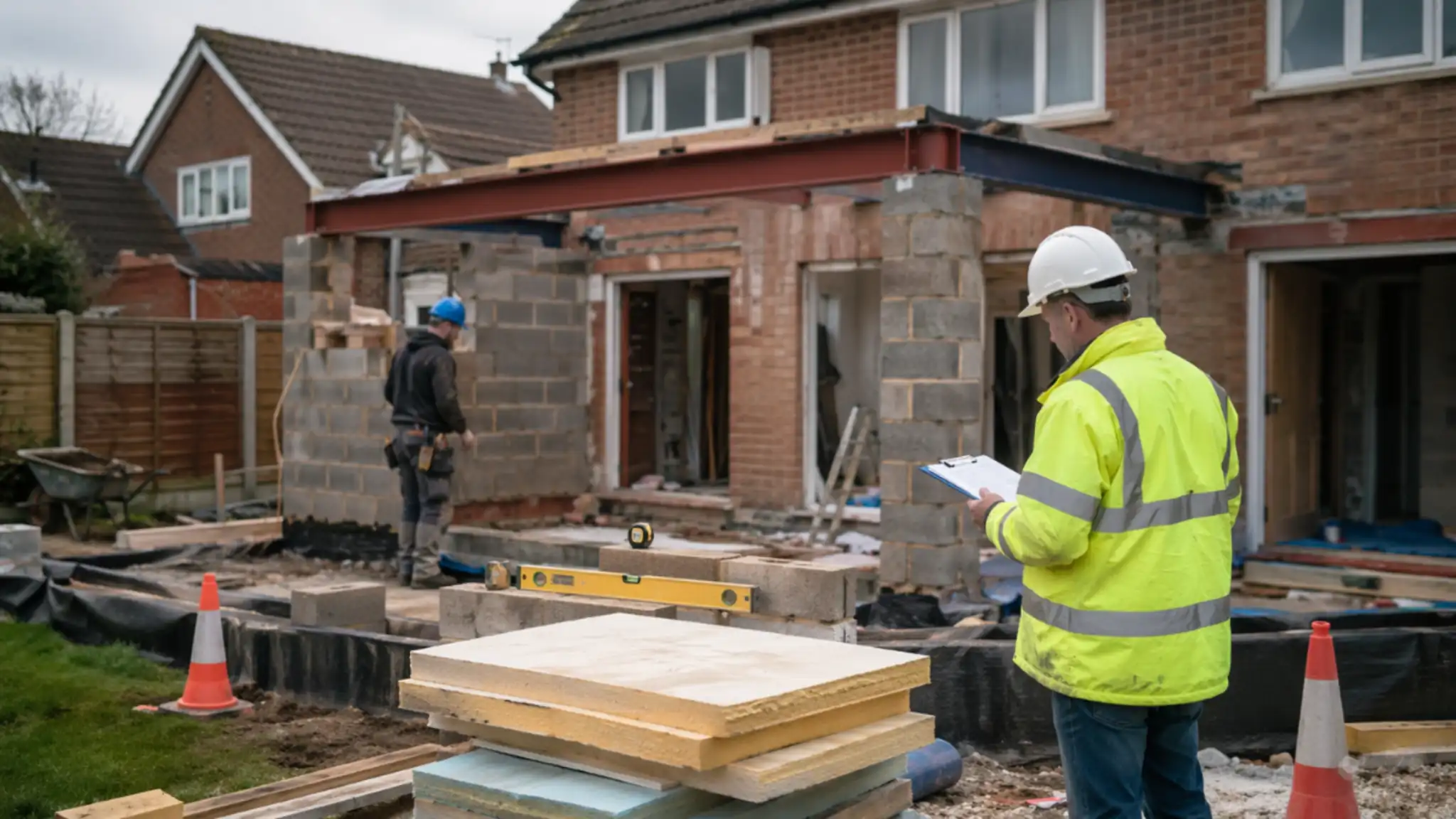
- Building Control will inspect key stages (foundations, damp-proofing, insulation, structure, drainage, fire safety details, completion).
- Two main application routes: Building Notice (faster, less design sign-off up front) or Full Plans (drawings checked before you start).
- Skipping Building Regs is risky — it can cause delays, enforcement issues and problems when you sell (missing certificates).
In this guide, we’ll explain what Building Control will actually check for a typical house extension in England, what drawings you may need, and how to pass inspections first time.
Not sure if your extension needs Building Control?
Tell us what you’re planning and we’ll explain whether Building Regulations apply, which route is best (Building Notice vs Full Plans), and what Building Control is likely to inspect.
Building Regulations for House Extensions: what they actually cover
Building Regulations for House Extensions exist to make sure building work is safe, energy efficient and properly constructed. In plain English, Building Control isn’t judging whether your extension “looks right” (that’s planning). Instead, they’re checking that the structure, insulation, fire safety and drainage details meet legal minimum standards.
For most homeowners, the simplest way to think about it is this: if you’re building new walls, changing structure, altering drainage, adding glazing, or connecting new electrics — Building Regulations are very likely involved.
Do all extensions need Building Regulations?
Most do. There are a few limited exemptions (for example certain small detached outbuildings, or very specific conservatory-style structures), but a typical house extension that’s heated, structurally connected, or involves significant building work is rarely exempt.
- Typical rear/side extensions: almost always Building Regulations.
- Loft conversions: Building Regulations (and usually multiple inspections).
- Garage conversions: Building Regulations (especially insulation, ventilation, fire separation and structure).
- Conservatories: sometimes exempt if they meet strict criteria — but many modern “orangery” builds are not exempt in practice.
Planning permission vs Building Regulations for extensions
A lot of problems start when homeowners mix these up. You can be fine on planning and still be non-compliant on Building Regulations.
Planning permission (council planners)
- Checks whether the extension is acceptable in principle (size, siting, design impact, neighbours, conservation constraints).
- May not be needed if your extension falls under permitted development (subject to limits and conditions).
Building Regulations (Building Control)
- Checks technical compliance: structure, insulation, ventilation, drainage, fire safety and safe electrics.
- Usually needed whether or not planning is required.
Building Notice vs Full Plans for house extensions
For Building Regulations for House Extensions, you’ll normally choose one of two routes. The best choice depends on complexity, how confident your builder is, and how much certainty you want before you start.
Full Plans
- You submit drawings and details up front.
- Building Control checks the plans before work starts (or early on).
- Often better for larger extensions, structural changes, or where you want fewer surprises on site.
Building Notice
- Less paperwork up front, but compliance is checked during site inspections.
- Can suit straightforward work — but if details are unclear, you may get delays while information is produced mid-build.
If you’re unsure which route fits, our guide explains it in detail: Building Notice vs Full Plans – which route is best?
What Building Control will check on your extension
Building Control inspections vary slightly by project, but for most extensions the checks follow a predictable pattern. Knowing what they’ll look for helps you avoid rework and last-minute “can you open that up again?” problems.
1) Foundations and ground conditions
They’ll check depth, width and soil suitability. If you’re near trees, drains, or the ground is made-up, Building Control may ask for deeper foundations or extra detail.
2) Structure (walls, steel beams, roof changes)
If you’re removing walls, creating open-plan spaces, or installing steel beams, Building Control will want evidence the structure is designed properly — often supported by structural calculations.
- Lintels and beams sized correctly
- Padstones / bearing details
- Stability and load paths
- Roof structure where altered
Helpful next read: Structural Calculations: when do you need them?
3) Insulation and energy efficiency (Part L)
Modern extensions must meet minimum insulation standards, including walls, floors, roofs and glazing. Building Control will often want to see the insulation thickness and product spec (not just “insulate as required”).
4) Ventilation (Part F) and condensation risk
Extensions often change how your house “breathes”. Building Control will check background ventilation, extract ventilation (kitchen/bathroom), and how you avoid condensation issues — especially in roof and wall build-ups.
Related guide: Building Regulations Part F (ventilation)
5) Drainage, rainwater and building over sewers
If your extension connects to drains, moves a soil stack, or sits near existing manholes, Building Control will likely inspect drainage runs and falls. If you’re building near/over a public sewer, you may need separate consent.
- Drain routes and access points
- Rainwater disposal
- Manholes and rodding points
- Building over sewer considerations
Useful guide: Building Over Sewers – what you must know
6) Fire safety (Part B) for extensions
Even a “simple” extension can trigger fire safety checks — particularly around escape windows, doors, internal layouts, and how new openings interact with existing routes.
Read more: Fire Safety: Part B in domestic extensions and conversions
7) Electrical safety (Part P)
New circuits, altered wiring or new consumer unit work should be done by a competent person who can certify the installation. Building Control will want to see the correct certification at completion.
Related guide: Building Regulations Part P explained
8) Accessibility and safety in use (Parts M & K)
Many extensions include new steps, altered thresholds, or changes to stairs/guarding. Building Control checks these details because small mistakes can create real safety issues.
- Safe steps and handrails
- Guarding to drops
- Reasonable access considerations where relevant
Quick costs snapshot (guide only)
Building Regulations costs vary by council, project size and whether you use the local authority or an Approved Inspector. As a rough guide, many homeowners budget for:
- Building Control fees (application + inspections) — commonly several hundred pounds to £1,000+ depending on scope.
- Drawings/specification (if doing Full Plans) — often a separate professional fee.
- Structural calculations — additional cost where steelwork or major openings are involved.
Treat these as planning figures, not a quote. The right number depends on your extension type, complexity and your chosen route.
Who prepares Building Regulations information for extensions?
For a Full Plans route (and for a smoother build generally), you’ll normally want proper drawings and clear specifications. Depending on the project, this might be prepared by:
- an architectural technologist / technician,
- an architect,
- a design-and-build firm (with competent technical design),
- or a specialist who produces Building Regulations drawings.
If you want a clear explanation of what the drawings include, these guides help: Plans for Building Regulations and What are Building Regulations drawings and why do you need them?
Building Regulations for House Extensions: costs & timelines
Time-wise, the key thing is that Building Control isn’t a single “approval moment” like planning. Instead, it’s a combination of: your application route + inspections at key stages + final certification.
When do inspections happen?
Inspections vary, but typical checkpoints include:
- Start / excavation (before concrete)
- DPC and oversite
- Drainage (before it’s covered)
- Structural elements (steelwork / roof structure as needed)
- Insulation (before plasterboarding)
- Completion (final sign-off and evidence of certificates)
To understand the inspection process in plain English, see: Building Control inspections – what to expect.
Not sure what Building Control will ask for on your extension?
We’ll explain what drawings and evidence you’ll need, and how to avoid common inspection delays.
Step-by-step: how to get Building Regulations approval for a house extension
If you want a smooth run, treat Building Regulations as a process you plan for — not a box you tick at the end.
HowTo checklist (simple homeowner version)
| Step | What you do | What it avoids |
|---|---|---|
| 1 | Confirm planning route (PD vs full planning) early. | Redesigning after you’ve paid for drawings/build. |
| 2 | Choose Building Notice or Full Plans based on complexity. | Site delays caused by missing details. |
| 3 | Get measured drawings / existing info accurate. | Mistakes that compound across design + build. |
| 4 | Sort structural input early (steel, big openings, roof changes). | Last-minute engineering and rework. |
| 5 | Agree inspection stages with your builder and Building Control. | Covering work before it’s inspected. |
| 6 | Collect certificates for completion (electrics, glazing as applicable, etc.). | Delays getting your completion certificate (and issues at sale time). |
For the wider picture (planning + drawings + approvals), these are useful: House Extensions – complete UK guide and Making plans: costs, drawings & approval.
Pitfalls & gotchas (including extensions built without Building Regulations)
Most Building Regs problems aren’t caused by “bad intentions”. They happen because homeowners start building before they’ve nailed down the technical details — or assume the builder will “handle all of that”.
Common issues we see with house extensions
- Insulation not installed as designed (or changed on site without checking).
- Drainage covered before inspection, so it has to be exposed again.
- Steelwork installed without correct bearings/padstones or missing supporting calcs.
- Poor ventilation planning leading to condensation and mould risk.
- Missing certificates (especially for electrics), delaying completion sign-off.
Technical details (the Parts that often affect extensions)
Building Regulations are organised into “Approved Documents” (Parts). Your extension may touch several, but these come up most often:
- Part A – Structure (openings, steelwork, stability)
- Part B – Fire safety (escape, internal separation, openings)
- Part F – Ventilation (extract fans, background vents)
- Part L – Conservation of fuel and power (insulation, glazing performance)
- Part P – Electrical safety
- Part K – Stairs and guarding (if altered/added)
- Part M – Access (where relevant)
If you want a simple “big picture” explainer, start with the pillar guide this article supports: Building Regulations: Complete Homeowner’s Guide.
Related comparisons (helpful when you’re planning)
- Building Notice vs Full Plans – which should you choose?
- Extension regulations UK: planning rules, Building Control & compliance
- Plans for Building Regulations: what drawings you need & when
FAQs: Building Regulations for House Extensions
Do you need Building Regulations for a house extension?
In most cases, yes. Building Regulations for House Extensions usually apply even if you don’t need planning permission. Building Control will check structure, insulation, ventilation, drainage and safety details, and you’ll normally need a completion certificate at the end.
Do I need Building Regulations for a small extension?
Often, yes. “Small” doesn’t automatically mean exempt. If you’re building new walls, altering structure, changing drainage, or creating a heated space, Building Regulations commonly apply. The cleanest way to confirm is to describe the scope to Building Control (or a professional) before you start.
What extensions are exempt from Building Regulations?
Some limited structures may be exempt (for example, certain small detached outbuildings or some conservatory-style builds that meet strict criteria). However, many modern “extension-style” conservatories, garden rooms and heated spaces are not exempt in practice. Always check your exact design — exemptions are conditional.
Can you build an extension without Building Regulations approval?
It’s strongly discouraged. If work that should be controlled isn’t approved, you can face delays, extra costs and difficulties later when you sell or remortgage because you may not have the correct certification. If you’re already in this situation, you may need a retrospective route to prove compliance.
What happens if you build an extension without Building Regs?
The practical issues usually include: missing completion certification, requests to open up work for inspection, remedial works to bring the build up to standard, and stress at sale time when solicitors ask for evidence. If you need to understand the “after the fact” route, see Retrospective Building Regulations time limits.
How much is Building Regulations for an extension?
Costs vary by local authority/Approved Inspector and by project size. You’ll typically have Building Control fees plus any professional costs for drawings/specifications and (where needed) structural calculations. The most reliable approach is to budget early and confirm which route you’re using (Building Notice vs Full Plans) so nothing is missed.
What will Building Control inspect on my extension?
Inspections commonly cover: foundations before concrete, damp-proofing, drainage before covering, structural elements as required, insulation before plasterboarding, and a final completion inspection with certificates (for example electrics). See: Building Control inspections – what to expect.
Want to avoid Building Control delays and rework?
We can sense-check your extension details, recommend the right application route, and help you prepare drawings that Building Control can inspect smoothly.
Next steps & useful guides
If you’re moving from “idea” to “getting it approved and built”, these guides are a solid next step:
- Building Regulations: Complete Homeowner’s Guide
- Building Control: what it is, when you need it, and how to pass inspections
- Building Notice vs Full Plans – which route is best?
- Plans for Building Regulations – what drawings you need & when
- Structural Calculations: when do you need them?
- Extension Regulations UK: planning rules, Building Control & compliance
- House Extensions – complete UK guide (planning, costs, council quirks)
- Certificates & compliance documents you must keep
- Do most extensions need Building Regs? Yes — most rear/side extensions, loft conversions and garage conversions require Building Control involvement, even if planning isn’t needed.
- What Building Control checks Structure, foundations, insulation/energy (Part L), ventilation (Part F), drainage, fire safety (Part B), electrics (Part P) and safe details on site.
- Two main routes Full Plans (drawings checked up front) or Building Notice (more reliance on site inspections and details during the build).
- Typical inspection stages Excavations/foundations, DPC, drainage, insulation pre-cover, and final completion (plus structure checks as needed).
- Why the completion certificate matters It’s your proof the work complied. Missing certification can cause headaches when selling or remortgaging.
- Best homeowner move Plan Building Regs early, keep evidence/certificates, and don’t cover work before it’s inspected.
If you want a calm, clear plan for compliance, message Plans Made Easy and we’ll point you in the right direction.
Official guidance (useful to bookmark)
For the most up-to-date official rules and explanations, these are worth checking:
- Planning Portal – national guidance (planning + building regulations overview)
- GOV.UK – planning permission in England & Wales (to separate planning from Building Regs)
- GOV.UK – Approved Documents (Building Regulations technical guidance)
- LABC – Building Control guidance and homeowner resources
How Plans Made Easy can help
Building Regulations for House Extensions are one of the easiest places for a project to get delayed — not because the rules are impossible, but because the details need to be right at the right time (and inspected before they’re covered up).
At Plans Made Easy, we help homeowners prepare clear, compliant drawings, choose the right Building Control route, and keep the paperwork tidy so the build can move forward without unnecessary stress.
Ready to move your project forward?
Plans Made Easy can prepare compliant plans, manage submissions, and guide you from idea to approval.
Performance Verified ✅
This page meets PME Optimisation Standards — achieving 95+ Desktop and 85+ Mobile PageSpeed benchmarks. Verified on

