
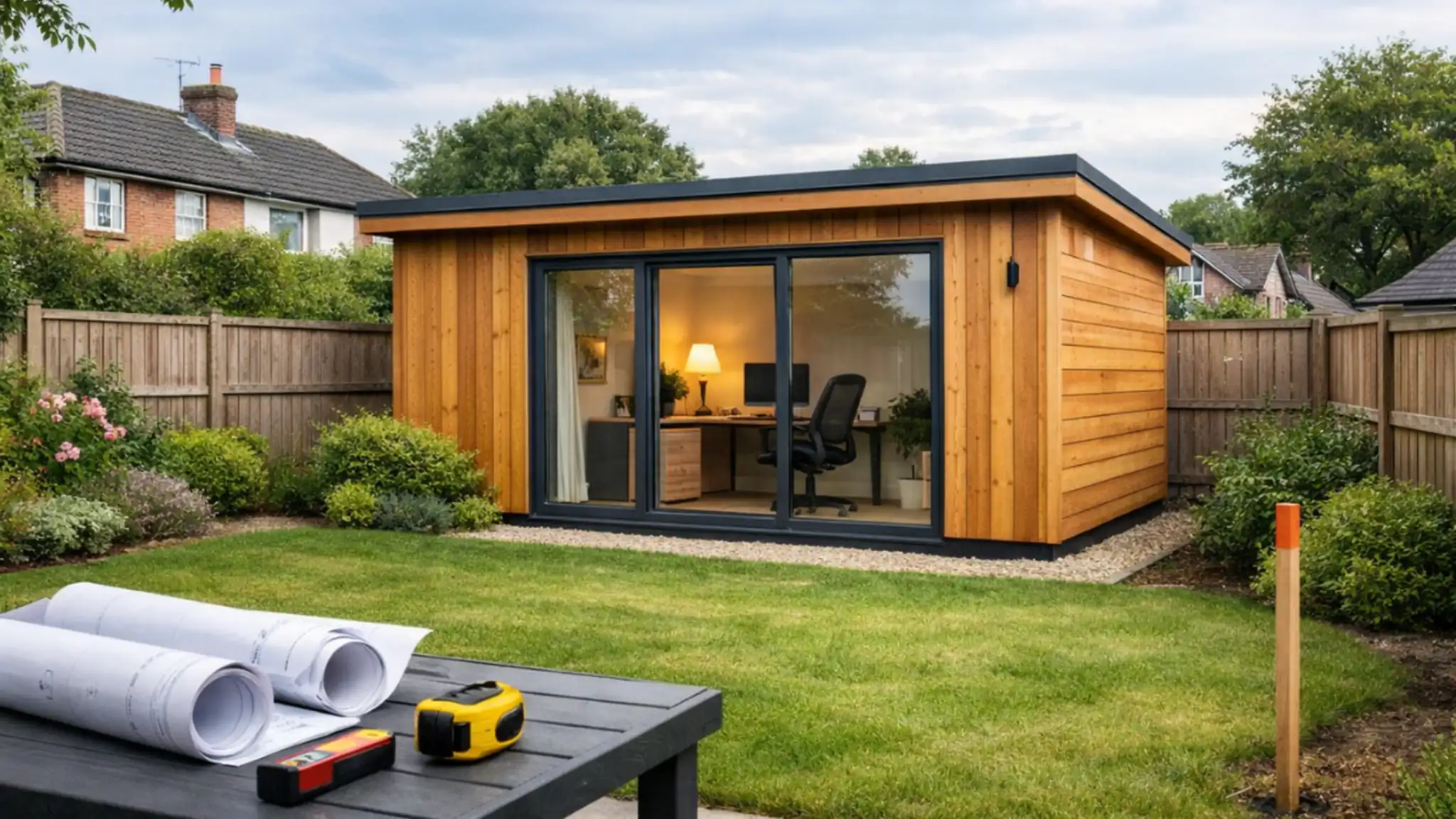
Share this post:
Quick summary: Home Offices for Garden
If you’re looking at Home Offices for Garden, the big question is usually whether you can build it under Permitted Development (no full planning application) — and what design choices keep you on the “safe” side of the rules.
- Most garden offices can be Permitted Development if they meet limits on height, location and use (for example: not forward of the principal elevation).
- Sleeping accommodation changes things — a “garden room with a bed” often raises a very different planning conversation.
- Building Regulations may apply depending on size, construction and services (especially electrics and any plumbing).
- Neighbours and boundaries matter: height near a boundary, overlooking, and noise are common causes of complaints and delays.
In this guide, we’ll walk you through the practical planning checklist and the design decisions that make approval (or a smooth PD route) much more likely.
Not sure if your garden office idea needs planning permission?
Share your sketch and a couple of photos of your garden — we’ll sense-check it against Permitted Development rules and flag any likely council issues early.
What counts as a “home office” in the garden?
A garden home office is usually classed as an outbuilding — a separate, detached structure within the garden of a house. In planning terms, it’s not the label that matters (shed / studio / pod / office), it’s what it is and how it’s used.
Most homeowners want a simple workspace: desk, power, heating, Wi-Fi, and somewhere quiet for calls. That’s typically straightforward. Where people run into problems is when the design starts to look like a separate dwelling — for example, a kitchenette, bathroom, or regular overnight sleeping.
If you want the bigger picture on outbuildings in general, this support article sits under our pillar guide:our outbuildings explainer.
Planning permission for Home Offices for Garden: the practical checklist
For many households, Home Offices for Garden can be built under Permitted Development — but only if a few key conditions are met. Here’s the practical checklist we use when we’re sanity-checking a proposal.
1) Is your home eligible for Permitted Development?
Some homes have restrictions that reduce or remove Permitted Development rights — for example, certain flats/maisonettes, some newer estates with conditions, and homes in sensitive areas.If you’re unsure, start with our plain-English checklist:see our “do I need planning permission?” guide.
2) Is it within the right part of the garden?
Outbuildings normally need to sit within the curtilage of the house and (in most cases) not be placed in front of the “principal elevation” facing the highway. If your garden is unusual — corner plots, side gardens, or a house that faces two ways — this is where local interpretation can bite.
3) Will the height and size stay within typical PD limits?
Height is one of the biggest tripwires for a garden office. Roof form matters, and so does proximity to boundaries.
4) Is it genuinely “incidental” to the main house?
Planning often expects garden outbuildings to be incidental to the enjoyment of the house (a home office usually is). However, if it becomes a separate unit with independent living facilities, the council may treat it very differently.
If you’re weighing up a more substantial garden room setup, you may also find this guide useful:our “when planning permission is required” walkthrough.
Permitted Development limits that catch homeowners out
In real life, most “do I need permission?” issues come down to a few predictable design choices. These are the ones to watch when planning Home Offices for Garden.
Height near boundaries
If you want the building near a fence line, be careful with height and roof shape. A “simple” pent roof can still exceed limits if the base is raised, the ground slopes, or thick build-ups are added (decking, insulation, roof build-up).
Raised platforms, decking and garden levels
A raised base can improve damp protection, but it can also make the overall structure look taller — and change how the council measures it. If you’re considering decking or a significant platform, it’s worth sense-checking early.
Overlooking and neighbour impact
Most garden offices are fine, but windows and doors positioned towards neighbours can trigger objections — especially on smaller plots. Frosted glazing, high-level windows, or a re-think of layout often solves this without compromising daylight.
Conservation areas and listed buildings
If you’re in a conservation area or your property is listed, you may have additional restrictions. Start here if that applies:conservation area rules explained andworks to listed buildings.
Want peace of mind before you spend money on a build?
We can advise whether a Lawful Development Certificate is sensible, and prepare drawings that clearly show heights, boundaries and use.
Building Regulations: when they apply (and when they don’t)
Planning permission and Building Regulations are separate systems. Even if you can build without a planning application, you may still need to think about Building Control — particularly for electrics, insulation and safety.
The quick way to get your bearings is our core guide here:our Building Regulations overview.If you’re appointing Building Control or trying to understand inspections, this is also helpful:what Building Control actually does.
Common triggers for Building Regs in garden home offices
- Electrics (especially new circuits and outbuilding supplies) — Part P matters.
- Insulation and energy performance if you’re creating a truly heated, all-year room.
- Structure and foundations if the build is substantial (not a lightweight kit) or the ground is tricky.
- Drainage / plumbing if you add a WC, sink or kitchenette.
If you need a clear plan package for compliance, these guides explain what’s involved:what drawings you need for Building Regs andhow the Building Regs application process works.
Design guide: layout, insulation, electrics, security and comfort
A garden workspace can look lovely on a brochure and still feel miserable in January. The best Home Offices for Garden are designed around year-round comfort and how you actually work.
Layout that works for real working days
- Desk position: avoid glare from full-height glazing directly behind your screen.
- Storage: plan for printers, files, and coat/shoe drop zones (it stops the room feeling cluttered fast).
- Call privacy: consider acoustic insulation, door seals, and where the building sits relative to neighbours.
Insulation and overheating (both matter)
People focus on staying warm, but summer overheating can be just as uncomfortable. Insulation, shading, ventilation and glazing choices all play a role. A simple approach is:
- good insulation to slow heat loss and heat gain,
- controlled glazing (not “glass all the way” unless you can shade it), and
- ventilation you can actually use during meetings (quiet vents, trickle options, or a sensible opening strategy).
Electrics and connectivity
If you’re running power to the bottom of the garden, do it properly. Think about:
- Dedicated supply sized for heating + equipment (not just a couple of sockets),
- Lighting suited to video calls (soft, forward-facing light helps),
- Data — hardwired ethernet is often more reliable than Wi-Fi extenders.
Security and access
A garden office is full of desirable kit. Good locks and sensible siting help, but don’t forget lighting and visibility. If it’s hidden at the far end of the garden, you may want motion lights and an alarm contact.
Step-by-step: how to plan it properly (without council stress)
If you want a smooth process (and fewer “surprise” issues), here’s the approach we recommend for a garden home office project.
Step-by-step checklist for a garden home office
- Decide the use (and stick to it). Home office, hobby room, gym, storage — keep it clearly ancillary to the main house.
- Mark out the footprint in the garden. Use pegs/string so you can see distances to boundaries and neighbours.
- Sketch the height and roof shape. This is where most PD mistakes happen, especially on sloping ground.
- Check constraints. Conservation area, listed building, Article 4, restrictive conditions (if relevant).
- Decide whether to apply for certainty. A Lawful Development Certificate can be worth it if you want paperwork for future sale.
- Prepare the right drawings. Clear plans/elevations, site plan, and notes that describe use and key dimensions.
- Plan services properly. Electrics, heating, ventilation, internet, and any drainage — avoid “we’ll sort it later”.
- Build with compliance in mind. Keep evidence (specs, photos, certificates) so you’re covered long-term.
If you want a broader view of what drawings typically include (and why councils reject unclear submissions), this guide is a useful companion read:our complete guide to drawings for planning.If you’re unsure how long the planning route might take, this helps set expectations:typical planning timelines explained.
FAQs: Home Offices for Garden
Do garden offices need planning permission?
Often, no — many garden home offices can be built under Permitted Development. However, the decision depends on height, location in the garden, and how the space will be used. If there are constraints (for example conservation areas or planning conditions), the answer can change. When in doubt, get it checked before you order a kit or start groundworks.
Can I put an office in my garden near the boundary?
You often can, but boundary placement is where height and neighbour impact become more sensitive. A low profile design, careful window placement, and correct height measurement are the usual “approval-friendly” choices. If your garden slopes, it’s especially worth getting the height confirmed properly.
How do I build a garden office that’s warm in winter (and not boiling in summer)?
Focus on insulation, controlled glazing, and a ventilation strategy that you can live with during calls. Plenty of glass looks great, but it can overheat quickly without shading. For winter comfort, avoid “token” insulation — a properly specified wall/roof/floor build-up makes a huge difference.
Are garden offices secure?
They can be, but you need to treat them like a mini outbuilding full of valuables. Good quality doors/locks, external lighting, and sensible sightlines help. If it’s very secluded, consider alarm contacts or smart monitoring for peace of mind.
Why are some garden offices so expensive?
Price usually reflects structure, insulation quality, glazing/door specifications, foundations, electrics, and fit-out. Cheaper options may be fine for occasional use, but for all-year working you’re typically paying for performance: warmth, durability, and a more “house-like” build-up.
Can I claim for a garden office (tax-wise)?
Tax treatment depends on your circumstances and how the space is used, so it’s best to speak to an accountant. From a planning perspective, what matters is that the building remains ancillary to the main home and doesn’t become a separate dwelling.
Worried your design might fall outside Permitted Development?
We’ll tell you what’s likely to be acceptable, what needs adjusting, and what drawings you’ll need to keep the process smooth.
Next steps & useful guides
If you want to go deeper (or you’re still deciding the best route), these PME guides are the most relevant next reads:
- Outbuildings Explained – What You Can (and Can’t) Build Without Permission
- A full homeowner guide to permissions for outbuildings
- A detailed guide to permissions for larger garden rooms
- Building Regulations: Complete Homeowner’s Guide
- Planning Permission Drawings: A Complete Guide for Homeowners
- Shed-to-workspace conversions: what to check before you start
- Most common routeMany garden home offices can be built under Permitted Development, if height, location and use stay within limits.
- Biggest PD tripwireHeight measurement (especially on sloping ground) and designs placed close to boundaries.
- Use mattersKeep it clearly ancillary to the main house — avoid creating a self-contained unit without proper advice.
- Building Regs focusElectrics, insulation/comfort, structure and any plumbing can trigger compliance requirements.
- Best “approval-friendly” design movePrioritise neighbour privacy (window placement), keep height modest, and document the use clearly on drawings.
- If you want certaintyConsider applying for a Lawful Development Certificate so you have paperwork for peace of mind and future sale.
Want a quick “yes/no” on your proposal? Send our team your rough dimensions and a couple of garden photos and we’ll point you in the right direction.
Official guidance
For the latest national guidance, it’s worth checking:
- Planning Portal – national planning guidance and application information
- GOV.UK – planning permission in England and Wales
How Plans Made Easy can help
The easiest way to keep a garden home office stress-free is to get the fundamentals right early: the siting, the height, the use, and the drawings that clearly explain it all. That’s exactly what we help homeowners do.
If you’re planning Home Offices for Garden and want confidence you’re building legally (and not storing up problems for later), our team can prepare compliant plans, advise on the best permission route, and guide you through the process from idea to sign-off.
Ready to move your project forward?
Plans Made Easy can prepare compliant plans, manage submissions, and guide you from idea to approval.

Performance Verified ✅
This page meets PME Optimisation Standards — achieving 95+ Desktop and 85+ Mobile PageSpeed benchmarks. Verified on

