
Share this post:
Quick summary: Planning Permission Bristol
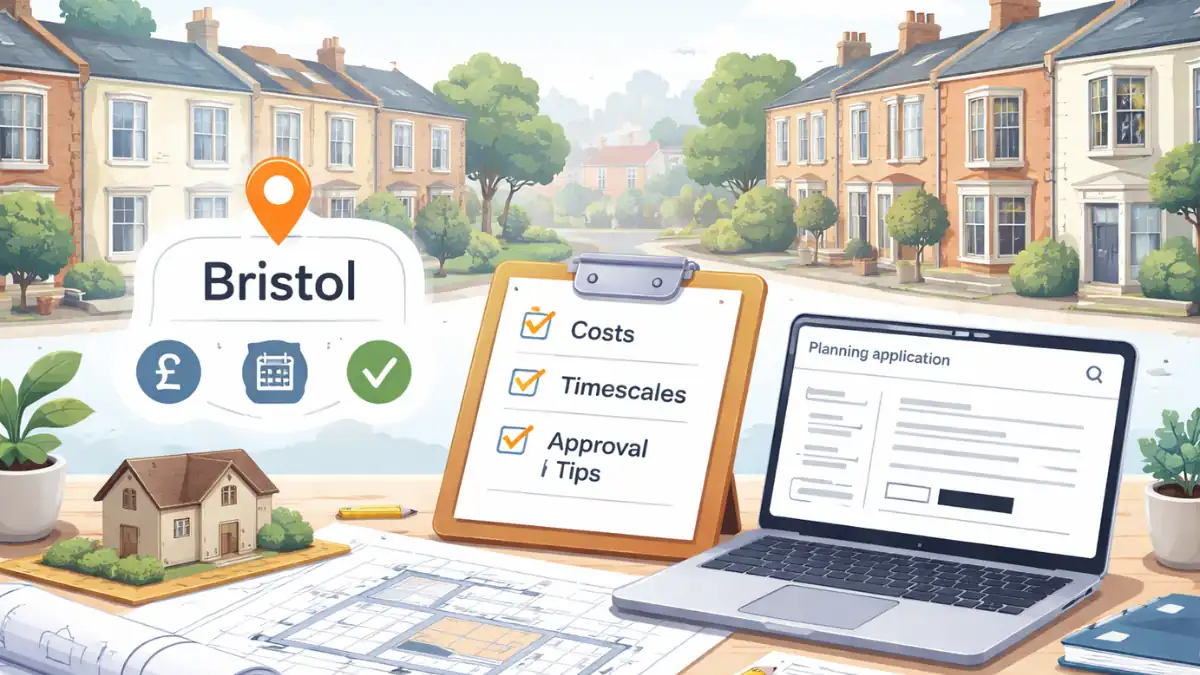
If you’re searching for Planning Permission Bristol, you’re usually trying to answer three things: how much it costs, how long it takes, and how to avoid an avoidable refusal with Bristol City Council.
- Typical council fee (householder): for many home extensions and alterations in England, the fee is currently £528 (check your exact fee using the Planning Portal calculator).
- Typical decision time: many householder applications aim for a decision in about 8 weeks from validation, although delays are common if information is missing or revisions are needed.
- Biggest approval wins: clear drawings, correct plans at the right scale, a sensible design for neighbours (overlooking / overshadowing), and addressing constraints like conservation areas or listed buildings early.
- Fastest way to de-risk: check whether it’s permitted development first, and consider a Lawful Development Certificate if you want paperwork for peace of mind.
In the guide below, we’ll walk you through costs, timescales, how to search existing applications in Bristol, and the practical steps that give you the best chance of approval first time.
Not sure if you actually need planning permission in Bristol?
Tell us what you’re planning (extension, loft, dropped kerb, garden room) and we’ll help you work out the right route — permitted development, lawful certificate, or a full application.
Quick summary: Planning Permission Bristol
Planning Permission Bristol usually follows the same national rules as anywhere in England, but the outcome still depends on local context — your street, neighbours, constraints (like a conservation area), and how clearly your application explains the proposal.
Most refusals we see are not because the idea is “impossible”. They happen because something is unclear, missing, or avoidably contentious — for example, poor-quality plans, boundary confusion, neighbour impact not addressed, or the wrong application route chosen.
Planning Permission Bristol: what homeowners need to know
When you’re improving a home in Bristol, planning can feel like a black box. However, the basics are quite consistent: the council needs to understand what you’re building, how it affects neighbours, and whether it fits planning policy.
The first (and most important) step is working out which route you’re actually on:
- Permitted development (no full application) — often applies to certain extensions, loft conversions and outbuildings, provided you stay within the limits.
- Lawful Development Certificate (LDC) — optional, but very useful if you want written confirmation the work is lawful (helpful for future buyers and solicitors).
- Householder planning application — common for extensions, big dormers, changes in sensitive areas, and anything outside permitted development.
- Other consents — for example listed building consent, or extra controls in conservation areas and Article 4 directions (where permitted development can be restricted).
If you’re unsure, our starting point checklist helps you decide the route before you spend money on drawings:Do I Need Planning Permission?
Planning Permission Bristol costs: fees, drawings, and “hidden extras”
Most homeowners only think about the council fee, but the real cost is usually a bundle of parts. For Planning Permission Bristol, it helps to separate costs into three buckets:
1) The council planning fee
Planning application fees are set nationally (not by Bristol), and the amount depends on the application type. As a guide, a typical householder application fee in England is currently £528.
For anything unusual (flats, multiple dwellings, changes of use, HMOs), the fee can be different. If you want the cleanest answer, use the Planning Portal fee calculator.
2) Drawings and surveys
Even where the council fee is fixed, the quality of drawings makes a huge difference to speed and outcome. In most Bristol home projects, you’ll want:
- Existing and proposed floor plans
- Existing and proposed elevations
- Site plan / block plan at the correct scale
- Location plan (often based on OS mapping)
- Sections where height/roof form matters or the site is sloping
If you want a deeper breakdown of what drawings are typically included (and what catches people out), these guides help:Planning Permission Drawings andDrawings for a Planning Application.
3) The “extras” people forget
Depending on the site and proposal, you may also need:
- Design & access statement (more common in sensitive locations)
- Heritage statement (listed buildings / conservation areas)
- Tree information (TPOs or important trees nearby)
- Drainage information (especially for larger builds)
- Building Regulations drawings after planning (a separate stage)
If you’re budgeting overall, this wider guide is useful:Planning Permission Cost (UK).
Planning Permission Bristol timescales: how long it really takes
Timescales are where most homeowners feel the stress — because you’re often coordinating builders, finances, and family life. In simple terms, there are two clocks running:
- Validation time — how long it takes for the council to confirm your submission is complete and “valid”.
- Determination time — the formal assessment period once it’s valid (often around 8 weeks for many householder applications).
In practice, the biggest delays come from avoidable issues such as:
- missing plans or incorrect scales
- unclear boundaries or site plans that don’t match reality
- incomplete descriptions (what exactly is changing?)
- neighbour impact concerns raised late (overlooking, dominance, loss of light)
- constraints discovered mid-way (conservation area / listed building issues)
If you want a full timeline breakdown (including what happens during consultation and how amendments work), see:Planning Permission Timelines.
Worried about delays with Bristol City Council?
We’ll sense-check your drawings and submission pack so you’re not losing weeks to avoidable validation issues or “please clarify” requests.
How to check planning applications in Bristol (and why it helps)
One of the smartest things you can do before you submit is look at what’s been approved (or refused) on your road and nearby. It helps you understand what Bristol City Council has accepted in practice — particularly for:
- rear extensions and wrap-arounds
- loft conversions and dormers
- front elevations and parking changes
- dropped kerbs and access alterations
- HMO-related applications (where relevant)
You can search and track applications on Bristol City Council’s website here:Search and track planning applications (Bristol City Council).
If you want a UK-wide guide to reading applications and decision notices (useful if you’re comparing areas like Bristol / North Somerset), this helps:How to View Planning Applications and Permissions.
What you need to submit: plans, documents, and common validation issues
For Planning Permission Bristol householder projects, your submission is only as strong as your documents. In most cases, you need:
- Completed application form (accurate description of development)
- Location plan and site/block plan
- Existing and proposed plans and elevations
- Ownership certificates and (if relevant) agricultural holdings information
- Fee payment and any supporting statements needed for your site
If you’re comparing professionals, it’s worth reading:Making Plans: Costs, Drawings & Approval andArchitect Drawings for Planning Permission.
Step-by-step: how to apply (and improve approval odds)
Step-by-step checklist for a smoother Bristol submission
- Confirm the right route. Start with permitted development, then decide whether you need an LDC or a full householder application.
- Check constraints early. Conservation areas, listed status, and nearby trees can change what’s acceptable.
- Review nearby precedents. Search Bristol applications and read decision notices for similar works on similar houses.
- Get the drawings right first time. Plans should be to scale, labelled, and show boundaries, heights, and relationships to neighbours clearly.
- Write a sensible description. Avoid vague wording — be clear about what is being built and where.
- Pre-empt neighbour concerns. If there’s any risk of overlooking/overshadowing, show how you’re reducing it (window positions, obscure glazing, setbacks, height control).
- Submit and track. Once submitted, monitor requests for clarification quickly so you don’t lose time.
Common pitfalls in Bristol (and how to avoid them)
Across Bristol, the same patterns come up again and again. Most are avoidable if you know what to look for:
Driveways, dropped kerbs, and front garden changes
These sound simple, but they can involve multiple considerations: highway safety, parking layout, visibility, drainage (especially if you’re replacing permeable surfaces), and the look of the street. If you’re planning a new access or dropped kerb, build in time to confirm what permissions are needed.
HMOs and change of use
If your query is about an HMO, be careful: planning and licensing can overlap, and the rules can be more complex than a standard householder project. In those cases, getting advice before submission can save months of back-and-forth.
Conservation areas and listed buildings
Bristol has many areas where design, materials, and heritage impact matter more. A normal “standard extension” approach may not be enough — the supporting statement and drawings often need to be more carefully prepared.Helpful reads:Conservation Areas andListed Buildings.
“With planning permission” doesn’t mean “ready to build”
Planning permission tells you the proposal is acceptable in principle. It doesn’t automatically cover structure, insulation, fire safety, drainage, or compliance documents.If you want a clear overview of what Building Regulations covers, see:Building Regulations (UK) guide.
FAQs: Planning Permission Bristol
How much does it cost to apply for planning permission in Bristol?
The council fee depends on the application type, but for a typical householder planning application in England it is currently £528. Your total cost is usually higher once you include drawings, surveys, and any supporting reports needed for your site (for example heritage or trees).
How long does planning permission take in Bristol?
Many householder applications aim for a decision in about 8 weeks from the date the application is validated. In practice, it can take longer if documents are missing, the council requests clarification, or you need to amend the design after consultation feedback.
How do I check planning permission applications in Bristol?
Bristol City Council provides an online search where you can view drawings, decision notices, and track applications. It’s a good way to see what’s been approved on your street and spot the common reasons for refusal before you apply.
Do I need planning permission for a dropped kerb in Bristol?
Often, yes — and even where planning isn’t required, highway approval can still be needed. Dropped kerbs also bring extra considerations like visibility, parking geometry and surface water drainage. It’s worth checking the correct route before you commit to contractors.
What plans do I need for a Bristol planning application?
Most applications need a location plan, a site/block plan, and clear existing and proposed plans and elevations (to scale and labelled). If the proposal is sensitive (heritage, tricky levels, neighbour impact), sections and a short supporting statement can make the application much clearer.
Is planning permission “personal” to me, or does it stay with the house?
In most normal cases, planning permission relates to the land/property rather than the person. However, there are exceptions and conditions can affect how it’s implemented — so always read the decision notice and conditions carefully.
Want to avoid a refusal or an avoidable delay?
We can review your proposal and tell you what tends to cause issues — before you submit to the council.
Next steps & useful guides
If you’re moving forward with your project, these PME guides are the best next reads:
- The main planning permission guide (UK)
- Do I Need Planning Permission? (quick checklist)
- Planning permission costs: fees + real-world budget
- Planning timelines: what to expect at each stage
- Planning drawings: what you actually need
- What to do if your application is refused
- Building Regulations: what happens after planning
- Best first stepCheck if it’s permitted development; consider an LDC for written confirmation.
- Typical council feeA common householder fee in England is £528 (confirm using the fee calculator for your application type).
- Typical timescaleOften around 8 weeks from validation for many householder applications, but delays happen if information is missing.
- Fastest way to reduce delaysClear, to-scale drawings + a complete submission pack (avoid validation failures).
- Common local sensitivitiesNeighbour impact (privacy/light), conservation areas, listed buildings, parking/access changes.
- Don’t forgetPlanning permission is separate from Building Regulations and Building Control inspections.
If you want a calm, practical plan for your next step, contact Plans Made Easy and we’ll point you to the safest route for your Bristol project.
Official guidance
For the most up-to-date national guidance and fees, it’s always worth checking:
- Planning Portal – national guidance and application information
- GOV.UK – planning permission in England and Wales
- Bristol City Council – planning application fees (local page)
How Plans Made Easy can help
Getting Planning Permission Bristol right is mostly about doing the basics well: choosing the correct route, preparing clear drawings, and dealing with neighbour impact and site constraints before the council has to ask.
If you want support, our team can prepare compliant plans, manage submissions, and guide you through the process so you’re not guessing at key steps.
Ready to move your project forward?
Plans Made Easy can prepare compliant plans, manage submissions, and guide you from idea to approval.
Performance Verified ✅
This page meets PME Optimisation Standards — achieving 95+ Desktop and 85+ Mobile PageSpeed benchmarks. Verified on

