
Share this post:
Quick summary: Planning Permission vs Building Regulations
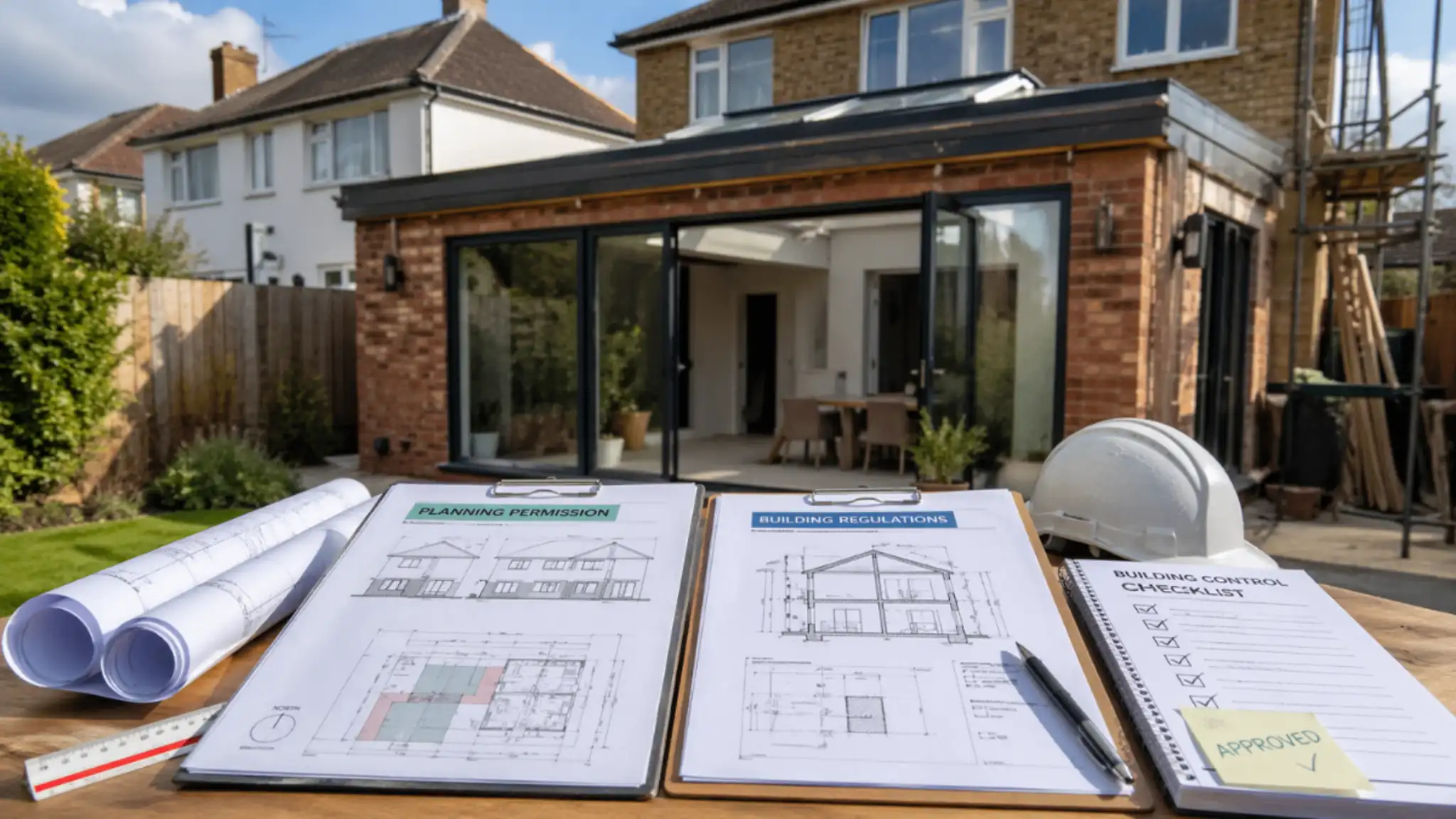
If you’re confused about Planning Permission vs Building Regulations, you’re not alone — and getting it wrong can cause delays, extra cost, or problems when you sell.In simple terms, planning permission is about whether you’re allowed to build something (appearance, neighbours, use and local policy), while Building Regulationsare about how it’s built (structure, fire safety, insulation, drainage, electrics and more).
- You can need one without the other: some projects are permitted development (no planning), but still need Building Regs.
- Planning is a “permission to develop” decision: made by the local planning authority (your council).
- Building Regs are a “compliance and safety” check: overseen by Building Control (council or approved inspector).
- Paperwork matters: for Building Regs you usually need evidence like a Completion Certificate or other compliance documents.
Below we’ll show you the differences, when each applies, and the common “grey areas” where homeowners accidentally assume they’re covered when they aren’t.
Not sure what approvals your project needs?
Tell us what you’re planning and we’ll explain whether you need planning permission, Building Regulations approval, or both — before you spend money in the wrong place.
Planning Permission vs Building Regulations: the simple difference
The easiest way to understand Planning Permission vs Building Regulations is to think of them as two different questions:“Am I allowed to do this?” (planning) and “Is it safe and compliant?” (Building Regs).Many projects need both. Some need only one. And a surprising number of projects need neither — but only if the rules are met exactly.
A quick homeowner example
- New rear extension: may need planning permission or may be permitted development, but it will almost always need Building Regulations approval.
- Replacing windows: usually doesn’t need planning permission, but it can require Building Regs compliance (often via a competent person scheme certification).
- Loft conversion: could be permitted development from a planning point of view, but still needs Building Regs for structure, fire safety and stairs.
If you’re starting from scratch, our main planning permission guide explains when you need permission and how approvals work.For the safety/compliance side, see our homeowner guide to Building Regulations.
Key differences: what each system actually controls
Planning permission: what the council is judging
Planning permission is about the impact of development. In practice, planning officers are looking at things like:
- Neighbour impact: overlooking, loss of light, overbearing mass, privacy issues.
- Street scene and appearance: design, materials, roof form, window placement.
- Use and layout: change of use, parking, access and local policy constraints.
- Site constraints: conservation areas, listed buildings, trees, flood risk, highways issues.
Building Regulations: what Building Control is judging
Building Regulations exist to make sure building work meets minimum standards for safety and performance. Building Control will typically check:
- Structure (Part A) — foundations, beams, load-bearing changes.
- Fire safety (Part B) — escape routes, fire doors, smoke alarms, separation.
- Insulation and energy efficiency (Part L) — walls, roofs, glazing and thermal performance.
- Ventilation (Part F) — background vents, extract fans and air quality.
- Drainage (Part H) — new connections, alterations, manholes and falls.
- Electrics (Part P) — notifiable electrical work and testing/certification.
Application types: planning, permitted development and Building Control routes
Planning routes (permission vs permitted development)
From a planning perspective, your project usually falls into one of these:
- Householder planning application: you apply to the council for permission.
- Permitted development (PD): you may not need planning permission if your proposal fits the PD rules.
- Other consents may still apply: for example listed building consent or extra restrictions in conservation areas.
If you’re unsure, start with our “do I need planning permission?” checklist andour permitted development rules guide.
Building Control routes (Full Plans vs Building Notice)
For Building Regulations, homeowners typically use one of two routes:
- Full Plans: detailed plans/specifications are checked and approved before work starts (often best for extensions and complex work).
- Building Notice: less upfront detail, but more reliance on inspections and on-site decisions (can suit simpler projects).
We explain the practical differences in Building Notice vs Full Plans.If you want the bigger picture, our Building Control explainer walks you through what inspectors check and when.
What’s included: drawings, documents and inspections
What planning drawings usually include
Most planning submissions need clear “planning-level” drawings so a case officer can assess what you’re proposing. Typically that means:
- Existing and proposed floor plans
- Existing and proposed elevations
- Location plan and block/site plan
- Sometimes sections or roof plans (especially for lofts or changes in height)
If you want a deeper breakdown, see our guide to planning permission drawingsand what to include in planning application drawings.
What Building Regulations drawings and approval usually include
Building Regulations drawings go further. They show how the project will be constructed and how it meets the Approved Documents guidance. You’ll often need:
- Construction details (insulation build-ups, junctions and specifications)
- Structural design information (often supported by structural calculations)
- Ventilation, drainage and safety notes
- Inspections at key stages (foundations, structure, insulation, completion)
Quick costs snapshot (plain English)
- Planning: you may have a council application fee (if permission is needed), plus drawings/professional support.
- Building Regulations: you’ll have Building Control charges, and often drawings/specifications (plus structural engineer input where required).
- Extra reports: some sites need specialist documents (heritage, trees, drainage, highways) — these can apply to planning, Building Regs, or both.
Costs vary by council area, project size and complexity. The safest approach is to budget for both approval routes early, then refine once you know whether your project is PD or needs full planning.For the bigger money picture, see our planning permission cost guide.
Costs & timelines: what to budget time (and admin) for
Homeowners often plan the build programme first, then get surprised by “approval time”.The truth is, planning and Building Control run on different timelines, and your project can stall if you treat them as one process.
Typical timing pattern (what we see most often)
- Planning stage: design + drawings + submission + council decision (if required).
- Building Regs stage: technical design + structural input + Building Control submission/notifications + inspections during the build.
- Completion stage: sign-off and certification.
If you want a clearer view of approval stages, see planning permission timelinesand what to expect at Building Control inspections.
Step-by-step: how to handle both without delays
HowTo checklist: planning permission + Building Regulations (in the right order)
| Step | What to do | Why it matters |
|---|---|---|
| 1 | Clarify the scope (what you’re building, where, and how big). | Stops “design creep” and helps you check permission and compliance accurately. |
| 2 | Check whether planning permission is needed or if it may be permitted development. | Avoids submitting the wrong application (or assuming you don’t need one). |
| 3 | Prepare planning drawings at the right level of detail. | Reduces back-and-forth with the case officer and helps avoid refusal. |
| 4 | While planning is progressing, start thinking about Building Regs “pressure points” (structure, insulation, fire safety, drainage). | Prevents expensive redesign later (especially on lofts, stair layouts and openings). |
| 5 | Move to Building Regulations drawings/specifications and (where needed) structural calculations. | Gives Building Control and your builder the technical detail they need. |
| 6 | Book inspections and keep certificates/compliance paperwork organised from day one. | Makes sign-off smoother and protects you when you remortgage or sell. |
Not sure if your idea fits Permitted Development?
We’ll check your project against PD rules and let you know if you need a full planning application.
Common pitfalls & gotchas homeowners run into
1) “I don’t need planning permission, so I don’t need Building Regs”
This is probably the biggest misunderstanding we see. Permitted development is a planning concept.Building Regulations still apply to many PD projects — particularly structural alterations, extensions, loft conversions, and certain changes to services.
2) “Planning permission includes Building Regulations”
Planning and Building Control are separate departments, with separate legal tests and paperwork.A planning approval letter doesn’t mean your builder can just start without notifying Building Control.
3) “Building Control can approve my project even if planning is a problem”
Building Control are there to check compliance, not planning policy. They can sometimes inspect work even where planning issues exist,but that doesn’t make the planning side “safe”. If planning enforcement becomes involved, Building Control sign-off won’t protect you from planning outcomes.
If you’re worried about past work or paperwork gaps, our guide to certificates and compliance documentsexplains what you should keep, and why it matters.
Technical details (plain English): what Building Control checks
You don’t need to memorise the Building Regulations, but it helps to know what commonly trips people up — especially on extensions, loft conversions and open-plan remodels.Below are a few “headline” areas Building Control will typically focus on.
Fire safety and escape routes (often the biggest surprise)
- Loft conversions: protected escape routes, fire doors, smoke alarms, and sometimes upgrades to floors/ceilings.
- Open-plan changes: escape and compartmentation can become more complex.
If you want a plain-English overview, see our domestic fire safety (Part B) guide.
Energy efficiency and insulation
Even small changes can trigger insulation requirements, especially where walls/roofs are altered or new glazing is installed.Our guide to Part L and energy efficiency explains what this means in real terms.
Structure and calculations
Removing walls, widening openings, changing roof structures or adding new loads often means steel beams and structural design.It’s worth understanding when structural calculations are needed before work starts.
Related comparisons homeowners often search for
- Permitted development vs planning permission: PD is a planning route, but Building Regs may still apply.
- Planning application vs Building Control: one is a policy/impact decision; the other is safety/compliance.
- Building Notice vs Full Plans: two routes to Building Regulations approval, with different risk profiles and paperwork.
FAQs: Planning Permission vs Building Regulations
What is the difference between planning permission and Building Regulations?
Planning permission is the council deciding whether your proposed development is acceptable in principle (design, neighbours, use and local policy).Building Regulations are about whether the work meets minimum safety and performance standards (structure, fire safety, insulation, ventilation, drainage and electrics).Many projects need both approvals, but they are separate processes.
Is planning permission and Building Control the same?
No. Planning is handled by the local planning authority. Building Control (either your council’s Building Control team or an approved inspector) checks compliance with the Building Regulations.A planning approval does not replace Building Control approval, and vice versa.
Can you get Building Regulations without planning permission?
Sometimes, yes — because the two systems are separate. For example, some internal structural alterations may need Building Regs even where planning permission isn’t required.However, if the work also requires planning permission and you build without it, you could face planning enforcement issues even if the work is technically compliant.
Do you still need Building Regulations for permitted development?
Very often, yes. Permitted development is a planning concept and doesn’t automatically remove Building Regulations duties.Extensions, loft conversions, structural changes, new drainage and certain electrical works typically still need Building Control involvement or certification.
Does planning permission include Building Regulations approval?
No — planning permission and Building Regulations approval are separate. Planning focuses on impact and policy. Building Regs focus on safety and technical compliance.You’ll usually deal with Building Control before and during the build, with inspections and sign-off at completion.
Is building without planning permission illegal?
If your project needed planning permission and you didn’t get it, you could be in breach of planning control and may risk enforcement action.That said, not every project needs planning permission — some are permitted development, and some work is not “development” in planning terms.If you’re unsure, it’s worth checking early (or applying for a lawful development certificate where appropriate) so you avoid stress later.
What size building can you have without planning permission?
It depends on what you’re building and where (rear extension vs outbuilding vs loft conversion), plus constraints like conservation areas and previous extensions.Permitted development has detailed limits on height, depth, boundary distance and how much of the plot can be covered.Use our permitted development guide as a starting point, then sense-check your specific site.
What paperwork should I keep after Building Regulations sign-off?
Keep your Building Control completion evidence (often a Completion Certificate) and any related certificates (electrical, gas, glazing, insulation/product data where relevant).Missing paperwork can slow down a sale or create awkward questions later. See our guide to certificates and compliance documents.
Want a quick sense-check before you commit?
We can tell you what approvals are likely for your type of project and what drawings you’ll need for each stage.
Next steps & useful guides
If you’re moving from “research” into actual design, these guides are the most useful next reads:
- Our complete planning permission guide (pillar)
- Building Regulations explained for homeowners
- Building Control: what it is and how inspections work
- Plans for Building Regulations: what drawings you need and when
- Planning permission drawings: what’s included
- Building Notice vs Full Plans: which route suits your project?
- Planning permission timelines: what to expect
- What planning permission is forWhether your development is acceptable in principle (design, neighbours, use, local policy and constraints).
- What Building Regulations are forWhether the work is safe and compliant (structure, fire safety, insulation, ventilation, drainage, electrics and more).
- Can you need one without the other?Yes. Many permitted development projects still need Building Regs. Some internal works need Building Regs but not planning.
- Who decides?Planning: local planning authority. Building Regs: Building Control (local authority or approved inspector) with inspections and sign-off.
- Best homeowner habitTreat them as two parallel checklists: “permission” and “compliance” — and keep certificates organised for the end.
- Common mistakeAssuming “no planning needed” means “no Building Regs needed” — which can create problems later.
If you tell us your project type and property location, we’ll help you map out the approvals and drawings you’ll need.Speak to Plans Made Easy.
Official guidance (worth bookmarking)
For the most reliable, up-to-date rules and process guidance, these are the best official sources:
- Planning Portal — national guidance on planning and building control applications
- GOV.UK — planning permission in England and Wales
- GOV.UK — building regulations approval and when you need it
- GOV.UK — Approved Document B (fire safety) guidance
Conclusion: getting both approvals right saves money and stress
Once you understand Planning Permission vs Building Regulations, most of the confusion disappears.Planning is about permission and impact; Building Regs are about compliance and safety.The calmest projects are the ones where homeowners plan for both early: clear drawings for the planning decision, and proper technical detail for Building Control and the build.
If you want a smoother path to approval, our team can prepare the right drawings, help you choose the right application route, and guide you through the admin — without guesswork.
Ready to move your project forward?
Plans Made Easy can prepare compliant plans, manage submissions, and guide you from idea to approval.
Performance Verified ✅
This page meets PME Optimisation Standards — achieving 95+ Desktop and 85+ Mobile PageSpeed benchmarks. Verified on

