
Share this post:
Quick summary: Planning Permission Peterborough
If you’re researching Planning Permission Peterborough, the fastest way to avoid delays is to (1) confirm whether your project is Permitted Development or needs a householder application, (2) prepare drawings that meet the council’s validation checklist, and (3) allow enough time for neighbour consultation and planning officer review.
- Typical timescale: many straightforward householder applications are decided within around 8 weeks once validated (complex cases can take longer).
- Common causes of delay: missing documents, incorrect drawings/scales, unclear site plans, or late design changes after submission.
- Cost reality check: you’ll pay two separate things — (a) the council’s planning application fee and (b) professional costs for surveys/drawings/planning support.
- Best approval tip: design for privacy, daylight and scale from day one — this is where many refusals start.
If you want, our team can sense-check your proposal before you submit, and tell you what usually gets queried locally (so you can fix it upfront rather than firefighting later).
Not sure if you actually need planning permission in Peterborough?
Tell us what you’re building and where, and we’ll explain whether it looks like Permitted Development or a full application — plus what drawings you’ll likely need.
Planning Permission Peterborough: how the process works
Searching for Planning Permission Peterborough usually means you’re at the “Can we actually do this?” stage — extension, loft conversion, garage conversion, garden room, or a more unusual idea. The good news is the planning process is predictable once you understand the steps. The stressful part is normally delays caused by missing documents, unclear drawings, or design choices that trigger neighbour objections.
In simple terms, most homeowner projects follow this flow:
- Check if the work is Permitted Development (and whether restrictions apply).
- Prepare a proportionate drawing pack (existing + proposed) and supporting documents.
- Submit online (often via the Planning Portal) and wait for validation.
- Consultation period (neighbours / consultees) while a planning officer assesses the proposal.
- Decision: approved (sometimes with conditions) or refused (with reasons you can address).
Do you need planning permission in Peterborough or is it Permitted Development?
One of the biggest misunderstandings we see is homeowners assuming “it’s an extension, so I need planning permission” — or the opposite: “my friend didn’t need it, so neither do I”. In reality, many projects fall under Permitted Development (PD), but only if you meet the rules and your property hasn’t lost PD rights.
You’re more likely to need a full planning application in Peterborough if:
- your home is in a conservation area,
- it’s a listed building (or within its curtilage),
- there are Article 4 restrictions, or
- the proposal pushes size/height/boundary limits or changes the front appearance significantly.
If you want a simple checklist approach, our “permission or not?” guide is a good starting point:use our homeowner checklist here.
Peterborough planning application types: householder vs other routes
Most homeowners applying for Planning Permission Peterborough will be using a Householder Planning Application (extensions, dormers, external alterations). However, it’s worth understanding the other labels you might see, because choosing the wrong type can slow things down.
Common application routes you’ll see
- Householder – typical home extensions and alterations.
- Full planning – often used for new dwellings, major changes of use, or more complex schemes.
- Lawful Development Certificate – to confirm a proposal is PD (or that existing works are lawful).
- Listed Building Consent – separate consent if the building is listed (and often needed even for internal works).
Planning Permission Peterborough costs & timescales: what to budget and how long it takes
Costs can feel confusing because people mix up council fees with professional fees. Here’s the cleaner way to view it.
1) Council planning application fee
For many homeowner applications in England, the planning fee is set nationally and paid to the local authority during submission. This is separate from any drawing or consultancy costs.
2) Drawings, survey and professional support
Your “real world” budget often depends on whether you need:
- a measured survey (especially for older or altered homes),
- existing + proposed plans/elevations and a site/location plan,
- design development (options and revisions), and
- someone to act as your agent and manage planning queries.
Quick costs snapshot (Peterborough homeowner projects)
- Planning application fee: paid to the council at submission (varies by application type).
- Planning drawings & submission support: varies widely based on complexity and revision needs.
- Building Regulations: usually a separate stage (and separate cost) after planning is approved.
- Extra reports: only if needed (trees, heritage, flood/drainage, noise, transport, etc).
If you want a fuller breakdown of where money typically goes (fees, drawings, surveys and “hidden extras”), this guide helps:see our cost breakdown here.
Typical timescales (what “8 weeks” really means)
Most straightforward householder applications are assessed within a standard determination period once validated. However, real timelines depend on:
- Validation speed (missing documents = delays),
- case officer workload,
- design complexity (and whether amendments are needed), and
- consultation issues (neighbour objections or technical consultees).
Want to reduce the risk of planning delays?
We can review your drawings pack before you submit and flag the common “validation” and neighbour-amenity issues that typically cause back-and-forth.
Peterborough validation checklist: what causes applications to be delayed
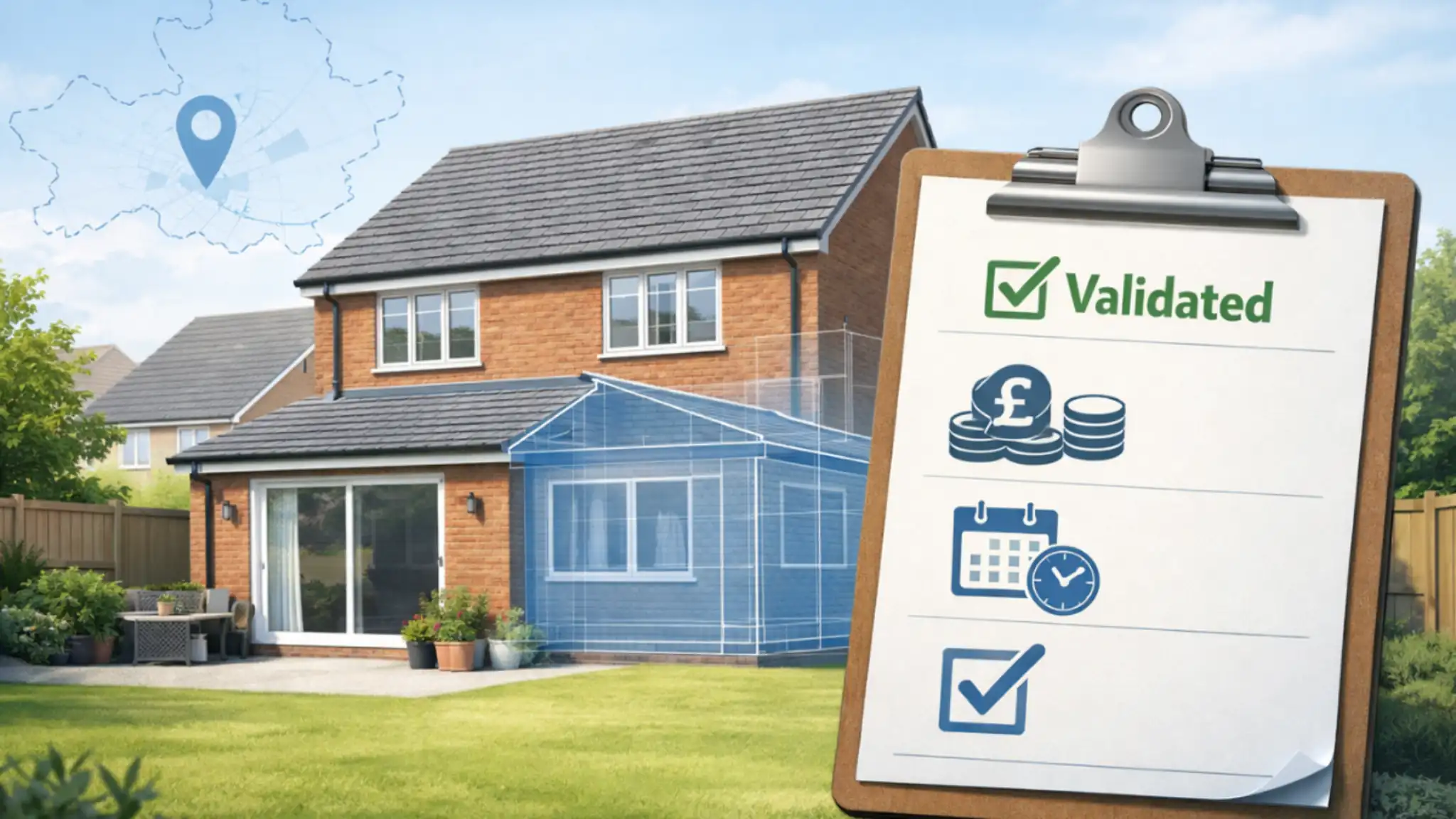
“Validation” is the council’s way of confirming your application includes the required documents, drawings and forms. Until it’s validated, the planning officer usually won’t assess it properly.
While each council has its own checklist, the most common missing or problematic items for homeowner applications include:
- Site plan / block plan not at the right scale or missing boundary markings,
- Location plan not correctly outlined,
- Plans/elevations missing key dimensions or levels,
- Roof alterations without enough information to understand height/shape changes, and
- Unclear descriptions (what you’re building, materials, and where it sits).
If you want to understand what a “good” drawing pack looks like (so you can compare quotes and avoid under-specced services), these guides help:see what drawings are normally requiredandread our homeowner guide to planning drawings.
Planning Permission Peterborough approval tips: what typically improves your chances
A planning officer’s job is to judge whether your proposal is acceptable in planning terms — not whether it’s a “nice idea”. Most approvals come down to a few predictable themes.
1) Respect neighbours: privacy, overlooking and daylight
For extensions, dormers and raised terraces, problems often start when new windows or height changes create overlooking or a loss of light. Small changes (frosted glazing, higher sill levels, or subtle re-positioning) can make a big difference.
2) Keep scale and massing proportionate
Proposals that look over-dominant for the plot, or out of character with the street, are more likely to trigger objections. Matching eaves lines, setting back upper floors, or reducing roof bulk can calm this down.
3) Materials and appearance (especially on visible elevations)
If the change is prominent from the street, officers typically want the materials and detailing to sit comfortably with the existing house. A short materials note can prevent “please confirm materials” queries later.
And remember: even with planning approval, you may still need Building Regulations compliance for the build. These explain the difference and how to pass inspections:read our Building Regulations guideandsee how Building Control works.
Step-by-step: a calmer way to apply for planning permission in Peterborough
If you want to avoid the “submit and hope” approach, use this simple process. It keeps your application focused, reduces rework, and helps you budget properly.
Step-by-step checklist (homeowner-friendly)
- Define the scope. What exactly are you building, and what problem does it solve (space, light, layout, storage)?
- Check whether PD might apply. If unsure, plan for a Lawful Development Certificate or a quick professional check.
- Confirm constraints early. Conservation area, listed status, tight boundaries, trees, drainage issues, or previous permissions can change everything.
- Prepare a solid drawing pack. Existing + proposed plans/elevations, plus site and location plans that meet validation requirements.
- Design for “planning tests”. Privacy/daylight, scale, appearance, and neighbour relationships should be obvious from the drawings.
- Submit and track validation. Respond quickly if the council requests missing items — this is where weeks are often lost.
- Be ready for small amendments. Minor revisions are common and can turn a slow “maybe” into a faster “yes”.
Related comparisons homeowners often search (and what they mean)
- Planning permission vs permitted development: PD is a set of rights you can use without a full application (if you meet limits and restrictions).
- Planning permission vs planning consent: “planning consent” is a general phrase — the exact consent could be planning permission, lawful development, listed building consent, etc.
- Planning approval: usually means the decision notice has been issued (often with conditions you must follow).
FAQs: Planning Permission Peterborough
Do I apply to Peterborough City Council or through the Planning Portal?
Most homeowners submit online, and many applications go through the Planning Portal interface. Either way, the application is assessed by the local planning authority. The key is making sure your drawings and supporting documents meet the local validation requirements so you don’t lose time at the start.
How long does a typical householder application take in Peterborough?
A lot of straightforward homeowner applications are decided within the standard determination period after validation. In practice, delays usually come from validation queries, neighbour objections, or needing design amendments. If you want to speed things up, focus on a complete submission and a design that clearly addresses privacy, scale and appearance.
What’s the most common reason applications get held up or refused?
The most common issues are neighbour impact (overlooking or loss of light), over-dominant scale, and unclear or incomplete drawings. Many refusals are avoidable with a better drawing pack and small design changes made before submission. If you’re worried, our refusal guide explains what to do next:read the step-by-step options here.
Can I submit Planning Permission Peterborough drawings myself?
Yes, you can submit an application yourself, and you can also prepare your own drawings if they meet the council’s standards (correct scales, clear dimensions, accurate site/location plans). However, many homeowners find it quicker and less risky to use a professional — especially where boundaries are tight or the design is complex.
I’m buying land with planning permission in Peterborough — what should I check?
Check the decision notice, approved drawings, and any conditions (for example materials, drainage, landscaping, or time limits). Also confirm whether the permission is implemented, whether amendments have been approved, and whether there are constraints like trees, highways access, or flood/drainage requirements. If you’re unsure, it’s worth getting the full pack reviewed before you commit.
Want a quick, honest steer before you apply?
We’ll review your idea and tell you what’s likely to be queried — plus what to include so your submission stands a better chance first time.
Next steps & useful guides
If you’re planning work now, these guides usually save homeowners time (and help you brief designers and builders more clearly):
- Homeowner checklist: when you might need permission
- What a “good” planning drawings pack includes
- Drawing requirements for a valid submission
- Costs breakdown: fees, drawings and common extras
- Timeline guide: key stages and what delays decisions
- Building Regulations overview (what planning doesn’t cover)
- Most important first stepConfirm whether the proposal is Permitted Development or needs a householder planning application.
- What “8 weeks” really meansThe standard decision period often starts after validation — missing items can delay validation by weeks.
- Top causes of delayIncomplete documents, unclear drawings, missing scale/levels, or late design changes after submission.
- Top causes of refusalNeighbour impact (privacy/daylight), over-dominant scale, and out-of-character appearance.
- Key money pointCouncil fees and professional drawing/support costs are separate — budget for both.
- Planning isn’t the endYou may still need Building Regulations approval and inspections before (and during) the build.
Want to reduce risk before you submit? Ask Plans Made Easy to review your proposal and drawings pack.
Official guidance
For national guidance and the most up-to-date application information, it’s always worth checking:
- Planning Portal – national guidance and application information
- GOV.UK – planning permission in England and Wales
How Plans Made Easy can help with your Peterborough application
Getting Planning Permission Peterborough approved is usually less about “gaming the system” and more about submitting a clear, complete application that shows the officer (and your neighbours) you’ve designed responsibly. Good drawings, a sensible layout, and a proposal that respects privacy and scale do most of the heavy lifting.
If you’d like support, our team can prepare compliant drawings, manage submissions, and guide you through planning and Building Regulations so you can move forward with fewer surprises.
Ready to move your project forward?
Plans Made Easy can prepare compliant plans, manage submissions, and guide you from idea to approval.
Performance Verified ✅
This page meets PME Optimisation Standards — achieving 95+ Desktop and 85+ Mobile PageSpeed benchmarks. Verified on

