
Share this post:
Quick summary: Modern home offices
Modern home offices can be created in a spare bedroom, living room corner, loft space, garage conversion or purpose-built garden room. The best option depends on how often you work from home, how much privacy you need, your budget, and whether the space needs planning permission or Building Regulations approval.
- Best small-space option: a compact desk, built-in storage and good task lighting in a bedroom, hallway landing or living room alcove.
- Best long-term option: a dedicated room or garden office with heating, insulation, data points and proper electrical provision.
- Planning point: many garden office outbuildings can fall under permitted development, but only if all size, height, location and use limits are met.
- Building Regulations point: detached garden offices may still need Building Control input depending on size, sleeping use, proximity to boundaries and construction.
A good modern home office should feel comfortable, practical and legally safe. Before you spend money on furniture, electrics or a garden room, it is worth checking the planning and Building Regulations position first.
Planning a home office or garden workspace?
We can check whether your idea needs planning permission, Building Regulations approval or a Lawful Development Certificate before you commit to the build.
What makes Modern home offices work well?
Modern home offices are no longer just a desk in the corner of a spare room. For many UK homeowners, they are now a permanent part of the home, whether that means a built-in workstation, a quiet study, a converted garage or a garden room used as a daily workspace.
The best setup is not always the biggest or most expensive one. Instead, a successful home office gives you enough privacy, natural light, storage, power, ventilation and comfort to work properly without making the rest of the house feel cramped.
What does a modern home office look like?
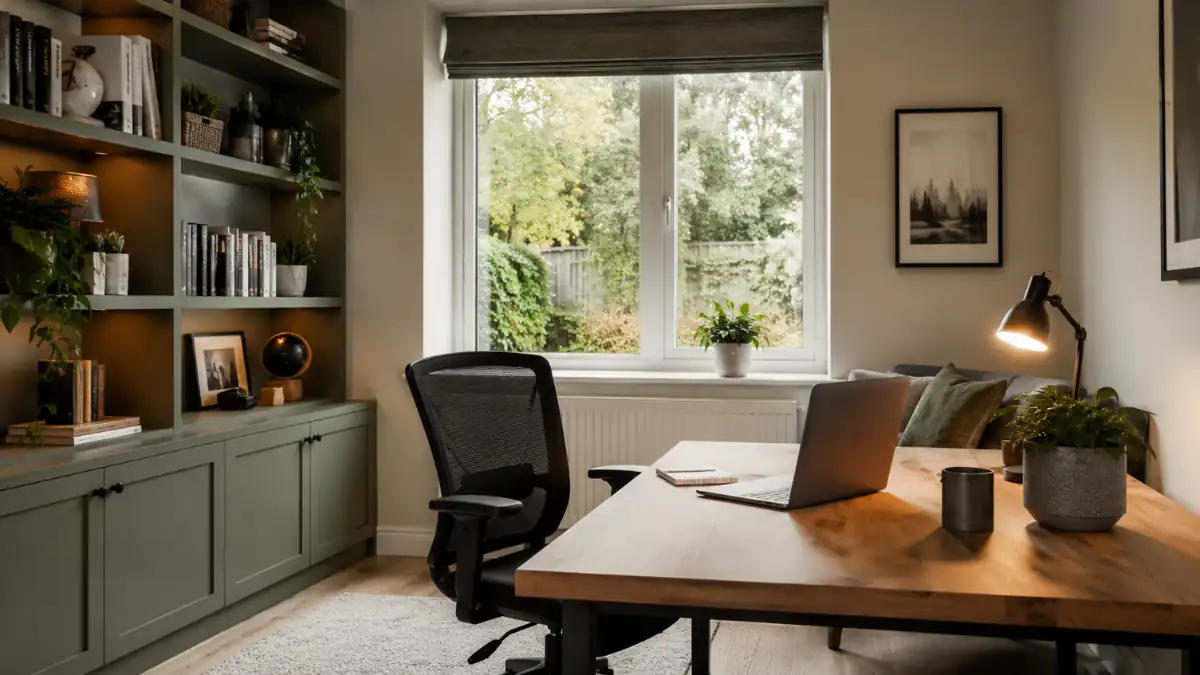
A modern office at home usually feels clean, calm and practical. It often includes a slim desk, ergonomic chair, concealed storage, layered lighting, neutral colours and enough sockets for screens, chargers, printers and task lighting.
However, the layout should follow how you actually work. For example, someone taking video calls all day may need acoustic treatment and a tidy background. In contrast, someone running a small creative business may need worktop space, storage and easy access to samples or equipment.
Modern home office design ideas for UK homeowners
Modern home office design is about making the space easy to use every day. Before thinking about decoration, start with the practical questions: where will the desk go, how much daylight is available, and can you shut the door when you need quiet?
Modern home office desk and layout ideas
- Wall-to-wall built-in desk: good for box rooms, alcoves and small bedrooms where every centimetre matters.
- L-shaped desk: useful if you need two screens, paperwork space or a printer nearby.
- Floating desk: a neat option for a living room or guest room where the office needs to disappear visually.
- Desk for two: works best with separate task lighting, individual sockets and enough width so both people can work comfortably.
Modern home office furniture and storage
Furniture should support the way you work rather than simply look good online. A modern home office chair is worth prioritising because it affects comfort more than most decorative choices.
- Use closed cabinets if you want a calm, minimal background for video calls.
- Add open shelves for books and display items, but avoid clutter around the desk zone.
- Choose cable management early, especially if you use multiple monitors.
- Consider a foldaway or sliding-door setup if the office shares space with a bedroom or guest room.
Modern home office lighting
Lighting is one of the most overlooked parts of a home office. A single ceiling pendant rarely gives enough comfortable light for long working days.
- Ambient lighting gives general light to the room.
- Task lighting lights the desk area without glare.
- Background lighting softens video calls and makes the room feel warmer.
Using a garden room as a modern home office
A garden room can be one of the best ways to create a dedicated office, especially if the main house is busy or short on space. It gives separation between work and home life, and it can look excellent when designed properly.
However, a garden office is still a building. That means you need to think about planning, Building Regulations, electrics, insulation, drainage, foundations and how it will be used.
For a deeper planning guide, read our main article on garden room planning rules. You may also find our general guides on planning applications for homeowners and checking whether consent is needed useful before choosing a supplier.
Planning permission for Modern home offices
If your home office is simply a desk inside an existing room, planning permission is usually not an issue. The position can change when you build something new, convert a garage, change the external appearance of the property or use the space for business activities that go beyond normal home working.
When a home office may need planning permission
- You are building a new garden office that does not meet permitted development limits.
- The building is forward of the principal elevation or in a restricted part of the plot.
- The building is too high, too close to a boundary or covers too much of the garden.
- You live in a listed building, conservation area, National Park or other designated land.
- The use becomes more like a separate business premises, with regular clients, staff, deliveries or noise.
If you want certainty, a Lawful Development Certificate can be a sensible option where the project appears to fall under permitted development. It gives useful evidence for future buyers, lenders and neighbours.
Building Regulations and safety checks for a modern home office
Building Regulations are separate from planning permission. Planning looks at whether the development is acceptable in principle. Building Regulations look at how the work is built, including structure, insulation, fire safety, ventilation, drainage and electrical safety.
For a desk inside an existing room, Building Regulations may not be relevant unless you are altering electrics, structure, drainage or insulation. For a garage conversion, loft conversion or new garden office, the position is more technical.
Building Control points to consider
- Electrics: new circuits and external supplies should be designed and installed safely.
- Insulation: year-round office use normally needs proper thermal performance.
- Fire safety: location, materials and escape routes may matter, especially near boundaries.
- Structure: floors, walls and roofs must be suitable for their intended use.
- Sleeping use: a building used for sleeping is treated more seriously than a simple daytime office.
Our guide to Building Regulations plan requirements explains what drawings and technical details may be needed. If your office involves new drawings, our article on planning drawing packages is also a useful starting point.
Quick costs snapshot for Modern home offices
Costs vary widely because “home office” can mean anything from a small desk setup to a fully insulated garden building. As a broad guide:
- Simple desk and chair setup: often from a few hundred pounds.
- Built-in desk and storage: commonly £1,000–£4,000+, depending on joinery and finish.
- Room refurbishment: decoration, flooring, lighting and electrics can quickly add several thousand pounds.
- Garden office: basic units may start in the low thousands, while high-quality insulated garden rooms can be much more.
- Professional drawings or applications: extra if planning, lawful development or Building Regulations information is needed.
Always separate furniture costs from construction, electrics, design drawings, council fees and Building Control fees so you can compare quotes properly.
Not sure if your home office idea fits the rules?
We’ll check your project against planning and Building Regulations requirements and let you know what approvals may be needed.
Step-by-step checklist for creating a modern home office
A clear process helps you avoid spending money in the wrong order. This is especially important if your office involves a garden room, garage conversion or structural changes.
HowTo checklist: plan your home office properly
| Step | What to check | Why it matters |
|---|---|---|
| 1. Choose the location | Spare room, living room, garage, loft or garden room. | The location affects cost, privacy, planning and technical requirements. |
| 2. Define the use | Occasional work, full-time office, client visits or business storage. | More intensive use can raise planning questions. |
| 3. Check planning rules | Permitted development, conservation area limits and local restrictions. | This helps avoid enforcement problems later. |
| 4. Check Building Regulations | Electrics, insulation, structure, fire safety and sleeping use. | Compliance protects safety and resale confidence. |
| 5. Design the workspace | Desk size, storage, lighting, power, heating and internet. | Good design makes the office comfortable every day. |
| 6. Get drawings if needed | Planning drawings, Building Regulations plans or supplier drawings. | Clear plans help councils, builders and Building Control understand the project. |
Common mistakes with modern home offices
Most problems happen when homeowners focus on the look before checking the practical details. A beautiful office can still be frustrating if it is cold, noisy, poorly lit or difficult to insure.
- Buying a desk before measuring chair movement and storage space.
- Forgetting sockets, data cables and charging points.
- Choosing a garden room without checking planning restrictions.
- Assuming a supplier’s brochure replaces proper Building Regulations advice.
- Using a garden office for sleeping without checking the rules.
- Ignoring neighbour impact, especially near boundaries.
FAQs: Modern home offices
What is a modern home office?
A modern home office is a dedicated workspace designed for comfortable, practical working at home. It may be a spare room, bedroom corner, living room workstation, garage conversion or garden office. The key features are usually good lighting, storage, power, internet connection, a suitable chair and a layout that supports daily work.
What does a modern home office look like?
Most modern home offices have a clean, uncluttered layout with a proper desk, ergonomic chair, concealed cables, useful storage and layered lighting. Many homeowners also add bookshelves, wall units, plants, acoustic panels or a tidy video-call background.
Can I use my home as an office?
In many cases, yes. Occasional or normal home working from a room in your house usually does not need planning permission. However, if the use becomes more business-like, with regular clients, staff, deliveries, noise or separate access, you should check with your local planning authority.
Do I need planning permission for a garden office?
Sometimes. Many garden offices can fall under permitted development, but only if all limits and conditions are met. Height, position, total garden coverage, designated land, listed buildings and the intended use can all affect the answer. A Lawful Development Certificate can provide useful certainty.
Do modern home offices need Building Regulations approval?
A desk inside an existing room usually does not need Building Regulations approval unless you are altering electrics, structure, drainage or insulation. A garage conversion, loft conversion or new detached garden office may need further checks, especially if it is large, close to a boundary or intended for sleeping.
What is the best layout for a modern home office in a small room?
For a small room, a built-in desk, wall shelves and closed storage usually work well. Keep the desk depth practical, allow enough chair movement, and use vertical storage so the floor area stays clear. Good task lighting is especially important in compact spaces.
Want a clear answer before you build?
Tell us where the office will go and how you plan to use it. We’ll help you understand the likely planning and Building Control route.
Next steps & useful guides
If you are planning a home office, garden room or workspace conversion, these guides will help you take the next step:
- Garden Rooms: Do You Need Planning Permission?
- Planning Permission: Complete Guide for Homeowners
- Do I Need Planning Permission?
- Lawful Development Certificate Guide
- Plans for Building Regulations
- Planning Permission Drawings
- Drawings for Planning Application
- Best locations Spare bedrooms, box rooms, loft spaces, living room alcoves, garage conversions and garden rooms can all work well.
- Main design priorities Desk position, chair comfort, storage, lighting, heating, internet, sockets and noise control.
- Planning risk Usually low for a desk inside the house, but higher for new garden buildings, garage conversions, listed buildings and business use with visitors.
- Building Regulations May apply where there are new electrics, structural changes, conversions, insulation work or detached buildings above certain thresholds.
- Useful certificate A Lawful Development Certificate can help prove a garden office is lawful where permitted development rights are being used.
- PME advice Check the rules before ordering a garden room, instructing trades or committing to expensive fitted furniture.
Need help checking your project? Contact Plans Made Easy for calm, practical advice.
Official guidance and useful references
These official resources are helpful when checking the planning and Building Regulations position for a home office, garden office or outbuilding:
- Planning Portal – outbuildings planning permission guidance
- Planning Portal – Building Regulations for outbuildings
- GOV.UK – planning permission in England and Wales
- GOV.UK – permitted development rights for householders technical guidance
How Plans Made Easy can help
A modern home office can make your home far more practical, but it is worth getting the basics right before you start. The best projects balance comfort, layout, storage and lighting with the planning and Building Regulations checks that protect you later.
Plans Made Easy can help you understand whether your home office idea is straightforward, whether a garden room may fall under permitted development, and whether drawings or an application are needed before work begins.
Ready to move your project forward?
Plans Made Easy can prepare compliant plans, manage submissions, and guide you from idea to approval.

Performance Verified ✅
This page meets PME Optimisation Standards — achieving 95+ Desktop and 85+ Mobile PageSpeed benchmarks. Verified on

