
Share this post:
Quick summary: Modern home offices designs
The best modern home offices designs combine a comfortable working environment with clever storage, natural light and a layout that makes everyday work easier. Whether you are transforming a spare bedroom, creating a modern minimalist workspace or planning a purpose-built garden office, thoughtful design can make even a small space feel practical and welcoming.
A successful modern home office does not need to be expensive or complicated. The key is choosing the right location, planning your desk and lighting carefully, and making sure the space suits how you actually work.
- Small home offices: Use floating desks, fitted shelving and space-saving furniture to make the most of compact rooms.
- Modern interior styles: Combine neutral colours, natural timber, clean lines and carefully chosen accessories for a contemporary appearance.
- Lighting and comfort: Prioritise daylight, adjustable task lighting, ventilation and an ergonomic workstation.
- Garden home offices: A detached garden building can provide greater separation from household distractions, although planning permission and Building Regulations must be considered.
- Planning considerations: Interior decoration alone will not normally require planning permission, but extensions, new outbuildings and certain changes of use can trigger additional requirements.
Our advice: Start with how you intend to use your office, rather than choosing furniture or decoration first. If your project involves building a new garden office or altering the structure of your home, check the relevant permissions before committing to construction.
Planning a new home office or garden workspace?
Our team can help you understand the planning and building requirements before you start making structural changes or building in your garden.
What makes modern home office design work?
A modern home office should look attractive, but appearance is only part of the story. The most successful workspaces support concentration, feel comfortable throughout the day and fit naturally into the surrounding home.
With more people dividing their working week between home and another workplace, having a suitable working environment remains important. The Office for National Statistics reported that 28% of working adults in Great Britain worked in a hybrid arrangement between January and March 2025.
However, a good workspace is not simply a desk beside a window. Its design should consider your equipment, working hours, available floor area and the amount of privacy you need.
Five characteristics of a contemporary home office
- Simple layouts: Furniture arranged around the work being carried out.
- Useful storage: Enough space for paperwork and equipment without unnecessary clutter.
- Balanced lighting: A combination of daylight, general lighting and adjustable task lighting.
- Comfortable surroundings: Appropriate seating, heating, ventilation and acoustic privacy.
- Flexible design: A room that can adapt if your equipment or working arrangements change.
Modern home office design ideas for different homes
There is no single modern office style that suits every property. Some homeowners prefer minimalist interiors, while others want a warmer, more traditional appearance with contemporary furniture.
The best design will depend on your available space, the character of your home and whether the office needs to serve another purpose.
1. Modern minimalist home office design
Minimalist offices use simple furniture, limited colours and well-organised storage to create a calm working environment. A pale desk, neutral walls and concealed cables can make the space feel uncluttered without making it look empty.
Keep frequently used items within reach. Meanwhile, store documents and less-used equipment in drawers or closed cupboards.
2. Contemporary home office ideas with natural materials
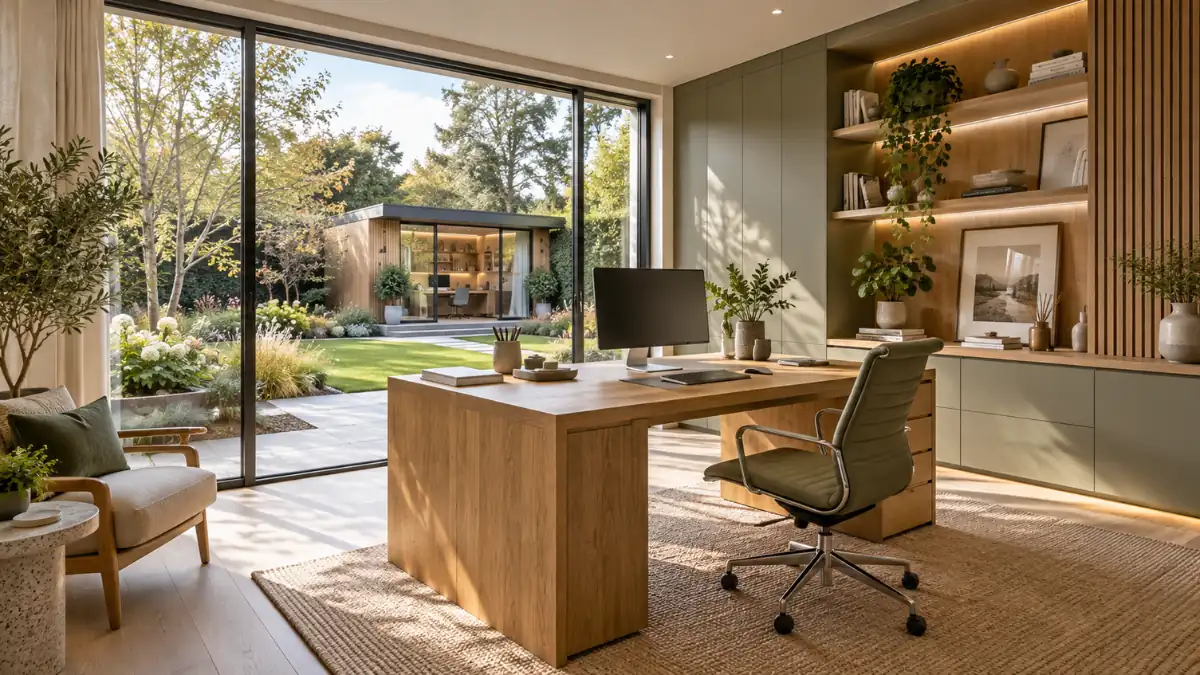
Timber desks, warm neutral paint colours and textured fabrics can soften the appearance of modern office furniture. For example, oak-effect shelving combined with matt black lighting creates a contemporary look without overwhelming a small room.
Adding a few plants or carefully selected decorative objects can make the office more welcoming. Nevertheless, practical desk space should remain the priority.
3. Modern luxury home office design
A more luxurious workspace might include fitted cabinetry, integrated lighting, acoustic panels and a large desk. Dark timber, muted green or charcoal finishes can create a sophisticated appearance.
Good-quality furniture and a carefully planned layout usually contribute more to the experience than expensive decoration alone.
4. Modern home office and library ideas
If you work with books, reference materials or paperwork, combining an office with a small home library can be particularly effective.
Floor-to-ceiling shelving maximises vertical space, while a comfortable reading chair provides somewhere to review documents away from your computer. Remember to secure tall shelving appropriately.
Small modern home office designs: making every metre count
A dedicated office does not have to occupy a large room. In many homes, a spare bedroom, landing alcove or quiet corner can provide enough space for a practical workstation.
The important point is to avoid overcrowding the available floor area. You should still be able to move comfortably, open storage and adjust your chair.
Modern home office ideas for spare bedrooms
A guest bedroom can work well as a combined office, particularly when visitors only stay occasionally.
- Position the desk where daylight is available without causing screen glare.
- Consider a sofa bed or compact guest bed.
- Use fitted storage to separate office materials from personal belongings.
- Choose matching furniture finishes for a coordinated appearance.
Modern home office wall design and narrow rooms
In a narrow room, a wall-mounted desk or slim workstation can preserve valuable circulation space. Open shelves may help, although excessive shelving can make a small office feel busy.
Light wall colours, simple window coverings and carefully positioned mirrors can help the room feel more spacious.
Modern home office layouts: which arrangement is best?
The right layout depends on whether you use one screen, several monitors, paperwork or specialist equipment. It also matters whether another person regularly shares the office.
Popular modern home office layout ideas
- Desk against a wall: A straightforward arrangement for compact spaces and single-screen working.
- Desk beside a window: Useful for daylight, provided reflections and glare can be controlled.
- L-shaped workstation: Suitable when you need separate areas for computer work and paperwork.
- Central desk layout: An option for larger rooms where visitors may sit opposite the desk.
- Two-person office: Parallel or opposing desks can work well when sound and privacy have been considered.
Rather than selecting a desk solely because it looks attractive, check its dimensions against the room. Leave sufficient space for the chair, drawers and comfortable access.
Modern home office furniture and desk positioning
An adjustable chair, suitable desk height and correctly positioned monitor can make a substantial difference during longer working sessions.
If you use a laptop for extended periods, an external keyboard, mouse and raised screen may help you achieve a more comfortable position. Employers also have responsibilities concerning display screen equipment where the relevant regulations apply.
Modern home office interior design: colours, materials and decoration
Modern office interiors often use a restrained colour palette with one or two contrasting finishes. However, the room should still feel like part of your home rather than a commercial workplace.
Modern home office paint ideas
- Warm white: Creates a bright backdrop for timber furniture.
- Soft grey: Works well with black, white or natural wood finishes.
- Sage green: Offers a gentle colour without dominating the room.
- Deep navy: Can create an attractive feature wall in a well-lit office.
- Muted beige: Complements contemporary furniture and natural textures.
Try paint samples at different times of day before deciding. Natural and artificial lighting can change the appearance of a colour considerably.
Modern masculine home office design and softer contemporary styles
Dark woods, leather-effect furniture, charcoal finishes and metal details are often used in masculine-inspired office interiors. Alternatively, lighter finishes, soft fabrics and warm colours can create a gentler contemporary appearance.
Neither approach is limited to a particular person. Instead, choose the materials and colours you enjoy while keeping the room practical.
Modern home office door ideas
Internal glazed doors can help borrowed light reach a home office, while solid doors usually provide greater visual privacy. Acoustic performance should also be considered if the room is used for regular video calls.
In some homes, changing a doorway or installing a different door may interact with fire safety requirements. This is particularly relevant where an existing fire-resisting door protects an escape route.
Modern home office lighting, storage and everyday comfort
Modern home office ceiling lighting ideas
General ceiling lighting should provide comfortable illumination without shining directly onto a monitor. Recessed fittings, pendants or surface-mounted lights can all work, depending on ceiling height and room proportions.
An adjustable desk lamp is particularly useful for paperwork and darker evenings. Meanwhile, blinds or curtains help control bright sunlight.
Modern home office storage ideas
Well-designed storage keeps the desk usable and reduces visual clutter. It can also help the room function as a guest bedroom or family space when you are not working.
- Use drawers for regularly accessed documents and stationery.
- Install shelves above the desk where safe and practical.
- Consider fitted cupboards for printers and bulky equipment.
- Provide concealed cable routes with suitable access for maintenance.
- Keep ventilation openings and electrical equipment unobstructed.
Heating, ventilation and acoustic comfort
A home office should remain comfortable throughout the year. Rooms that become too hot in summer or difficult to heat in winter can be frustrating to use.
Where you are creating a new room or making significant alterations, insulation, ventilation and heating arrangements should be considered together. Relevant Building Regulations may include Part L for energy efficiency and Part F for ventilation.
Soft furnishings, rugs and appropriate wall finishes can reduce echo. However, where outside noise or sound transfer between rooms is significant, more detailed acoustic solutions may be necessary.
Modern garden home office designs: creating a separate workspace
A modern garden office is an attractive option when there is insufficient space inside the house or when you want a clearer separation between work and family life.
Depending on the site, a garden building can accommodate a desk, shelving, storage and a small meeting area. Larger designs may also include a seating space or other facilities.
Modern garden office design ideas
- Contemporary timber cladding: Creates a natural finish that can sit comfortably within a landscaped garden.
- Simple rectangular layouts: Make furniture placement and storage easier to organise.
- Large glazed openings: Improve daylight, although solar gain and privacy require consideration.
- Built-in storage: Helps smaller garden offices remain practical.
- Insulated construction: Can support comfortable use throughout the year when appropriately designed.
Before choosing a design, consider the building's position in relation to boundaries, neighbouring properties, trees and existing garden space.
Our main garden rooms homeowner guide explains the wider planning considerations. You can also explore our dedicated workspace guide for garden buildings for further practical ideas.
Thinking about building a garden office?
We can help you check the proposed size, position and use against the relevant planning rules, and identify what drawings or approvals may be needed.
Do modern home office designs need planning permission?
Whether planning permission is required depends mainly on the type of work you intend to undertake, rather than the office's interior design style.
For example, decorating an existing room and installing freestanding furniture will not normally require planning permission. Building a new garden office or extending the house involves different considerations.
Converting an existing room into a modern office
Using an existing bedroom or study as a normal domestic office will not usually require a planning application. However, structural alterations, new windows, electrical work or changes affecting fire safety may require Building Regulations compliance.
A business that regularly receives customers, creates significant traffic or changes the residential character of the property may also raise planning issues.
Modern garden offices and permitted development
Some domestic outbuildings can be constructed under permitted development rights in England. These rights are subject to conditions, including restrictions on height, location and the amount of garden land covered.
For example, an outbuilding within two metres of a property boundary is generally subject to an overall height limit of 2.5 metres under the relevant householder permitted development rules.
Other restrictions also apply. Furthermore, permitted development rights may have been removed or restricted for an individual property, and not every form of business use qualifies.
For more detail, see our guide to garden office planning requirements.
Building Regulations for modern garden offices
Planning permission and Building Regulations are separate matters. A garden office may not need planning permission but could still require Building Regulations approval.
Certain small detached buildings can be exempt from some Building Regulations requirements. However, eligibility depends on matters including floor area, construction, proximity to boundaries and whether sleeping accommodation is provided.
Electrical installations also need to be safe and comply with applicable requirements, even where the building itself benefits from an exemption.
Our garden building compliance guide explains what homeowners should check before construction.
How to design a modern home office: step-by-step checklist
A little preparation can prevent unsuitable furniture purchases and costly design changes later.
Modern home office design checklist
| Step | What to do | Why it matters |
|---|---|---|
| 1 | Identify how the office will be used. | Determines desk size, equipment and privacy needs. |
| 2 | Measure the available floor space. | Helps furniture fit without restricting movement. |
| 3 | Plan desk and monitor positions. | Supports comfortable working and reduces glare. |
| 4 | Choose lighting and ventilation. | Improves everyday comfort. |
| 5 | Plan power sockets and storage. | Reduces clutter and trailing cables. |
| 6 | Select colours and finishes. | Creates a coordinated interior. |
| 7 | Check permissions where building work is proposed. | Helps avoid compliance problems. |
| 8 | Finalise the design and budget. | Reduces unexpected changes and costs. |
If your proposal involves a garden building or house extension, professional drawings may help establish accurate dimensions, assess the design and support any required applications.
Modern home office design mistakes to avoid
Some office arrangements look impressive in photographs but are less successful in everyday use. Before committing to a design, consider the following common mistakes.
- Choosing appearance over comfort: A stylish desk is of limited value if it does not suit your working posture.
- Ignoring daylight: Poor desk positioning can lead to uncomfortable reflections and screen glare.
- Underestimating storage: Insufficient cupboards and drawers quickly lead to clutter.
- Overcrowding the room: Large furniture can make movement difficult.
- Forgetting ventilation: A warm, poorly ventilated office may become uncomfortable during longer working sessions.
- Ignoring permissions: Garden offices, extensions and significant alterations should be checked before work begins.
Creating a modern home office that works for you
The best modern home offices designs are not necessarily the largest or most expensive. They are the spaces that bring together comfort, good lighting, sensible storage and a layout that supports everyday working.
Whether your preference is a minimalist study, a contemporary office and library or a dedicated garden workspace, begin with the practical requirements before selecting decorative finishes.
If the project involves new construction or structural alterations, checking planning permission and Building Regulations requirements early can help you avoid unnecessary complications.
FAQs: modern home offices designs
What is modern home office design?
Modern home office design focuses on practical layouts, comfortable furniture, effective lighting and uncluttered interiors. Contemporary workspaces often incorporate neutral colours, natural materials, fitted storage and flexible furniture.
How do I design a modern home office in a small room?
Start by measuring the room and identifying essential equipment. Choose a suitable compact desk, make use of vertical storage and avoid oversized furniture. Careful lighting and simple colours can help a small office feel more spacious.
What are the best modern home office colours?
Warm white, soft grey, sage green, muted beige and navy are popular contemporary choices. The best colour depends on available daylight, room size and personal preference. Test paint samples before deciding.
How should I arrange my modern home office desk?
Position your desk where you can work comfortably without excessive screen glare. Allow adequate room for your chair and equipment, and keep regularly used items within easy reach. An adjustable chair and correctly positioned monitor are particularly important.
Can I turn a spare bedroom into a home office?
Yes. Using an existing bedroom as a normal domestic office will not usually require planning permission. However, structural changes or certain electrical and building works may need Building Regulations compliance.
Do modern garden offices need planning permission?
Not always. Some domestic garden buildings qualify for permitted development in England, provided the relevant conditions are met. Building height, position, property restrictions and the intended use must all be considered before construction.
Can a modern garden office be used all year round?
Yes, provided it has been designed appropriately for year-round use. Good insulation, suitable glazing, effective ventilation and adequate heating are important. The construction must also meet any applicable regulatory requirements.
Is a garden office better than a spare bedroom office?
A garden office may offer greater privacy and separation from household activities. However, it normally involves more construction work and expense than adapting an existing room. The right option depends on your space, budget, working needs and applicable permissions.
Next steps and useful Plans Made Easy guides
If you are considering more than an interior makeover, the following guides explain the planning and building requirements that may apply to your project.
- Garden Rooms: Do You Need Planning Permission? – the main pillar guide covering garden building considerations.
- Inspiring Home Offices – ideas for workspaces in garden rooms, extensions and existing homes.
- Garden Buildings Office Guide – planning, costs and design considerations.
- Garden Office Planning Permission – how permitted development and planning applications differ.
- Building Regulations for Garden Rooms – compliance considerations for new garden spaces.
- Garden Shed Home Office – practical considerations when adapting an existing garden building.
- Heating a Garden Room – ways to improve comfort throughout the year.
- Best starting point Plan around daily working needs, equipment and available floor space.
- Small office solutions Compact desks, vertical storage, simple furniture and effective lighting.
- Popular design styles Minimalist, contemporary timber, modern luxury and office-library combinations.
- Important comfort factors Ergonomic furniture, daylight, ventilation, heating and acoustic privacy.
- Planning permission Normally unnecessary for simple domestic interior decoration, but may be required for new buildings or certain alterations and uses.
- Garden office height Under relevant permitted development rules, the maximum overall height is generally 2.5m when an outbuilding is within 2m of a boundary.
- Building Regulations Requirements depend on the construction, floor area, use and nature of the proposed work.
- Professional guidance Check planning restrictions and construction requirements before ordering or building a new garden workspace.
Official guidance and further reading
For additional information, these independent official sources provide useful guidance on planning requirements, home working and workplace design.
- Planning Portal – Outbuildings and permitted development guidance – national guidance on domestic outbuilding restrictions in England.
- GOV.UK – Planning permission in England and Wales – government information about when planning permission may be necessary.
- Office for National Statistics – Who has access to hybrid work in Great Britain? – research published in June 2025 on working arrangements.
- Health and Safety Executive – Managing display screen equipment for home workers – practical guidance on comfortable and safe home workstations.
Ready to plan your ideal home office?
If your project involves a new garden office, extension or building alterations, Plans Made Easy can help with planning advice, suitable drawings and the approvals you may need.

Performance Verified ✅
This page meets PME Optimisation Standards — achieving 95+ Desktop and 85+ Mobile PageSpeed benchmarks. Verified on

