
Share this post:
Quick summary: How to Renovate a House
If you’re searching for How to Renovate a House in the UK, the biggest win is doing the “boring” planning first. A clear scope, realistic budget, and the right approvals (planning permission, permitted development checks, Building Regulations and Party Wall where relevant) will save you the most time, stress, and money later.
- Start with a proper survey (especially for older homes) so you don’t miss damp, movement or unsafe electrics.
- Decide your scope and priorities — safety and structure first, finishes last.
- Check permissions early: some “internal” work still triggers Building Regulations, and protected homes (listed/conservation areas) have extra rules.
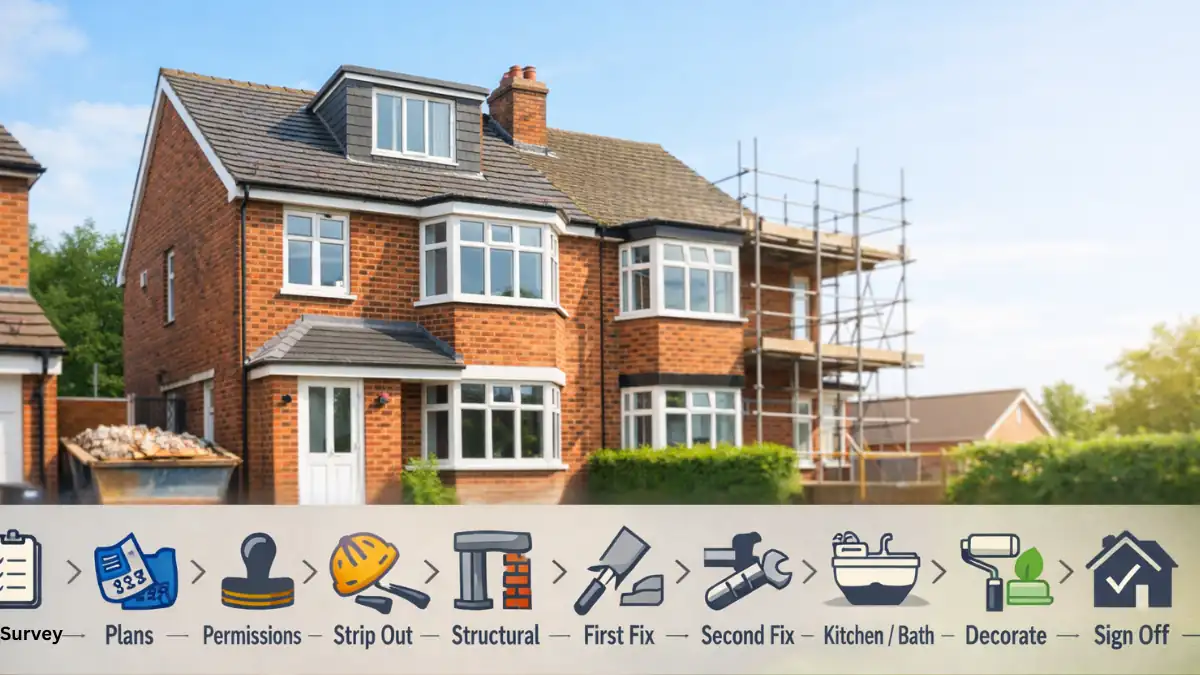
- Renovate in the right order — strip out, first fix, plastering, then kitchens/bathrooms, then decorating.
- Keep a contingency (often 10–15%) because most renovations uncover surprises once walls and floors open up.
In the guide below, we walk you through a practical step-by-step approach we use with homeowners — including what to do first, what you can DIY safely, where Building Control fits in, and how to avoid the common “gotchas” that cause delays.
Not sure where to start with your house renovation?
Tell us what you’re changing and our team will flag the likely approvals, drawings, and next steps — before you spend money in the wrong order.
How to renovate a house: what to do first
Most renovation problems don’t come from “bad taste”. Instead, they come from doing work in the wrong order, skipping checks, or discovering expensive issues after you’ve already committed. So if you’re wondering how to renovate a house without it taking over your life, start with three essentials: information, scope, and a plan.
1) Get the right surveys before you design anything
A renovation is only as good as the condition of what you’re building on. Before layouts, tiles or kitchen quotes, you want confidence that the basics are sound.In practice, that usually means:
- Condition survey (especially for older properties): damp, roof, movement, ventilation, timber condition
- Drainage checks if you’re moving kitchens/bathrooms or planning an extension
- Electrical assessment if the consumer unit is old or you see lots of DIY additions
- Asbestos survey where the age and materials make it likely (common in garages, soffits, textured coatings and older floor tiles)
2) Define your scope (what you are and aren’t doing)
Homeowners often say “we’re doing a full renovation”, but that can mean anything from decorating and a new kitchen to structural work, re-wiring, re-plastering and new windows.A simple way to make decisions faster is to write your scope in three lists:
- Must-do (safety, leaks, structure, compliance issues, anything stopping you living safely)
- Should-do (layout improvements, insulation upgrades, ventilation, heating improvements)
- Nice-to-have (higher-end finishes, landscaping, feature lighting, smart home extras)
3) Decide if you’re renovating while living in the house
Renovating a house while living in it can work, but it changes everything: how you phase the build, where you store materials, and which rooms you tackle first.If you plan to stay put, it helps to:
- Keep one working bathroom as long as possible
- Set up a temporary kitchen (kettle, microwave, sink access) before the main one is stripped out
- Plan dusty work (chasing walls, sanding floors) in tight phases
- Agree working hours and a “clean-down routine” with your builder
How to renovate a house in the right order (the simple sequence)
If you only take one thing from this guide, make it this: do the messy, structural, and hidden work first, then work towards finishes.A typical renovation order looks like this:
- Surveys + scope
- Design + drawings (where needed)
- Permissions + approvals (planning / lawful development / Building Control route)
- Strip out (carefully, with asbestos awareness)
- Structural work (steel beams, alterations, chimney breast changes, new openings)
- First fix (electrics, plumbing, heating pipework, ventilation ducting)
- Insulation + airtightness upgrades (where part of the scope)
- Plastering (and drying time)
- Second fix (sockets, radiators, sanitaryware, doors, skirting)
- Kitchens/bathrooms
- Decorating + flooring
- Snagging + sign-off + paperwork
How to renovate a house legally: planning permission, PD and Building Regs
A lot of renovation work is internal and doesn’t need planning permission. However, it’s easy to assume “no planning” means “no rules”, which is where homeowners get caught out.In the UK (and we’re assuming England here), you may need to think about:planning permission, permitted development (PD), Building Regulations, and sometimes the Party Wall etc. Act.
When planning permission might apply during a renovation
Planning permission tends to come into play when you change the outside of the house, change the use, or do work that affects the street scene or neighbours.Common triggers include:
- Extensions (rear, side, wrap-around)
- Loft conversions with dormers facing certain directions
- New windows/doors in certain protected contexts
- Cladding, render changes, or significant external re-modelling
- Work in a conservation area or to a listed building
If you’re unsure whether permission is required for what you’re changing, this PME guide is a good starting point:working out whether you need permission for your project.
Permitted development (PD) and lawful development certificates
Some extensions and alterations can be allowed under permitted development. Even then, many homeowners choose to apply for a Lawful Development Certificate for peace of mind and future saleability.If your renovation includes an extension, our team often recommends checking PD properly before committing to layout decisions.
Building Regulations and Building Control — the part people forget
Building Regulations are about safety and performance: structure, fire safety, insulation, ventilation, electrics, drainage, stairs and more.During a renovation, Building Regs commonly apply to:
- Structural changes (removing walls, new openings, steel beams)
- Electrical work (Part P — certain work must be certified)
- New bathrooms/kitchens (ventilation, drainage changes)
- Replacing windows/doors (performance and safety glass rules)
- Loft conversions (fire safety, stairs, structure)
- Insulation upgrades (Part L where relevant)
If you want a plain-English overview, these two PME guides help homeowners get the basics right:what Building Regulations coverandhow Building Control works (and how to pass inspections).
Worried you’ll miss a permission or Building Regs step?
We can sanity-check your renovation scope and tell you what drawings, approvals and inspections are likely — before work starts on site.
How to renovate a house on a budget without cutting corners
Doing a renovation cheaply is rarely the goal. Doing it efficiently is.The easiest way to waste money is to change your mind mid-build or fix problems that should have been identified early.If you need to renovate on a tighter budget, focus on decisions that reduce rework:
Budget move #1: fix the “silent money pits” first
Damp, leaks, poor ventilation, rotten timbers, unsafe wiring, and drainage issues don’t look exciting — but they can destroy finishes and create repeat costs.Even with a small budget, deal with these early so the work you do lasts.
Budget move #2: simplify the layout, not the fundamentals
Structural changes and moving drains tend to be expensive. Sometimes, you can get 80% of the improvement by:
- keeping the kitchen roughly where it is (but improving storage and lighting)
- upgrading insulation and ventilation while walls are open
- using standard-sized doors, windows and kitchen carcasses
- choosing durable mid-range finishes and spending money where it matters (worktops, taps, floor durability)
Budget move #3: phase the renovation properly
If you can’t do everything at once, phase work so you don’t undo it later. For example:
- Do electrics and plumbing before plastering and decorating
- Plan future extension/loft work before you redesign the ground-floor layout
- Future-proof with spare cabling routes, capped pipework, and sensible consumer unit capacity
How to renovate a house step-by-step (UK checklist table)
Here’s a simple, homeowner-friendly sequence you can use to plan your project. It’s written to help you stay organised, speak to builders confidently, and avoid missing compliance steps.
Renovation checklist: what to do and when
| Stage | What you do | Why it matters |
|---|---|---|
| 1. Surveys | Condition checks, asbestos awareness, drainage/electrical assessments as needed | Avoids designing around hidden defects and protects your contingency |
| 2. Scope + brief | Must/should/nice-to-have list, priorities, approximate budget, time constraints | Stops “scope creep” and helps you compare quotes fairly |
| 3. Permissions | Check planning/PD, consider lawful development certificate, confirm Building Regs route | Prevents enforcement headaches and delays mid-build |
| 4. Drawings | Measured survey + existing/proposed plans; add Building Regs drawings if needed | Accurate drawings reduce “allowances” and surprise costs in builder quotes |
| 5. Tender & contract | Get comparable quotes, agree scope, confirm programme, payment stages and variations process | Reduces disputes and keeps control of costs |
| 6. Build phase | Strip out → structural → first fix → plaster → second fix → kitchens/bathrooms → finishes | Doing it in order avoids rework and protects your finishes |
| 7. Sign-off | Building Control inspections, completion paperwork, certificates, snagging | Protects you when selling and gives confidence the work is compliant |
How to renovate a house without delays: the big renovation gotchas
Renovations become stressful when decisions stack up and the site programme slips. Most delays come from a small set of predictable issues.Here are the ones we see most often — and what to do instead.
Gotcha #1: starting demolition before the plan is final
If you strip out too early, you can end up paying for temporary works, redesign, or rushing decisions under pressure.Finalise layouts, kitchen/bathroom positions, and key product lead times before the project becomes dusty chaos.
Gotcha #2: unclear quotes and “missing items”
A cheap quote is only useful if it’s complete. Ask for clarity on:
- what’s included in the price (and what’s excluded)
- who supplies fixtures (and whether fitting is included)
- rubble removal, skips, protection, and making good
- how changes/variations are priced and approved
Gotcha #3: forgetting the paperwork you’ll need later
Even if the work looks great, missing certificates can become a headache when you sell.Keep a simple folder for completion documentation, warranties, and relevant compliance certificates.This PME guide explains what’s worth keeping:a homeowner checklist of certificates and compliance documents.
Renovate vs refurbish vs repair: what’s the difference?
Homeowners use these terms interchangeably, but they can imply different scopes (and therefore different risks, budgets and approvals).A simple way to think about it:
- Repair = fix what’s broken (leaks, damaged plaster, roof repairs, replacing failed components)
- Refurbish = improve finishes and fittings (new kitchen/bathroom, redecorating, flooring, lighting)
- Renovate = refresh the home more comprehensively (often including layout changes, upgrades, and sometimes structural works)
In other words, “how to refurbish a house” might be mostly a finishes project, whereas How to Renovate a House often includes compliance checks, design decisions, and work that needs Building Control involvement.
FAQs: How to Renovate a House
Is £40k enough to renovate a house in the UK?
Sometimes — but it depends on what “renovate” means for your property. £40k can cover a solid refurbishment (for example, redecoration, flooring, some electrical improvements, and a mid-range kitchen or bathroom) if the structure is sound and you’re not moving lots of drainage or doing major building work. However, if you need a full rewire, new heating system, significant plastering, roof work, or structural changes, £40k can disappear quickly. A survey and a clear scope are the best way to answer this for your home.
Is renovating a house worth it in the UK?
It often is, especially if you’re solving functional problems (space, layout, damp, poor insulation, outdated electrics) and you plan to live there for several years. The key is to match spend to the property and area, and to avoid over-improving. If you’re considering extensions or big changes, it can help to read our guide onhow extensions fit into planning and overall project decisions.
How do people get money to renovate a house?
Common routes include savings, remortgaging, home improvement loans, or staged/phased renovations. If you’re borrowing, it’s worth being cautious about “best case” budgets — renovations nearly always uncover something once you open up. A sensible scope and a contingency can stop finance stress later.
How can I renovate a house with no money (realistically)?
If budget is extremely tight, focus on safety and preventing further damage first: stopping leaks, improving ventilation, basic heating reliability, and essential electrical safety. Then phase everything else. “No money” renovations often mean time and effort instead: careful DIY preparation (where safe), buying second-hand materials, and doing rooms one at a time. Just avoid DIY on regulated areas like electrics unless properly certified.
What order should I renovate a house in?
In most homes: surveys and scope first, then design and approvals, then strip out, then structural changes, then first-fix electrics/plumbing, then plastering, then second fix, then kitchens/bathrooms, then decorating and flooring. Doing it in this order helps you avoid damaging new finishes and prevents expensive rework.
How much does it cost to renovate a house?
Costs vary massively because “renovation” can mean anything from a light refurb to major structural work. A good approach is to break your budget into categories (structure, services, insulation/ventilation, finishes, professional fees, and contingency) and get like-for-like quotes. If your project includes work that needs compliance checks, our guides onwhat Building Control inspections look forandhow Building Regulations approval workscan help you plan with fewer surprises.
Is renovating a house stressful?
It can be — but most stress comes from uncertainty and constant decisions. You can reduce it by finalising key choices early (layout, kitchen/bathroom positions), keeping one liveable zone if you’re staying in the house, and agreeing how changes are handled (scope, pricing, and programme). A simple weekly plan (what’s happening, what decisions are needed, what’s arriving) also makes a huge difference.
How not to renovate a “haunted” house?
We’ll keep this one practical: don’t skip surveys, don’t ignore damp and ventilation, and don’t assume “quirky old house smells” will disappear after decorating. Older properties often need sensible fabric-first improvements (ventilation, insulation where appropriate, careful repairs) before finishes. In short: treat the cause, not the symptoms.
Want a second opinion before you commit?
Share your renovation scope and we’ll help you spot missing steps, likely approvals, and the parts that typically cause budget blowouts.
Next steps & useful guides
If you’re planning a renovation and want to go deeper on the approvals and drawings side, these PME guides are the most useful next reads:
- Understanding Building Regulations for home projects
- How Building Control works (and how to pass inspections)
- What drawings you need for Building Regulations
- When Party Wall notices are needed (and how the process works)
- When structural calculations are required
- Typical planning timelines and what can slow them down
- What a good scope of work looks like for homeowners
- Best first stepStart with surveys and a clear scope — you’ll save more than you spend.
- Right orderStructural + first fix first, finishes last. Don’t decorate before electrics/plumbing are finalised.
- Approvals to watchPlanning (or PD/LDC) for external changes; Building Regulations for structure, electrics, insulation, drainage and fire safety.
- Budget safety netKeep a contingency (often 10–15%) for hidden issues uncovered during strip-out.
- PaperworkKeep completion and compliance documents — they matter for sign-off and future sale.
Useful external guidance (official sources)
- Planning Portal guidance (national overview)
- GOV.UK planning permission overview (England & Wales)
Ready to move your renovation forward?
Plans Made Easy can prepare compliant plans, help you choose the right approvals route, and guide you from idea to sign-off with less stress.

Performance Verified ✅
This page meets PME Optimisation Standards — achieving 95+ Desktop and 85+ Mobile PageSpeed benchmarks. Verified on

