
Share this post:
Quick summary: Home Offices UK
If you’re researching Home Offices UK, the big question is usually whether your new workspace counts as permitted development (no planning application needed) or whether you’ll need planning permission. For many homeowners, a modest garden workspace can fall under permitted development — but size, height, location and how you use it can quickly change that.
- Planning: often not needed for smaller outbuildings, but rules vary and restrictions apply (especially in conservation areas and listed buildings).
- Building Regulations: may apply depending on structure, electrics, insulation, fire safety and whether it’s “habitable”.
- Costs: basic “garden office” builds can be lower-cost, but year-round comfort (insulation, heating, glazing, power and drainage) usually increases the budget.
- Best next step: sense-check your design early so you don’t build something that the council later treats as non-compliant.
Below, we’ll walk you through planning rules, typical cost ranges, and practical design choices so you can create a home workspace that’s comfortable, compliant, and unlikely to cause issues later.
Not sure if your garden workspace needs planning permission?
Tell us what you’re thinking and we’ll sense-check it against permitted development rules and local constraints before you spend money on a build.
Quick summary: Home Offices UK
Most Home Offices UK projects are essentially outbuildings (a detached structure in the garden). Many can be permitted development, but it depends on height, footprint, placement and whether it’s genuinely incidental to the enjoyment of the house (for example, a personal workspace rather than a separate dwelling).
The safest approach is to confirm the planning position early — and if you want future-proof peace of mind, consider a Lawful Development Certificate for permitted development builds.
Home Offices UK: what counts as a “home office” for planning?
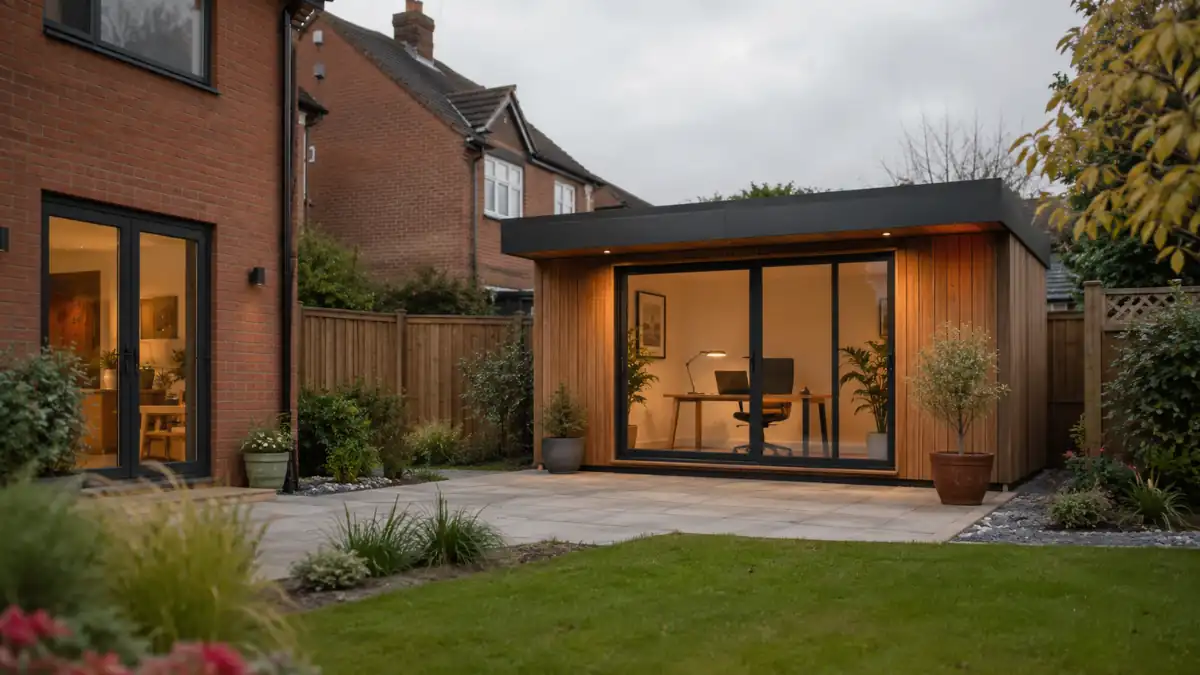
When homeowners search for Home Offices UK, they’re usually picturing a garden workspace: quiet, separate from the main house, and comfortable enough to use in winter. From a planning point of view, councils tend to look at it as an outbuilding — and what matters is not the label (“office”), but what it is and how it will be used.
“Incidental use” in plain English
Many garden workspaces can be treated as incidental to the enjoyment of the dwellinghouse — meaning it supports normal residential life. A typical example is a home office used by the household during the day.
Problems tend to arise if the building starts to look and function like something else (for example, sleeping accommodation, a self-contained unit, or a business that increases visits/traffic).
Key differences: shed vs studio vs garden room workspace
Not all “garden offices” are created equal. The more it behaves like a proper room, the more you need to think about comfort, compliance, and whether it changes the planning position.
Simple timber shed-style workspace
- Lower cost and quick to install.
- Often fine for occasional use, but can be cold/damp without proper insulation and ventilation.
- May still need compliant electrics if you’re running power.
Insulated garden studio / modern pod
- Typically insulated walls/roof/floor with double glazing.
- Better for year-round working, video calls, and equipment.
- Usually where questions about building control start to come up.
Garden room-style workspace
- Often larger, more “room-like”, sometimes with plumbing or a WC.
- More likely to trigger planning or Building Regulations considerations.
- Best approached like a small building project rather than a “shed upgrade”.
Planning routes: permitted development, householder planning, and certificates
Most homeowners fall into one of three routes. Which one applies depends on your property and proposal.
1) Permitted development (PD)
If your proposal meets the outbuilding criteria, you may not need to submit a planning application. However, PD is not a “free-for-all” — there are limits around height, placement, and coverage of the garden.
2) Householder planning application
If the proposal falls outside permitted development (or your PD rights are restricted), you may need a full householder application. This is common when the building is larger, closer to boundaries, in a sensitive area, or there are existing constraints on the property.
3) Lawful Development Certificate (recommended for peace of mind)
If you’re building under permitted development and want to avoid future disputes when you sell, a Lawful Development Certificate can provide written confirmation from the council that the proposal is lawful.
If you want the bigger-picture garden room angle, our pillar guide covers it here:Read our main guide to garden rooms.
What a good spec includes (so it’s usable year-round)
A home workspace that’s genuinely comfortable through a UK winter needs more than a nice-looking exterior. These are the features that most homeowners end up grateful they budgeted for.
Comfort essentials
- Insulation to walls/roof/floor (not just “some insulation”).
- Double glazing and decent seals to stop draughts.
- Ventilation (especially if you’re on calls all day).
- Heating that makes sense for the space (often electric options are simplest).
- Lighting that works for work, not just ambience.
Practical extras that reduce hassle
- Reliable power (enough sockets, proper cable sizing, safe installation).
- Internet planning early (mesh, hard-wired, or point-to-point).
- Sound control (especially near roads, neighbours, or if you record calls).
- Secure doors/windows if you’re leaving equipment inside.
Quick costs snapshot: what UK homeowners typically budget
- Basic workspace build: lower-cost options exist, but comfort can be limited in winter without upgrades.
- Year-round insulated workspace: typically a higher spend due to insulation, glazing, electrics and finish.
- With WC / plumbing: budget increases again due to drainage, water supply, ventilation and compliance checks.
Costs vary hugely by size, spec, access, ground conditions and whether you’re using a kit/supplier vs a bespoke build. If you want a proper budget, start with an outline spec and a simple plan.
Who should prepare drawings (and what councils expect)
Even if you’re buying a “ready-made” garden office, you may still need clear drawings if you’re applying for planning (or for a certificate). Councils want to understand the proposal quickly and unambiguously.
When you usually need drawings
- If you’re making a householder planning application.
- If you want a Lawful Development Certificate for a permitted development build.
- If you’re in a sensitive area (or there are known restrictions).
- If you want contractors to quote accurately and avoid “extras” later.
Costs and timelines: realistic budgets for UK homeowners
The reason budgets jump around so much is simple: the difference between a garden “box” and a genuinely comfortable, secure workspace is mostly in the specification and services.
Typical timeline (rough guide)
- Early design + checks: a short stage to confirm constraints, position and likely planning route.
- Drawings and submission (if needed): preparing the set and uploading to the council.
- Decision period: varies by route and local authority workload.
- Build phase: depends on size, access and groundworks.
Not sure if your idea fits Permitted Development?
We’ll check your project against PD rules and let you know if you need a full planning application.
Step-by-step: from idea to compliant build
If you want a smooth path (and fewer surprises), follow a simple sequence. It keeps decisions clear and avoids redesign later.
HowTo checklist: planning a garden workspace
- Define the use. Is it just a personal workspace, or will clients visit? Any sleeping use? Any plumbing?
- Pick a location in the garden. Think about neighbours, privacy, daylight, access, and distance from the house for electrics/internet.
- Sense-check planning constraints. Conservation area? Listed building? Previous planning conditions? (These can change everything.)
- Decide the planning route. Permitted development, certificate, or householder planning.
- Agree an outline spec. Insulation, glazing, heating, ventilation and power requirements.
- Get drawings (if needed). Clear, scaled plans reduce delays and questions.
- Confirm Building Regulations triggers. Especially if you’re insulating, adding fixed heating, electrics or plumbing.
- Build with compliance in mind. Document what you do (photos/specs) in case you need evidence later.
Common pitfalls (and how to avoid council headaches)
Mixing up planning permission and Building Regulations
These are separate systems. You can sometimes be fine on planning but still need to meet Building Regulations (or vice versa).
Designing around a “supplier brochure” rather than your site
A design that works on a flat, open plot may not work in a real garden with level changes, trees, drainage issues or neighbour relationships.
Not thinking about neighbours and privacy
Even if you meet technical rules, overlooking and noise can still trigger complaints. Simple design choices help:
- Place windows thoughtfully (and consider obscured glazing where needed).
- Use screening/planting rather than relying on “we won’t use it much”.
- Consider sound insulation if you’re on calls all day.
Technical details: insulation, electrics, fire safety and drainage
Insulation and condensation (the comfort deal-breaker)
In UK gardens, condensation is the quiet killer of “cheap” builds. Good insulation plus ventilation is what keeps the space comfortable and protects finishes and equipment.
Electrics and safety
Getting power out to the garden is common — but it needs to be designed and installed safely. If you’re adding a consumer unit, fixed heating, lots of sockets, or external works, you may trigger Building Regulations requirements around electrical safety.
Drainage and a WC
Adding a toilet or kitchenette is often where complexity increases. It can involve trenching, connection points, ventilation, and sometimes additional permissions depending on your setup. It’s still doable — just better planned early.
Local council quirks to be aware of
Some councils are stricter about how they interpret outbuildings, especially in tight urban gardens, conservation areas, or where neighbours are close. If your proposal is borderline, the wording and clarity of your drawings can make a real difference.
FAQs: Home Offices UK
Do Home Offices UK projects usually need planning permission?
Many garden workspaces can be permitted development, but it depends on height, footprint, placement and whether your property has restrictions (for example conservation area, listed status, or planning conditions). If you want certainty, a Lawful Development Certificate is a sensible option.
What’s the difference between a garden office and a garden room?
In practice, “garden office” is often a smaller workspace, while “garden room” can imply a more room-like build (insulation, heating, sometimes plumbing). Planning decisions are based on what you’re building and how it will be used, not the marketing name.
Can I run a business from my garden workspace?
Working from home is usually fine, but if your use changes the character of the property (client visits, deliveries, noise, signage or staff), it can raise planning considerations. If your business use is more than “incidental”, it’s worth getting advice.
Do I need Building Regulations for a garden office?
It depends on the specification and how the space is built and serviced. Electrics, insulation, fixed heating, plumbing and certain construction approaches can bring Building Regulations into play. It’s best to confirm early so you don’t need expensive changes later.
Should I get a Lawful Development Certificate for permitted development?
If you want extra peace of mind (especially for future sale), yes. It provides written confirmation from the council that your proposal was lawful at the time of the decision, provided you build it as approved.
Want a quick “yes/no” on your garden workspace idea?
Share your sketch, supplier spec, or rough dimensions and we’ll tell you the likely planning route and what to watch out for.
Next steps & useful guides
If you’re moving from “idea” to “build”, these related guides on Plans Made Easy can help you avoid delays and keep things compliant:
- Garden rooms (planning rules and when you need permission)
- Planning permission explained for homeowners
- A simple checklist to work out if you need permission
- What to budget for across the full approval process
- When you need Building Regulations drawings and what they cover
- How to prepare a sensible plan set before you start building
- Most common planning routeMany garden workspaces can be permitted development, but restrictions apply and not every property qualifies.
- When planning is more likelySensitive locations, restricted PD rights, larger footprints/heights, or a use that looks more than “incidental”.
- Best “peace of mind” optionA Lawful Development Certificate for PD builds (helpful for future sale and reducing disputes).
- Comfort essentialsInsulation + ventilation + decent glazing are what make it feel like a real room in UK weather.
- Most common mistakeAssuming “it’s a small office” means no rules apply — planning and Building Regulations are separate checks.
- Best next stepSense-check the planning route early, then lock in a spec that matches year-round use and budget.
Want us to sense-check your proposal? Contact Plans Made Easy for a quick planning route check.
Official guidance (always worth checking)
For the most up-to-date national guidance, start here:
- Planning Portal – guidance on permitted development and applications
- GOV.UK – planning permission (England and Wales)
Conclusion: the safest way to get a compliant home workspace
A well-designed garden workspace can be one of the best upgrades you make to your home — but the easiest way to create stress is to build first and ask planning questions later. If you confirm the planning route early, choose a sensible spec, and keep the use clearly residential, you greatly reduce the risk of complaints or council pushback.
If you’d like a calm, practical check of your idea, our team can review your proposal, advise on the most likely planning route, and help with drawings and submissions where needed.
Ready to move your project forward?
Plans Made Easy can prepare compliant plans, manage submissions, and guide you from idea to approval.

Performance Verified ✅
This page meets PME Optimisation Standards — achieving 95+ Desktop and 85+ Mobile PageSpeed benchmarks. Verified on

