
Share this post:
Quick summary: Garden sheds home offices
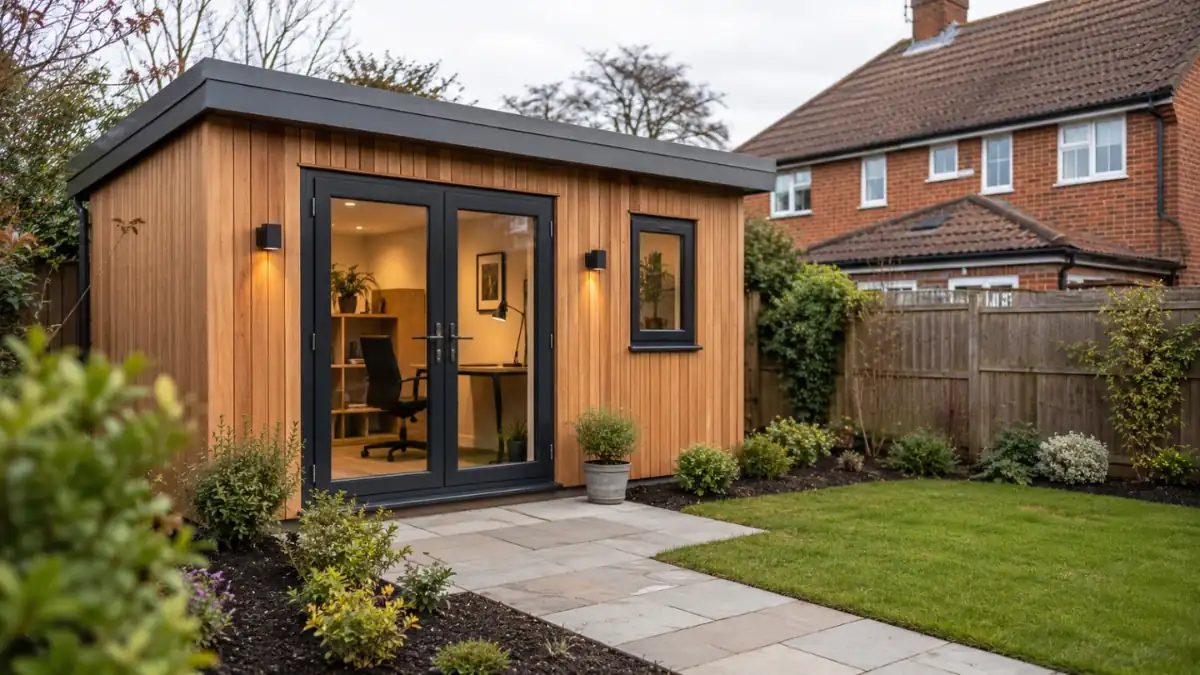
If you’re thinking about Garden sheds home offices, the good news is that many “shed office” style projects can be done under Permitted Development (no full planning application) — as long as you stay within the outbuilding rules on height, position and overall garden coverage.
- Planning permission: Often not needed for a garden office shed if it meets outbuilding PD limits (especially height and location).
- Building Regulations: Often not required for small detached buildings, but size, distance to boundaries and intended use matter (sleeping use is the big trigger).
- 2m boundary rule (planning): If it’s within 2m of a boundary, the overall height limit is typically 2.5m.
- Big “gotcha”: Using it as a “home office” is usually fine — using it as separate living accommodation is where councils and Building Control take a much closer look.
This guide explains how to keep your garden shed office compliant, when you might want a Lawful Development Certificate for peace of mind, and what to do if you’re in a conservation area or dealing with tricky neighbours.
Unsure if your garden office shed needs planning permission?
Tell us what you’re building and where it will sit in the garden — we’ll sense-check it against Permitted Development and flag any likely council issues.
Quick summary: Garden sheds home offices
Most Garden sheds home offices can be built without a full planning application if they meet the outbuilding limits for Permitted Development — but height, boundary distance, and how you use the space are what catch people out.
Planning and Building Regulations are separate checks. Even if you don’t need planning permission, you may still need to think about Building Control (especially for electrics, insulation expectations, and fire safety near boundaries).
Garden sheds home offices: what usually needs permission (and what doesn’t)
A “garden shed home office” sits in the same bucket as many other domestic outbuildings — meaning it often falls under Permitted Development (PD). In simple terms, PD is a set of rules that lets you build certain things without submitting a full planning application, as long as you stay within the limits.
When a shed office is usually fine under Permitted Development
- It’s a single-storey outbuilding used for normal domestic purposes (including working from home).
- It’s positioned to the side or rear of the house (not in front of the principal elevation).
- It stays within the usual height limits — including the key boundary rule.
- It doesn’t take you over the overall limit on how much of your garden can be covered by buildings.
The planning rule that catches most people: height near boundaries
If your outbuilding sits within 2 metres of a boundary, the maximum overall height is typically 2.5 metres. If you want to go higher (for example a pitched roof), you usually need to keep it further away from the boundary and still stay within the broader PD height limits. (Planning Portal sets these out clearly.)
Garden office shed vs garden room vs extension (key differences)
Homeowners often search for Garden sheds home offices when they really mean: “What’s the simplest way to add a warm, usable workspace without months of disruption?” Here’s the practical difference:
Related comparisons (quick decision guide)
- Garden office vs extension: A garden office usually avoids internal building work and can be quicker; an extension often adds more value and feels more integrated, but is more disruptive.
- Shed office vs garden room: “Shed office” tends to imply a simpler structure; “garden room” often means a higher-spec build (better insulation, electrics, glazing, heating).
- DIY build vs professional install: DIY can save money, but compliance, durability and finish quality are where problems tend to appear.
If your long-term plan is a proper year-round room with plumbing, higher heat output, or “annexe” style use, it’s worth getting advice early — those projects often move beyond the simple outbuilding category.
Planning routes: Permitted Development, LDC, and full planning
There are three common “routes” for a garden shed home office — and choosing the right one can save you stress later.
1) Permitted Development (often the best fit)
If your proposed outbuilding meets the PD rules, you can normally proceed without applying for planning permission. That said, many homeowners still want written confirmation (especially if they’ll sell in the future).
2) Lawful Development Certificate (LDC) for peace of mind
An LDC is a formal decision from the council confirming your build is lawful under Permitted Development. It’s not mandatory, but it can be very helpful for:
- avoiding disputes later (neighbours / future buyers),
- protecting you if the council queries it in the future,
- giving installers and builders a clear compliance target.
3) Full planning permission (when PD won’t cover it)
You may need a householder planning application if the shed office:
- exceeds the PD height/position limits,
- sits somewhere PD doesn’t allow (often the front garden),
- is in a restricted area with PD limitations,
- looks more like independent accommodation (or materially changes how the property is used).
What drawings and details you actually need
Whether you’re applying for an LDC, submitting full planning, or simply wanting a clean paper trail, the same core information tends to matter.
Typical drawings for a garden shed home office
- Site location plan and block plan showing the position in the garden.
- Existing and proposed drawings (even for an outbuilding, this is often expected for applications).
- Elevations showing height, roof type, doors/windows and finishes.
- Dimensions clearly marked (including overall height).
Who should prepare plans for a shed home office?
For a straightforward shed office, you don’t always need a full architectural design process. What you do need is someone who understands how councils interpret outbuilding rules and can produce clean, consistent drawings.
- Simple “off-the-shelf” installs: Many suppliers provide standard drawings — but check that they match your site and boundary distances.
- Made-to-measure builds: A plan-drawing service, architectural technologist or designer can tailor the design around PD limits.
- Complex sites / restrictions: If you’re in a conservation area, dealing with levels, trees, or neighbour constraints, proper planning input is worth it.
Costs & timelines: realistic expectations
Garden offices vary massively — from basic insulated timber sheds through to fully finished “mini studios”. Most budget surprises come from foundations, electrics, heating, glazing upgrades, and internal fit-out.
Quick costs snapshot (typical budget headings)
- Base structure: entry-level to premium depending on size/spec.
- Groundworks: base/foundation type, access, drainage considerations.
- Electrics: armoured cable run, consumer unit upgrades, sockets/lighting, Part P compliance.
- Insulation & heating: year-round comfort is where “shed” becomes “room”.
- Planning/admin: drawings, LDC (optional), and any required reports.
The smoothest projects are the ones where the layout, electrics and insulation spec are decided early — before ordering the building.
Step-by-step: how to plan a compliant garden shed office
HowTo checklist: planning a garden shed home office (without council headaches)
- Confirm your property type. Houses usually have PD rights; flats/maisonettes are different.
- Sketch the position in the garden. Check distances to boundaries and nearby buildings.
- Lock in the height strategy. If you’re within 2m of a boundary, design around the 2.5m height limit.
- Decide how “room-like” it needs to be. Heating, insulation, glazing and ventilation affect cost and compliance.
- Consider an LDC if you’re close to limits. Particularly helpful for future sale and neighbour reassurance.
- Plan utilities properly. Electric supply, data, and drainage (if you’re thinking WC/sink) should be decided early.
- Get drawings that match your site. Avoid generic drawings that don’t reflect your boundaries and levels.
Not sure if your idea fits Permitted Development?
We’ll check your garden office shed against PD rules and tell you if you’re likely to need an LDC or full planning.
Pitfalls & gotchas (the stuff that causes hassle)
Other common problems we see
- Measuring height incorrectly: especially on sloping gardens or raised bases.
- Ignoring existing structures: sheds, greenhouses and previous outbuildings count towards overall garden coverage limits.
- Boundary assumptions: fences aren’t always the legal boundary line.
- Neighbour sensitivity: overlooking, noise, and “commercial use” concerns can prompt complaints even when lawful.
Technical details: insulation, electrics, heating and fire safety
If you want a shed office you’ll genuinely use in winter, the technical choices matter just as much as the planning route.
Insulation and comfort (the difference between “shed” and “office”)
- Insulated floor, walls and roof reduce condensation and make heating affordable.
- Ventilation matters — especially with computers and all-day use.
- Glazing affects heat loss and summer overheating; shading and opening lights help.
Electrics and Building Regulations (Part P)
Even where the outbuilding itself is exempt from Building Regulations approval, electrical work must still be done safely and, in many cases, properly certified.
When Building Regulations are more likely to matter
Planning Portal’s guidance is a helpful baseline: small detached buildings often don’t require Building Regulations approval if they’re below certain floor areas and not used for sleeping. However, size and boundary distance matter — especially for fire safety.
Local council quirks: conservation areas, listed buildings and conditions
Some sites are simply more sensitive. You’re more likely to need specific advice if:
- your home is listed (or in the curtilage of a listed building),
- you’re in a conservation area or similar designated area,
- your PD rights have been removed (sometimes via Article 4 directions),
- you’ve had prior permissions with conditions restricting outbuildings.
FAQs: Garden sheds home offices
Do I need approval for a shed if I’m using it as a home office?
Often, no — many garden shed home offices fall under Permitted Development as an outbuilding. The key is staying within the rules on position (usually side/rear), overall height (especially near boundaries), and overall site coverage. If you’re close to the limits, a Lawful Development Certificate can be a good idea for peace of mind.
Do garden sheds require planning permission in the UK?
Not always. Many sheds and garden offices are treated as outbuildings and can be permitted development. You’re more likely to need planning permission if it’s too tall, too close to boundaries for the chosen height, positioned in front of the house, or in an area/property type with restrictions (for example listed buildings).
How close can you put a shed to a house or boundary?
Distance matters most because it affects what height you’re allowed under Permitted Development. As a rule of thumb, if your outbuilding is within 2 metres of a boundary, you’ll usually need to keep it to 2.5 metres in overall height. Getting the position right on the plan is one of the easiest ways to avoid council issues later.
Can I work from a shed in my garden without it becoming “commercial use”?
In most cases, yes. A typical work-from-home setup (desk, computer, video calls) is normally considered incidental to the use of the home. Issues can arise if it starts to operate like separate business premises — for example regular client visits, staff working there, deliveries, signage, or noticeable noise.
Are garden sheds covered by home insurance if I turn it into an office?
It depends on your insurer and the policy details. Some policies cover garden buildings as “outbuildings” up to a certain value, but you may need to declare higher-value contents (computers, equipment) or security upgrades. It’s always worth checking before you kit it out.
Can you put a home office shed in a conservation area?
Sometimes, but restrictions are more common. You may still have Permitted Development rights, but they can be limited, and councils can be more sensitive to design, materials and visibility. If you’re in a conservation area, it’s worth getting a quick planning sense-check before you order anything.
When does a shed become a “garden room” in planning terms?
The label matters less than the rules it meets. A “shed”, “garden room” or “garden office” is still usually treated as an outbuilding. What changes the planning conversation is scale, positioning, and use — especially if it’s set up as separate living accommodation rather than a normal domestic outbuilding.
Want to avoid redesigns and delays?
We can confirm the best planning route for your garden office and prepare the drawings needed for an LDC or full planning submission.
Next steps & useful guides
If you want to go a level deeper (or you’re comparing options), these guides are a helpful next step:
- Garden Rooms: Do You Need Planning Permission?
- Planning permission (homeowner guide)
- Do I need planning permission? (quick checklist)
- Plans for Building Regulations: what you need and when
- Planning permission costs: what to budget for
- Making plans: drawings, approvals and common pitfalls
- Most common planning routePermitted Development (outbuilding rules) — but confirm height and boundary distances early.
- Key height ruleIf within 2m of a boundary, overall height is typically limited to 2.5m.
- When an LDC helpsIf you’re close to PD limits, want proof for future sale, or want clarity before spending on a premium build.
- Big “use” triggerHome office use is usually fine — separate living accommodation is where permission/regs often change.
- Comfort essentialsInsulation + ventilation + properly planned electrics are what make the space genuinely usable year-round.
- Best first stepFix the position and roof height strategy first — it’s the easiest way to stay compliant.
Want a quick yes/no before you order anything? Ask Plans Made Easy to sense-check your garden office plan.
Official guidance & useful references
For the latest official rules and plain-English explanations, these are worth checking:
- Planning Portal guidance on outbuildings (Permitted Development rules)
- Planning Portal guidance on outbuildings (Building Regulations overview)
- GOV.UK overview of planning permission in England & Wales
- ONS data on hybrid working in Great Britain (useful context for home office demand)
How Plans Made Easy can help
A garden shed office can be one of the quickest, least disruptive ways to add a proper workspace — but it only feels “easy” when the planning rules and the practical details (height, boundaries, insulation and electrics) are thought through upfront.
If you’d like a calm, straightforward steer, our team can confirm the best planning route, prepare compliant drawings, and handle submissions where needed — so you can build with confidence and avoid council problems later.
Ready to move your project forward?
Plans Made Easy can prepare compliant plans, manage submissions, and guide you from idea to approval.
Performance Verified ✅
This page meets PME Optimisation Standards — achieving 95+ Desktop and 85+ Mobile PageSpeed benchmarks. Verified on

