
Share this post:
Quick summary: Extension Conversion
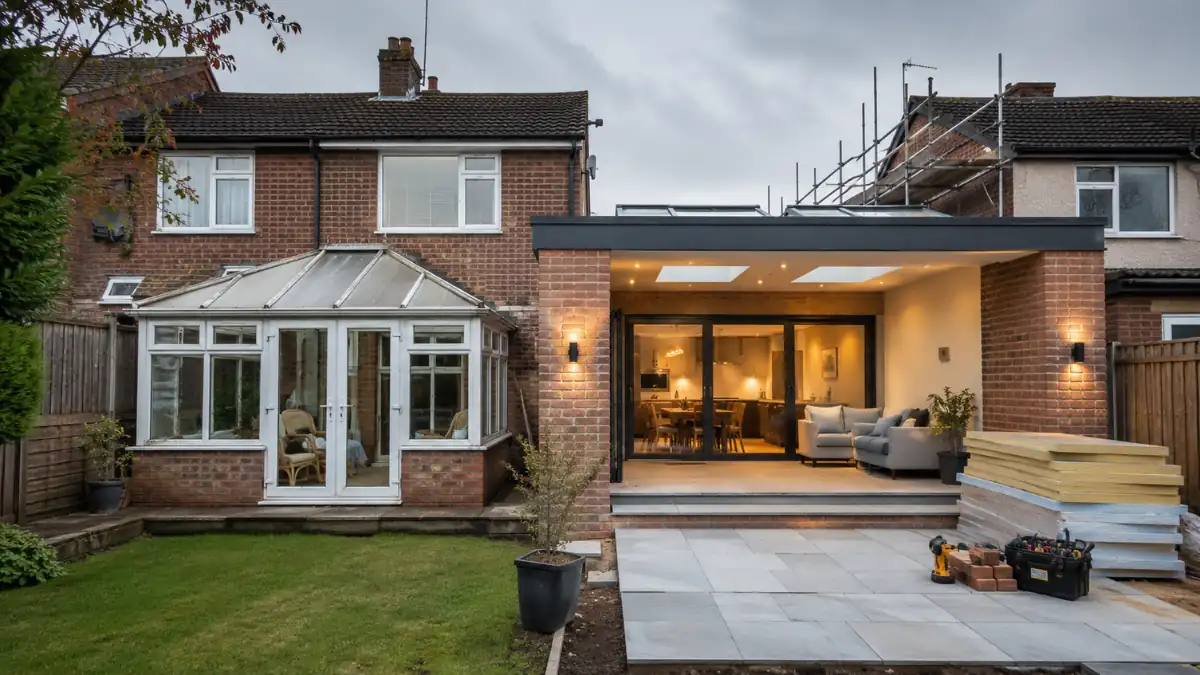
An Extension Conversion is usually when you turn an existing space into “proper” habitable room space (a conservatory, garage, lean-to, or similar) and upgrade it so it performs more like the rest of the house. In practice, that normally means better insulation, compliant glazing, proper foundations (or evidence of them), and Building Regulations sign-off.
- Most common example: changing a conservatory into a year-round extension (often by replacing the roof and improving thermal performance).
- Planning vs Building Regs: you might not need planning permission, but Building Regulations are often the bigger hurdle.
- Costs: simple upgrades can be a few thousand; full “make it a real extension” conversions can be £15,000–£40,000+ depending on size, structure and finishes.
- Big risk area: older conservatories and garages can hide issues (foundations, damp, cold bridging, drainage, lintels), so budgeting for remedial work is sensible.
If you want the space to be warm, mortgageable, and easy to sell later, treat the job like a small build project: get the design right, check permissions early, and build to the correct standards.
Thinking about turning an existing space into “proper” living space?
We’ll quickly sense-check planning, Building Regs, and typical costs before you commit to builders or roof quotes.
Quick summary: Extension Conversion
An Extension Conversion is typically where you upgrade an existing “add-on” space (like a conservatory or garage) into a properly insulated, compliant room that feels like part of the main house. Whether you need planning permission depends on what changes externally, but Building Regulations are often required for the works to be signed off and future-proof.
What is an Extension Conversion?
Homeowners use the phrase “extension conversion” in a few different ways, so it helps to be clear. Most often, it means you already have a space attached to the house (a conservatory, a basic rear addition, a garage, or a lean-to) and you want to upgrade it so it becomes comfortable, legal living space.
In plain English: you’re not just redecorating. You’re usually improving the structure and thermal performance so the room can be used year-round without freezing in winter and overheating in summer.
Common “extension conversion” projects we see
- Conservatory to extension upgrade (often replacing a glass/polycarbonate roof with a warmer roof system and improving insulation).
- Garage extension and conversion (bringing a garage into the living area and sometimes extending it).
- Older rear additions that were built lightly and now need upgrading to match modern standards.
- Connecting spaces (opening up a wall to integrate the room into the main house layout).
Extension conversion vs extension: what’s the difference?
A new extension starts from scratch (foundations, walls, roof). An extension conversion starts with something that already exists — which can be a benefit, but it can also bring unknowns.
Why an extension conversion can be simpler
- You may already have a footprint, roofline, and doors in place.
- Neighbours may be used to the structure (sometimes reducing “shock factor”).
- For some projects, the external changes are modest — which can reduce planning risk.
Why an extension conversion can be trickier
- You don’t always know what’s under the floor (foundations, insulation, drainage, damp-proofing).
- Bringing an older space up to today’s standards can involve more remedial work than expected.
- Once you open things up, you may find structural constraints (lintels, load-bearing walls, roof supports).
Related comparisons homeowners often weigh up
- Extension vs conservatory: conservatories can be cheaper initially, but year-round comfort usually requires upgrades.
- Conversion vs extension: conversions reuse space; extensions add new floor area — the “best” option depends on layout and budget.
- Extension vs loft conversion cost: lofts avoid groundwork but can have structural complexity; extensions can be more straightforward but involve foundations.
Do you need planning permission for an Extension Conversion?
It depends on what you’re changing. Many “upgrade” projects don’t need full planning permission if the external appearance stays broadly the same and the original structure was lawful. However, there are common situations where you do need to check.
Planning permission is more likely if you are:
- Changing the roof shape/height noticeably (for example, replacing a low conservatory roof with a taller solid roof).
- Altering the front/side elevation in a visible way, especially on a corner plot.
- In a conservation area, or your home is listed.
- Extending beyond typical permitted development limits (depth/height/position rules).
For a wider view of the rules and common council “quirks”, your pillar guide is the right starting point:our complete house extensions guide.
What’s usually included in an Extension Conversion?
The scope varies by project, but most conversions fall into a few predictable work packages. Knowing these helps you compare quotes and avoid surprises.
Typical work items (conservatory-style conversions)
- Roof upgrade (warmer roof system, improved ventilation, better weatherproofing).
- Wall and floor insulation improvements to reduce heat loss and condensation risk.
- Glazing changes (for example, swapping old units for modern performance glazing).
- Heating integration (radiator/UFH) — often triggers Building Regs considerations.
- Opening up to the house (structural work, lintels/RSJs where needed).
Typical work items (garage-related conversions)
- New insulated floor build-up (garages often sit lower than the house and can be cold/damp).
- Infill where the garage door was (proper wall build-up with insulation).
- Ventilation and fire separation where the garage adjoins the house.
- Drainage checks if you add a WC/utility in the converted space.
Quick costs snapshot (UK) for an extension conversion
- Light upgrades (minor thermal improvements, internal works): often £3,000–£10,000.
- Typical “conservatory to proper room” upgrade: commonly £15,000–£35,000.
- Garage conversion (basic, no extension): often £10,000–£25,000 depending on spec.
- Higher-spec / structural changes: £35,000+ once you include significant roof, structure, or new openings.
These are broad guide ranges. Site conditions, existing construction quality, structural requirements and finish level can move the number significantly.
Costs & timelines: what’s realistic?
Most extension conversions feel “small” until you list the trades involved. Even a simple upgrade can touch roofing, glazing, insulation, plastering, electrics, heating, and (sometimes) structural steelwork.
What drives cost up the fastest
- Unknown foundations or floor build-up (especially with older conservatories).
- Structural openings to remove walls and properly integrate the room.
- Roof replacement with insulation/ventilation detailing done correctly.
- Drainage alterations (new kitchen/utility/WC) and associated Building Regs checks.
- Finish level (bespoke joinery, large-format tiles, underfloor heating, premium glazing).
Typical timeline (very rough guide)
- Design + checks: 1–3 weeks (longer if planning is needed).
- Building Control route chosen: before work starts (Full Plans vs Building Notice, depending on scope).
- On-site works: 2–6+ weeks depending on roof/structure and finishes.
Not sure if your idea fits Permitted Development?
We’ll check your project against PD rules and let you know if you need a full planning application.
Step-by-step: how to plan an Extension Conversion (without nasty surprises)
The easiest way to keep control is to treat the job like a mini extension project — even if the footprint already exists.
HowTo checklist table
- Confirm what you’re converting. Conservatory? Garage? Older lean-to? Note sizes, roof type, and how it connects to the house.
- Do an early planning sense-check. If the external appearance/roof height changes, check whether you’re still within PD. (Your broader starting points: planning guidance and a quick “do I need planning permission?” checklist.)
- Decide what “proper room” means for you. Year-round warmth? Open-plan connection? Heating? This affects Building Regs scope.
- Survey the existing structure. Floor levels, damp risk, visible cracking, roof condition, and any signs the space was lightly built.
- Choose a Building Control route. For bigger jobs, Full Plans can reduce uncertainty because the design is checked before you build.
- Get drawings that match the job. Even if planning isn’t needed, clear drawings help builders price properly and help Building Control inspections go smoothly.
- Budget a contingency. Older “add-on” spaces regularly reveal remedial work once opened up. A sensible starting point is 10–15%.
- Keep paperwork tidy. Save approvals, specs, and completion documents — it reduces stress later when selling or remortgaging.
Pitfalls & gotchas (the things that catch people out)
Common issues we uncover
- Foundations not suitable for heavier structures (some older conservatories were built lightly).
- Cold bridging and condensation where new insulation meets old construction.
- Damp and floor level problems (garages especially).
- Structural support needed when opening the space to the main house.
- Non-compliant electrics/heating if previous works were DIY or undocumented.
Technical details homeowners should understand (without the jargon)
You don’t need to become a building inspector, but a few basics help you ask the right questions and spot unrealistic promises.
Building Regulations: the usual “hot topics”
- Part L (energy efficiency): insulation standards, thermal bridging, and glazing performance are central to making the room comfortable.
- Part A (structure): new openings, beams, altered roofs and load paths must be correctly designed.
- Part F (ventilation): airtight upgrades need proper ventilation to prevent mould/condensation.
- Part B (fire safety): relevant if you alter escape routes or create new openings and layouts.
- Part P (electrics): electrical work in homes must be safe and appropriately certified.
If you’re also producing detailed drawings for compliance, our Building Regulations guide is the best companion read:what drawings are needed for Building Regulations.
Local council quirks (why “my mate didn’t need it” isn’t a reliable test)
Planning teams and Building Control officers can interpret evidence and risk differently, especially around older conservatories and “what existed when”. If you’re changing roof height, adding large glazing, or opening up internal layouts, it’s sensible to get a proper check rather than relying on guesswork.
FAQs: Extension Conversion
What does “extension conversion” actually mean in the UK?
It usually means upgrading an existing attached space (often a conservatory or garage) so it becomes a comfortable, compliant room that feels like part of the house. That typically involves improved insulation, structure checks, heating/ventilation considerations, and Building Regulations sign-off.
Do I need planning permission to convert a conservatory into an extension?
Sometimes, but not always. If the external change is modest and you stay within permitted development limits, you may not need full planning permission. However, if you alter roof height/shape significantly, change the appearance on a sensitive elevation, or you’re in a conservation area or listed building, planning is more likely. When in doubt, we recommend a quick sense-check before you start spending.
Is Building Regulations approval needed for an extension conversion?
Very often, yes — particularly where you alter structure, add or change insulation, connect heating, replace roofs, or open up load-bearing walls. Building Regulations are usually the key step that makes the space “proper” in terms of comfort, safety and future saleability.
How much does an extension conversion cost in the UK?
It depends on the existing construction and what you’re upgrading. Light upgrades can be a few thousand pounds, but a typical “conservatory to proper room” upgrade is commonly in the £15,000–£35,000 range. Costs rise when foundations, structural openings, roof replacement, or high-end finishes are involved.
Extension vs conservatory: which is better value long-term?
A conservatory can be cheaper initially, but many homeowners later spend money making it usable year-round. A well-built extension is usually easier to heat, integrates better with the home, and is more straightforward from a compliance and resale point of view. The right choice depends on budget, how you’ll use the space, and whether your existing structure can be upgraded effectively.
Can I extend on an existing extension?
Sometimes, yes — but you’ll need to check planning limits, neighbour impacts, and whether the original structure can take additional loads. This is a situation where drawings and a structural sense-check are especially useful before you commit.
Conversion vs extension: how do I decide?
If you already have an attached space that’s the right size and position, upgrading it can be efficient. If you need more floor area or a better layout, a new extension may make more sense. A quick feasibility check usually clarifies which route gives you the best result for your budget.
Want a quick “is this worth converting?” answer?
Tell us what you’ve got (photos help) and we’ll outline the likely constraints, options and next steps.
Next steps & useful guides
If you’re moving forward, these guides will help you plan properly and avoid delays:
- Start with the complete house extensions guide (planning, costs, and council quirks)
- Understand the basics of planning permission for home projects
- Use the quick checklist to sense-check whether consent is likely
- Learn what drawings you’ll need for Building Regulations sign-off
- See what councils expect from a typical drawings pack
- Understand what should be shown on extension drawings (and why)
- What it isUpgrading an existing attached space (often conservatory/garage) into a comfortable, compliant room.
- Planning permissionSometimes not required, but more likely if you change roof height/shape, alter a sensitive elevation, or you’re in a conservation/listed context.
- Building RegulationsOften required once you alter structure, insulation, heating, ventilation, or open up the room to the main house.
- Typical costsWide range; many “proper room” upgrades sit around £15,000–£35,000, with higher costs where structural/foundation work is needed.
- Biggest riskHidden construction issues (foundations, damp, cold bridging) that only show once works start.
- Best next stepGet a quick feasibility check and a clear scope/drawings so pricing, compliance and inspections are smoother.
Want to know the most likely route for your home? Send your details to Plans Made Easy and we’ll guide you.
Official guidance & trusted references
For the latest rules and standards, it’s worth checking:
- National guidance and application help from Planning Portal
- Planning permission overview on GOV.UK
- Approved Documents (Building Regulations) library on GOV.UK
- Independent construction cost guidance from RICS
Conclusion: how to make an Extension Conversion go smoothly
An extension conversion can be a brilliant way to get more usable space without starting from scratch — but only if the existing structure can be upgraded properly. The biggest wins come from doing the early checks (planning, Building Regs route, and structure) and then getting clear drawings and a realistic scope before you accept quotes.
If you want a calmer process with fewer surprises, our team can sense-check your proposal, prepare compliant plans, and guide you from “idea” through to approvals and sign-off.
Ready to move your project forward?
Plans Made Easy can prepare compliant plans, manage submissions, and guide you from idea to approval.

Performance Verified ✅
This page meets PME Optimisation Standards — achieving 95+ Desktop and 85+ Mobile PageSpeed benchmarks. Verified on

