Category: Building Regulations

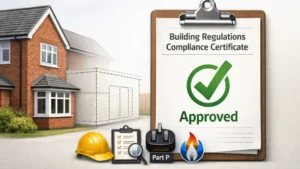
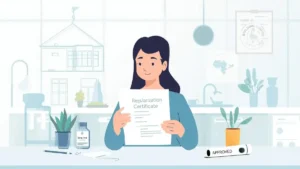
Illustration of a woman holding a Regularisation Certificate in a modern office setting, symbolizing approval and documentation for legal compliance in construction or property matters.

What Is a Regularisation Certificate – And Do You Need One?

A Regularisation Certificate is retrospective Building Regulations approval from your local authority Building Control, used when work was done without proper sign-off. This guide explains when you need one, how the application works, typical costs and timescales, and how it compares with a completion certificate and indemnity insurance—so you can resolve missing paperwork calmly and correctly.

Read More »
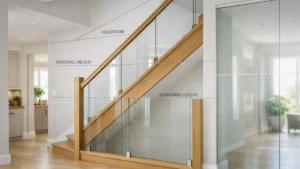
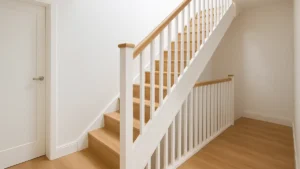
Modern UK hallway with timber staircase showing Building Regulations Stairs compliance — featuring safe handrail height, clear headroom, and minimalist white balustrades in soft natural lighting

Building Regulations Stairs Requirements Explained in Plain English

Building Regulations for stairs in UK homes fall mainly under Part K, covering rise, going, pitch, headroom and handrails. This clear, homeowner-friendly guide explains the essential rules, common pitfalls and what Building Control will check. Ideal for anyone installing or altering a staircase and wanting to avoid approval delays.

Read More »
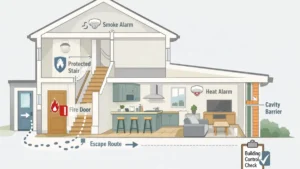
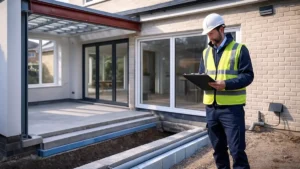
A UK building control officer conducting a structural site inspection of a modern home extension, checking foundations, insulation, and steelwork—ideal visual for answering building control questions on compliance and construction standards.

Building Control Questions Explained — What Inspectors Really Look For

Building Control questions can feel daunting, but most inspections follow a clear pattern. This guide explains the questions inspectors typically ask, what they look for at each stage, and how to prepare so your project stays compliant. Learn how to avoid common pitfalls, pass inspections smoothly, and keep your home improvement on track.

Read More »
Qualified electrician inspecting a modern UK domestic fuse board, ensuring compliance with Building Regulations Part P electrical safety standards in a well-lit home interior.

What Is Building Regulations Part P? UK Rules Explained Simply

Building Regulations Part P sets the safety standards for electrical work in homes across England. It explains when work must be notified, what counts as notifiable, and the certificates you must keep to stay compliant. This clear guide helps homeowners understand the rules, avoid common pitfalls, and ensure their electrical installations are safe and legally approved.

Read More »
A modern UK semi-detached home under light renovation, featuring solar panels, visible roof insulation, and an energy efficiency rating chart overlay, illustrating key aspects of Energy Performance Ratings and Building Regulations compliance.

How Energy Performance Ratings Impact Your Property Value

Energy Performance Ratings show how well your home meets Building Regulations Parts L and F. Learn how improving insulation, ventilation and heating efficiency can raise your EPC score, reduce running costs and help secure Building Control approval for extensions, conversions and upgrades across your home.

Read More »
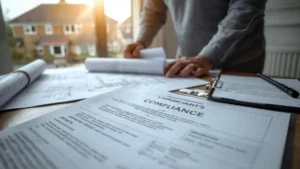
Man reviewing architectural floor plans at a desk surrounded by documents labeled "Building Regulations" and "Retrospective Approval," with a clock and a house in the background, symbolising compliance with UK building control deadlines.

Retrospective Building Regulations Time Limit: How Long You Have to Apply and Prove Compliance (UK Guide)

Built without sign-off? This plain-English UK guide explains how retrospective Building Regulations really work: the true ‘time limit’, enforcement risk, what evidence councils ask for, Regularisation vs Full Plans, typical costs, opening-up inspections, and the fast, step-by-step route to a certificate lenders and buyers accept—so your sale or remortgage can proceed.

Read More »
SiteLock