
Share this post:
Quick summary: Building Regulations Part J
Building Regulations Part J covers the safe installation of combustion appliances and fuel storage systems in England. If you are installing a wood-burning stove, log burner, fireplace, gas boiler or oil-fired heating appliance, Part J helps ensure your installation has suitable ventilation, safe flues, fire protection and carbon monoxide safeguards.
- What it covers: Heat-producing appliances, air supply, fireplaces, hearths, chimneys, flues, combustion gases and fuel storage.
- When it applies: Commonly when installing or replacing combustion appliances, constructing new chimneys or undertaking related building work.
- Building Control: Relevant installations normally need Building Regulations notification, either through Building Control or an appropriately registered competent person installer.
- Carbon monoxide alarms: Appropriate detection and early warning are required under Part J, with guidance updated in October 2022.
- Planning permission: Usually a separate consideration, particularly where external flues, chimneys, listed buildings or conservation areas are involved.
For most homeowners, the important thing is to get the installation checked and properly certified. A compliant appliance must have adequate combustion air, a suitable flue and appropriate protection against fire and carbon monoxide.
This guide explains the main requirements, when Building Control approval is needed, what your installer should check and how to avoid common compliance problems.
Planning a stove, fireplace or heating installation?
Our team can help you understand which building approvals and drawings your project may need before work begins.
What is Building Regulations Part J?
Part J is the section of the Building Regulations in England dealing with combustion appliances and fuel storage systems. In everyday terms, it helps ensure that equipment producing heat by burning fuel can operate safely without creating unacceptable fire, smoke or carbon monoxide risks.
The official guidance is called Approved Document J: Combustion Appliances and Fuel Storage Systems. It explains recognised ways to meet the legal requirements contained in the Building Regulations.
This distinction matters. The regulations themselves are legally enforceable, while an Approved Document provides practical guidance on achieving compliance. Alternative solutions may be acceptable if they satisfy the applicable requirements.
Which appliances are covered by Part J?
Common domestic examples include:
- Wood-burning stoves and log burners.
- Open fires and solid-fuel fireplaces.
- Gas-fired boilers and certain gas appliances.
- Oil-fired boilers and heating appliances.
- Biomass heating appliances.
- Associated chimneys, flues, hearths and fuel storage installations.
Therefore, Part J can apply to a new installation in an existing house just as readily as it applies to a new-build property.
Building Regulations Part J requirements explained
The main requirements are grouped under J1 to J7. Together, they address combustion air, safe removal of combustion products, carbon monoxide warnings and protection of the building and surrounding environment.
J1 – Air supply for combustion appliances
Fuel-burning appliances need sufficient air to operate correctly. If the supply is inadequate, combustion may become inefficient and potentially dangerous.
For example, a stove installed in a highly insulated home may require carefully designed permanent ventilation or a suitable direct external air supply. Extractor fans can also affect pressure conditions, so their interaction with the appliance must be assessed.
The necessary provision depends on the appliance type, output, installation arrangement and manufacturer's instructions. You should never assume that a room's existing ventilation is sufficient.
J2 – Discharge of products of combustion
Smoke and combustion gases must be discharged safely to the outside air. Consequently, chimneys and flues need appropriate design, positioning, materials and performance.
The installer should assess the flue route, discharge terminal, surrounding openings and any nearby structures. A poorly designed flue can cause smoke to enter the home or allow combustion products to accumulate.
J3 – Warning of carbon monoxide release
Carbon monoxide is particularly dangerous because you cannot reliably detect it by sight or smell. Part J therefore requires appropriate provision for detecting and warning occupants of harmful carbon monoxide release.
Amendments taking effect on 1 October 2022 extended the guidance for carbon monoxide alarms. For new installations, the alarm location and specification must be checked against the relevant guidance and appliance arrangement.
J4 – Protection of the building against fire
Combustion appliances, hearths, fireplaces, flues and chimneys must not create an unacceptable fire risk to the building.
This means considering heat-resistant construction, clearances from combustible materials and protection around areas exposed to high temperatures. Timber floors, beams and nearby wall linings may require particular attention.
J5, J6 and J7 – Information and fuel storage
The remaining provisions address the information needed about hearths, fireplaces, flues and chimneys, together with requirements designed to limit pollution and fire risks associated with certain fuel storage systems.
These become particularly relevant when installing or altering oil-fired heating systems and associated storage tanks.
Building Regulations Part J for wood-burning stoves and fireplaces
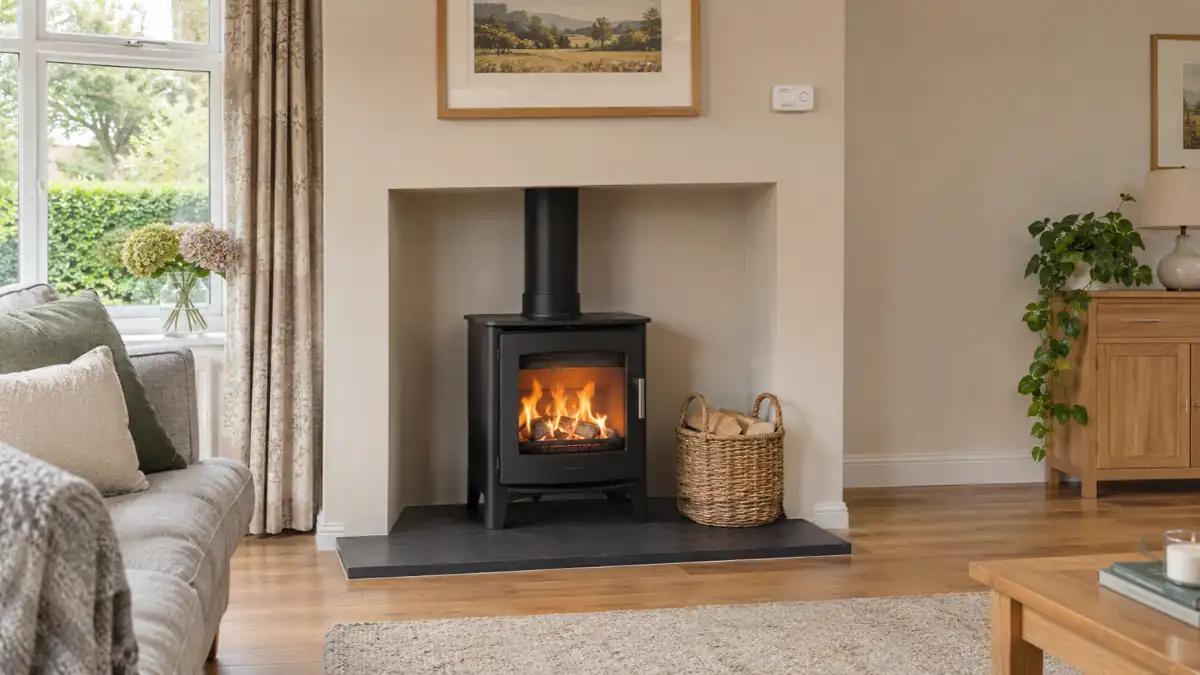
Installing a log burner is one of the most common reasons homeowners encounter Approved Document J. Although the stove itself may appear straightforward, the surrounding construction is equally important.
Hearth requirements for a log burner
A hearth helps protect the building from heat and burning material. Its dimensions, thickness and construction depend on the appliance and the installation conditions.
Certain appliances certified not to raise the hearth temperature above 100°C may be suitable for a qualifying non-combustible 12mm superimposed hearth. Other installations can require substantially different construction and protection.
Therefore, do not assume every stove can sit on a thin decorative hearth. The installer's design must follow the appropriate Part J guidance and product specification.
Chimney liners and flue arrangements
Existing chimneys are not automatically suitable for modern wood-burning stoves. Their condition, size and compatibility with the appliance must be checked.
Depending on the installation, a suitable liner or a new insulated flue system may be needed. The installer must also consider access for inspection, cleaning and maintenance.
Do you need Building Regulations approval for Part J work?
Yes, many domestic combustion appliance installations are notifiable building work. However, notification can normally be dealt with in one of two ways.
Option 1 – Use a registered competent person installer
An installer registered under a scheme authorised for the relevant work can normally self-certify compliance and notify the local authority through the scheme.
For solid-fuel installations, HETAS is one recognised example. Other authorised schemes also exist. Gas installations require an appropriately Gas Safe registered engineer, while suitable oil installations may be covered by OFTEC registration.
Before appointing someone, check that their registration covers the particular work being undertaken.
Option 2 – Apply through Building Control
If the work is not being self-certified through an authorised competent person route, you will generally need to arrange the appropriate Building Control process before starting.
Depending on the work and applicable application arrangements, Building Control may inspect the installation and require supporting details.
Our guide to how Building Control works explains what homeowners should expect from this process.
What certificates should you receive?
Once relevant notifiable work is completed, you should obtain the appropriate compliance documentation from the registered installer or Building Control body.
Retain these documents with the appliance instructions and commissioning records. They can be useful for servicing, insurance enquiries and future property sales.
Our separate article explains the importance of keeping essential property compliance records.
Part J versus other Building Regulations: what's the difference?
Part J does not operate in isolation. Depending on your project, other requirements may also apply.
- Part B – Fire safety: Wider fire safety provisions, including means of escape and fire protection.
- Part F – Ventilation: Ventilation provisions for the building beyond combustion air arrangements.
- Part L – Conservation of fuel and power: Energy efficiency requirements relevant to certain heating work.
- Part P – Electrical safety: Relevant electrical installation work associated with heating equipment.
For example, installing a new boiler during a kitchen extension may involve combustion safety, energy efficiency, ventilation and electrical provisions.
You can explore the broader requirements in our complete Building Regulations homeowner guide.
Part J versus planning permission
Building Regulations and planning permission serve different purposes. Part J concerns technical safety, whereas planning permission deals with whether proposed development is acceptable in planning terms.
Some external flues or chimneys may require planning permission, depending on their positioning, appearance and the property's circumstances. Listed buildings and properties within conservation areas can also involve additional considerations.
Our homeowner planning permission checklist provides a useful starting point.
Unsure which regulations apply to your project?
We can review your proposed alterations and help identify the building plans and approval route you may need.
How to meet Part J requirements: step-by-step checklist
A little preparation can prevent expensive alterations once installation work has started.
Homeowner's Part J compliance checklist
- Identify the appliance. Confirm the fuel type, model, rated output and intended position.
- Check the existing building. Assess chimney condition, ventilation, surrounding materials and any structural alterations.
- Establish the approval route. Confirm whether a registered installer can self-certify the work or whether Building Control involvement is necessary.
- Check the manufacturer's instructions. Confirm applicable hearth, flue, clearance and air supply requirements.
- Prepare any necessary drawings. Show relevant appliance positions, flue routes and associated building alterations.
- Arrange competent installation. Use appropriately qualified and registered professionals for the work involved.
- Complete testing and commissioning. Ensure the installer checks the installation and demonstrates safe operation.
- Obtain the compliance records. Keep the appropriate certificate, commissioning information and servicing instructions.
Where substantial building alterations are involved, accurate technical information can help coordinate the heating installation with the wider construction project.
Our guide to preparing plans for Building Regulations explains the drawing information commonly required.
Common Part J mistakes homeowners should avoid
Problems often arise because the appliance is purchased before the installation requirements have been considered.
1. Assuming an existing chimney is suitable
A traditional fireplace chimney may need inspection, repairs or a suitable liner before it can serve a modern stove. Its age alone does not establish suitability.
2. Overlooking ventilation
An airtight home can create particular challenges for combustion appliances. The correct air supply must be established rather than relying on opening a window when the appliance is in use.
3. Using unsuitable hearth materials
Some decorative floor finishes are not suitable for the temperatures involved. Therefore, check the required hearth construction before choosing the final appearance.
4. Failing to arrange certification
A physically completed installation is not necessarily properly documented. Missing notification or certification can create difficulties later, particularly when selling the property.
5. Confusing building approval with environmental rules
A Part J-compliant stove must still comply with other applicable legislation. In particular, smoke control area restrictions and rules relating to permitted fuels and appliances may affect how it can be used.
These are separate considerations from the appliance's installation under Building Regulations.
Does complying with Part J cost extra?
The cost depends mainly on the installation itself. A straightforward stove connected to a suitable existing chimney may involve less work than a new external twin-wall flue or substantial alterations to a fireplace.
Potential additional costs include chimney inspection, flue lining, ventilation provision, hearth construction, Building Control fees and professional design work.
Where new building work is involved, it is sensible to coordinate the heating installation with the overall project timetable rather than leave it until the final stages.
Conclusion: Getting Part J right from the beginning
Part J is an important part of keeping combustion appliances safe. It addresses much more than the stove or boiler itself, including the air supply, chimney, hearth, surrounding construction and protection against carbon monoxide.
For homeowners, the best approach is to establish the requirements early, appoint appropriately competent installers and obtain the right compliance documentation.
If your installation forms part of a larger renovation or extension, our team at Plans Made Easy can help you understand how the proposed work fits into the wider building design and approval process.
FAQs: Building Regulations Part J
What is Part J of the Building Regulations?
Part J covers combustion appliances and fuel storage systems. It includes requirements for combustion air, safe discharge of gases, carbon monoxide warnings, protection against fire and certain fuel storage arrangements. Approved Document J explains recognised ways to meet these requirements in England.
Are Building Regulations Part J a legal requirement?
Yes. The applicable requirements in Part J of Schedule 1 to the Building Regulations 2010 are legally enforceable. Approved Document J provides guidance on how to comply, rather than being the legislation itself.
Do I need Building Regulations approval for a wood-burning stove?
Installing a new wood-burning stove is normally notifiable building work. An installer registered under an appropriate competent person scheme can generally self-certify compliance. Otherwise, Building Control involvement is ordinarily required.
What are the Part J hearth requirements?
The required hearth depends on the appliance, the temperatures it produces and the surrounding construction. Some qualifying appliances may use a suitable 12mm non-combustible superimposed hearth, but others require different dimensions and construction. Always follow the applicable guidance and manufacturer's instructions.
Does Part J require a carbon monoxide alarm?
Part J requires appropriate provision for detecting and warning of harmful carbon monoxide release where a combustion appliance is provided. The Approved Document guidance was extended in October 2022. The correct alarm arrangement depends on the installation.
Does Part J apply to existing buildings?
Yes. Relevant building work in existing homes, including installing or replacing combustion appliances, may need to comply. However, the regulations do not automatically require every unchanged, existing installation to be upgraded simply because guidance has been amended.
Can I install a wood burner without HETAS?
HETAS registration is not the only route to compliance. Other authorised competent person schemes may cover the work, and a Building Control route is also possible. However, the installation must meet the applicable requirements and be correctly notified where necessary.
Do I need planning permission for a new chimney or flue?
Not always. Some installations may fall within permitted development rights, while others require planning permission. The position and dimensions of the proposed installation, together with property restrictions, must be considered. Listed building consent may also be necessary.
What happens if Part J work is not certified?
Missing compliance documentation can make it difficult to demonstrate that notifiable work was carried out correctly. It may also cause difficulties during a property sale. Contact the installer, relevant scheme operator or Building Control body to establish what records exist and what action may be needed.
Does Part J apply to gas boilers?
Yes. Gas appliances fall within the wider scope of Part J, although other legislation and technical standards also apply. Gas work must be undertaken by an engineer appropriately registered with Gas Safe for the work concerned.
Next steps and useful guides
If you are planning a heating installation, extension or renovation, these related Plans Made Easy guides can help you understand the wider approval process:
- Building Regulations: Complete Homeowner's Guide – the main pillar guide covering the wider system.
- Understanding the building approval process – what approval means and when it is needed.
- Fire safety requirements for residential projects – related fire protection considerations.
- Energy efficiency requirements for homes – relevant heating and energy provisions.
- What happens during building inspections – preparing for inspections and completion.
- Main purpose Safe installation of combustion appliances and fuel storage systems.
- Applies to Relevant building work involving solid-fuel, gas and oil combustion appliances.
- Key safety topics Ventilation, flues, hearths, fire protection, carbon monoxide and fuel storage.
- Current England guidance Approved Document J, 2010 edition incorporating the 2010, 2013 and 2022 amendments.
- Notification Normally required for relevant new or replacement combustion appliance installations.
- Certification route Appropriately registered competent person installer or Building Control.
- Planning permission Separate from Part J compliance; may be needed for some external alterations.
- Geographical scope This guide covers England. Other jurisdictions have different requirements.
Official guidance and further reading
For detailed technical requirements and current official information, refer to the following resources:
- GOV.UK – Approved Document J: The government's official technical guidance for combustion appliances, hearths, chimneys, flues and fuel storage.
- GOV.UK – Competent Person Schemes: Information about authorised schemes and work that registered installers can self-certify.
- English Housing Survey – Housing Quality: Official evidence about safety measures in English homes, including carbon monoxide alarms.
- Planning Portal – Boilers and Heating: Practical guidance about Building Regulations for domestic heating installations.
Ready to move your project forward?
Plans Made Easy can help you prepare the right drawings, understand building approval requirements and plan your home improvements with confidence.
Performance Verified ✅
This page meets PME Optimisation Standards — achieving 95+ Desktop and 85+ Mobile PageSpeed benchmarks. Verified on

