
Share this post:
Quick summary: building regulations certificate
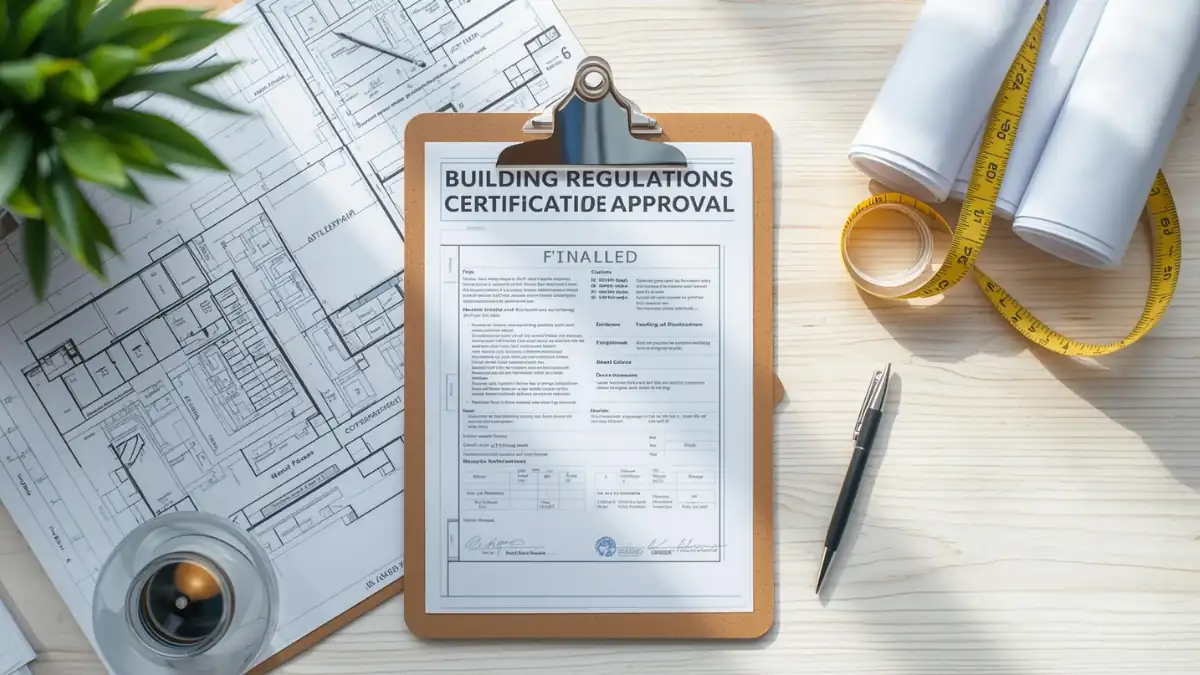
A building regulations certificate confirms that building work on your home complies with the legal construction standards in England and Wales. This includes things like extensions, loft conversions, structural changes, and even some electrical or boiler work.
- Completion Certificate: Issued after inspection, confirming the project meets all Building Regulations.
- Compliance Certificate: Common for work like new boilers or rewiring, showing a registered contractor has self-certified the job.
- Regularisation Certificate: For work done without approval — this is retrospective and can be complex to get.
If you're buying, selling or altering a property, you'll likely need to find or obtain the correct certificate. In this guide, we’ll explain exactly what they are, when you need one, how to get one, and what to do if yours is missing.
Trying to find your building regulations certificate?
If you’re unsure what you need — or whether your project has one — we can help you identify, locate or apply for the right certificate.
What is a building regulations certificate?
A building regulations certificate is an official document confirming that your building work complies with current UK Building Regulations. It may be issued by your local council or an approved private building control body.
This certificate is important because it proves that your project — whether it’s a loft conversion, structural wall removal, or new electrics — meets legal safety, energy, and construction standards.
When do you need a building regulations certificate?
You typically need a certificate for any work that falls under Building Regulations approval. This includes:
- New extensions or structural alterations
- Garage and loft conversions
- Installing new boilers or heating systems
- Electrical rewiring (especially kitchens or bathrooms)
- Drainage work, roof replacements, and glazing changes
Having the right certificate helps avoid issues when selling your home, applying for insurance, or carrying out further work later on.
Types of building regulations certificate
There are different types depending on how and when the work was done:
1. Completion Certificate
Issued once your work has passed all necessary building control inspections. This is common for full applications or building notice routes.
2. Compliance Certificate
Usually issued when a registered installer (like a Gas Safe or NICEIC contractor) self-certifies their work. Often applies to boilers, windows or electrics.
3. Regularisation Certificate
Retrospective approval for building work done without permission. You’ll need to prove compliance — and it may involve opening up parts of the build for inspection.
How to get a building regulations certificate
The process depends on whether the work is finished, underway or not yet started:
✔ For new or planned work
- Submit a Building Notice or Full Plans application before work begins.
- Notify Building Control when work starts — they’ll carry out site inspections.
- If everything complies, you’ll receive a Completion Certificate at the end.
✔ For completed work with no certificate
- If the work was done by a registered contractor (e.g. Gas Safe), contact them to request a copy of the Compliance Certificate.
- If not registered or no certificate was issued, apply for retrospective approval (Regularisation).
Not sure if you need a building regulations certificate?
Tell us what you’ve built (or plan to build) and we’ll let you know whether you need one — and how to get it.
Lost your certificate? Here’s what to do
If your solicitor or buyer is asking for a certificate and you can’t find it:
- Contact your local Building Control department and request a replacement copy.
- Use the Planning Portal or GOV.UK tools to search existing property records.
- If the work was certified by a contractor (e.g. FENSA, HETAS, NICEIC), check their database or call them.
If no certificate exists, you may need to apply for retrospective sign-off.
Can you get a retrospective building regulations certificate?
Yes — but only in the form of a Regularisation Certificate. This involves submitting plans and allowing inspections. Not all work will pass. It’s best to apply before selling the property or applying for a mortgage.
Our team can advise you on your chances of approval and what drawings you may need. Read more in our guide to Building Regulations approval.
FAQs: building regulations certificate
Do I need a building regulations certificate for a boiler?
Yes, in most cases. A registered Gas Safe engineer should notify the work and issue a Building Regulations Compliance Certificate. You’ll usually receive this in the post after installation.
What happens if I don’t have a certificate?
You may struggle to sell your home, insure the work, or prove compliance. In some cases, you’ll need to apply for retrospective approval or indemnity insurance.
How long does it take to get a certificate?
For new work, the certificate is issued after the final inspection. For lost certificates or regularisation, allow several weeks depending on your council’s timescales.
Can I do the work myself and still get a certificate?
Yes — but you’ll need to submit a building control application and pass inspections. DIY work without proper approval may be refused or require corrections later.
How much does a building regulations certificate cost?
The certificate itself isn’t charged separately — it’s part of your Building Control fee. Retrospective approval or replacement copies may incur small admin charges.
Next steps & useful guides
- Building Regulations: Complete Homeowner’s Guide
- Building Control: What It Is, When You Need It, and How to Pass Inspections
- Building Regulations Completion Certificate – What It Is and Why You Need One
- Retrospective Building Regulations Time Limit: What You Can Do
- Certificates & Compliance Documents You Must Keep
- What it confirmsThat building work complies with legal Building Regulations.
- When you need oneFor extensions, conversions, structural work, boilers, electrics and more.
- Who issues itYour local council’s Building Control team or a private approved inspector.
- TypesCompletion Certificate, Compliance Certificate, Regularisation Certificate.
- Retrospective optionYes – but only via a Regularisation application, and it must pass inspection.
- Replacement copiesUsually available from your local authority or the original contractor.
Need help tracking down or applying for a building regulations certificate? Speak to our team today.
Official guidance
- Planning Portal – national guidance on Building Regulations
- GOV.UK – apply for Building Regulations approval
How Plans Made Easy can help
Whether you’re mid-project, about to apply for permission, or selling a home with missing paperwork, we can help you work out what certificates you need — and how to get them properly.
We produce Building Regulations drawings, liaise with Building Control, and support homeowners applying for regularisation. It’s all part of helping your project stay safe, legal and stress-free.
Ready to move your project forward?
Plans Made Easy can prepare compliant plans, manage submissions, and guide you from idea to approval.
Performance Verified ✅
This page meets PME Optimisation Standards — achieving 95+ Desktop and 85+ Mobile PageSpeed benchmarks. Verified on

