
Share this post:
Quick summary: Contemporary Home Offices
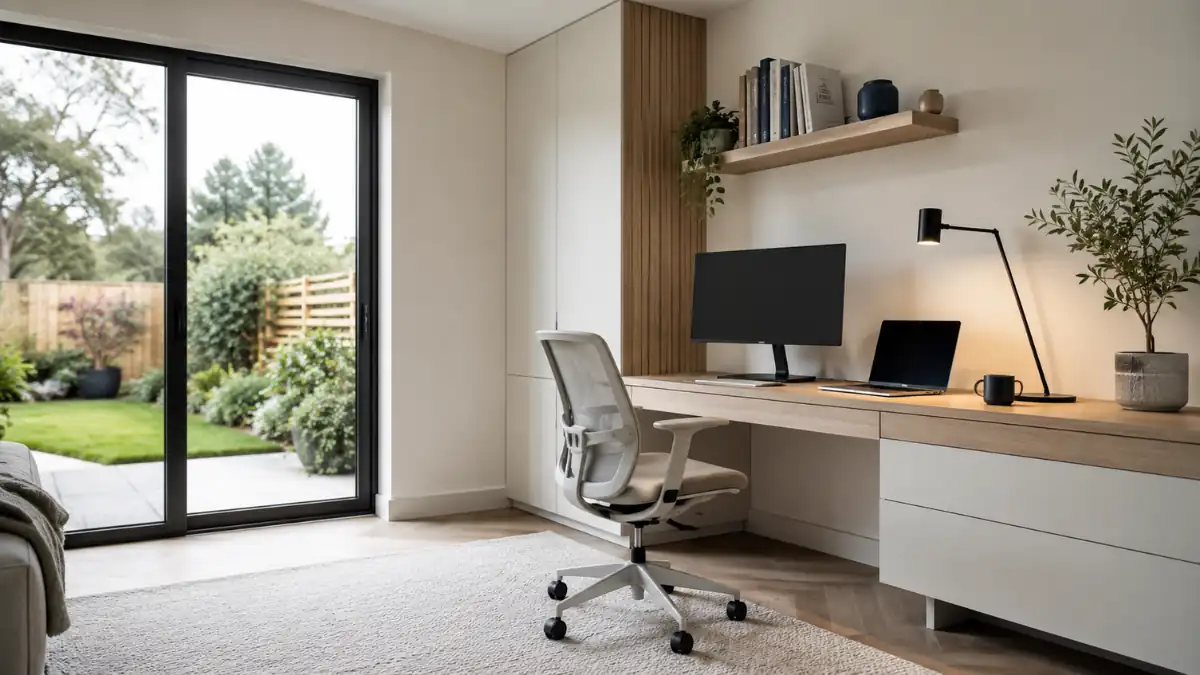
If you are planning Contemporary Home Offices at home (or in a garden room), focus on three things first:daylight + layout, comfortable ergonomics, and quiet storage. Get those right and the “modern look” becomes easy.
- Best layout tip: Put your desk where you get natural light from the side (less screen glare, more comfort).
- Most overlooked upgrade: Proper cable management + storage (it makes any office feel instantly more “contemporary”).
- Work-from-home comfort: A supportive chair, correct desk height, and good task lighting matter more than expensive furniture.
- Garden room office? Don’t guess — check planning permission / permitted development and think about insulation, electrics and heating early.
In this guide we’ll share modern design ideas, practical layouts, and the key UK “don’t-get-caught-out” points if your home office is going in a garden room or outbuilding.
Thinking of a home office in a garden room or outbuilding?
Tell us what you’re planning and we’ll sanity-check permitted development, planning permission, and what drawings you may need.
Quick summary: Contemporary Home Offices
Contemporary Home Offices feel calm and modern because they are designed aroundsimple lines, hidden clutter, good lighting and comfortable ergonomics.If your office is going in a garden room, make sure you also think aboutplanning permission, permitted development, and Building Regulations early — it saves stress later.
Contemporary home offices: what makes them “work” (not just look good)
Most people search for contemporary home office ideas because they want a space that feels tidy, modern and motivating.However, the best contemporary setups are not “style-first” — they are function-first, and the style follows naturally.
What “contemporary” usually means in a home office
- Clean lines and fewer visual distractions.
- Neutral base colours with one accent colour (for example, deep blue, olive, or warm timber).
- Clutter-free surfaces (storage is designed in, not added as an afterthought).
- Layered lighting: daylight + ceiling light + task light.
- Comfortable working position so you can actually use the space daily.
Contemporary home office setups: spare room vs garden room vs conversion
A contemporary home office can go in lots of places. The “best” option depends on how quiet you need it to be,how often you take calls, and whether you want separation from the main house.
Option A: Spare room contemporary home office
- Pros: easiest and fastest to set up; usually no planning considerations.
- Watch-outs: noise from the rest of the house; storage can spill into the room if you do not design it.
Option B: Garden room contemporary home office
- Pros: separation from family life; excellent for calls; feels like “going to work”.
- Watch-outs: insulation, electrics, heating and internet need planning; you may need to check permitted development and planning permission.
If you are considering this route, our main guide on garden roomsis the best place to start.
Option C: Garage / loft / outbuilding conversion as a contemporary home office
- Pros: uses existing footprint; can feel “built in” and premium.
- Watch-outs: Building Regulations are commonly relevant; you may need drawings and Building Control sign-off.
Garden room home office: permitted development, planning permission and when to ask
A lot of homeowners assume a garden office is always “permitted development”. Often it can be — but only if you meetall the limits and conditions. The safest approach is to check early, especially if you are close to boundaries,have a smaller garden, or live in a designated area.
Typical routes homeowners use
- Permitted development (PD): if your garden room/outbuilding meets all PD rules.
- Lawful Development Certificate (LDC): optional but often sensible as proof the build is lawful.
- Householder planning application: if PD limits are exceeded or restrictions apply.
If you want a broader overview first, start with ourplanning permission guideand the quick checklist:do I need planning permission?
What to include in a contemporary home office design
Whether you are styling a spare room or fitting out a garden office, contemporary home office design usually comes down toa small set of practical “building blocks”.
1) Desk position and daylight
- Put the desk where daylight hits from the side (reduces glare and eye strain).
- If you take video calls, think about what’s behind you (a calm wall, shelving, or soft panelling works well).
- In a garden room, consider the sun path so you do not overheat in summer.
2) Contemporary home office desk choices (including desks with drawers)
- Minimal desk + drawer pedestal: keeps the “floating” look but adds storage.
- Built-in desk run: most seamless look, especially in small rooms.
- Sit/stand desk: great for comfort, but plan cable routing carefully.
3) Contemporary home office storage (the “secret sauce”)
If your goal is a modern, calm space, storage is not optional. Even simple storage makes a home office feelmore professional and less like “a laptop on the dining table”.
- Closed storage for paperwork, chargers, and messy items.
- Open shelving for a few curated items (books, plants, one or two personal objects).
- Printer + tech station (especially if you work with plans, drawings or documents).
4) Contemporary home office chair and ergonomics
A chair does not have to look “corporate” to be supportive. Aim for adjustable height, supportive back, and a seat that feels right for longer sessions.If you’re working daily at a screen, it’s also worth following established workstation guidance so the space supports your posture long-term.
Costs & timelines: what to budget for (without overdoing it)
Most contemporary home offices can be created in phases. That’s helpful because you can spend on what actually improves comfort(chair, lighting, storage), and be more modest on “nice-to-haves”.
Quick costs snapshot – contemporary home office essentials
- Low-cost refresh: paint + lighting + cable tidy + a few storage upgrades.
- Mid-range setup: quality chair, desk with drawers, storage wall, better acoustics (rugs/panels), and improved lighting.
- Garden office fit-out: allow for electrics, heating, insulation level, internet, and a sensible contingency.
If you are building or altering a space (especially a garden room), budgeting is easier when you know what permissions and drawings you may need.Our guide to making plans explains how to approach it step-by-step.
Not sure if your idea fits Permitted Development?
We’ll check your project against PD rules and let you know if you need a full planning application.
Step-by-step: planning your contemporary home office (checklist)
This is the simple process we recommend for homeowners. It keeps the space practical and avoids costly changes later.
Step-by-step HowTo: contemporary home office plan
- Choose the location. Spare room, garden room, or conversion — pick based on noise and how often you work from home.
- Measure the space properly. Desk depth, chair clearance, and storage depth are where most layouts go wrong.
- Decide your desk orientation. Side-on to windows is usually best for comfort and glare control.
- Plan power and data points. More sockets than you think; include charging, printer, and broadband needs.
- Build storage into the layout. Aim for a “clear desk” finish at the end of each day.
- Layer your lighting. Ceiling + task + softer ambient lighting for winter evenings.
- Choose comfortable ergonomics. Chair first, then set desk height and monitor height around it.
- If it’s a garden room: check garden room planning basics and consider an LDC for peace of mind.
Pitfalls & gotchas to avoid
Common mistakes we see in home office projects
- Not enough storage (the room looks great for a week, then clutter takes over).
- Desk too shallow for a monitor + keyboard + paperwork.
- Glare from a window directly behind or in front of the screen.
- Cold garden room because insulation/heating were left to the end.
- Planning assumptions (“it’s fine, it’s only a shed”) without checking restrictions.
Technical details: electrics, insulation, lighting, heating and internet
These are the “boring bits” that make a modern home office feel genuinely comfortable day-to-day — particularly in a garden room.
Electrics and Building Regulations (Part P)
- For new circuits or significant electrical work, use a qualified electrician and make sure the work is properly certified.
- Plan sockets around your desk position and storage wall, not just where it’s easiest to install them.
Insulation and winter comfort (Part L)
- If you want year-round use, insulation standards matter. A “summer room” spec can feel miserable in winter.
- Think about draughts, glazing spec, and practical heating (not just a small portable heater).
Lighting that feels modern (and helps productivity)
- Task light: a directional lamp for focused work.
- Ceiling light: even ambient light for the whole room.
- Warm secondary lighting: makes the room feel calm in winter evenings.
Internet and video call reliability
- Garden rooms often need a deliberate plan: wired connection, robust Wi-Fi, or a mesh system.
- Allow for power and data routes early so you avoid visible cables later.
Related comparisons (that homeowners often consider)
- Garden room office vs spare room office: garden rooms offer quiet separation, while spare rooms are simpler and cheaper to set up.
- Built-in desk vs freestanding desk: built-in looks more seamless; freestanding is easier to change later.
- Open shelving vs closed storage: open shelves look great styled; closed storage keeps the space genuinely tidy.
Local council quirks to be aware of (England)
Even when projects are similar, councils can be stricter on certain things — typically height near boundaries, privacy impacts,and whether an outbuilding looks like a “separate unit”. If your property is in a conservation area or has an Article 4 direction,you should not assume permitted development applies.
If you want a safe starting point, use our main resources:planning permission,do I need planning permission?,and the pillar guide: garden rooms.
FAQs: contemporary home offices
What’s the quickest way to make a home office feel more contemporary?
Start with a clutter reset: hide cables, add closed storage, and keep the desk surface clear. Then use a neutral base colour and one accent.Finally, improve lighting (a task lamp plus softer ambient light) — it makes the space feel instantly more modern.
What desk size works best for a contemporary home office desk setup?
Most people are happiest with a desk that comfortably fits a monitor/laptop setup plus a bit of “working space”.As a rule of thumb, aim for enough depth that your screen is not right on the edge, and enough width for keyboard, mouse and notes.If space is tight, a desk with drawers can reduce the need for extra furniture.
How do I add storage without ruining the modern look?
Use a mix: mostly closed storage (cabinets, drawers, cupboards) and a small amount of open shelving for a few styled items.This keeps the “clean” look while still being practical for paperwork, chargers and day-to-day clutter.
Do I need planning permission for a garden office?
Not always — many garden offices can fall under permitted development, but only if all limits and conditions are met(and there are no extra restrictions on your property). If you are close to boundaries, in a designated area, or want peace of mind,it is worth getting advice or applying for a Lawful Development Certificate.
Do Building Regulations apply to a garden room home office?
It depends on what you are building and how it is constructed and used. In practice, if you want the space to be comfortable year-round,it is wise to plan insulation, electrics, ventilation and heating properly from day one.If you are unsure, we can advise what level of drawings and Building Control input is sensible.
What’s the best lighting setup for modern working?
Use “layers”: daylight where possible, a main ceiling light, and a good task lamp. Add softer lighting for evenings.Also avoid placing your screen directly facing a window — it usually creates glare and eye strain.
What chair works best for a contemporary home office?
Choose comfort first: adjustable height, supportive back, and a seat that feels right for longer sessions.Plenty of chairs look modern while still being supportive — and it’s one of the upgrades you will feel every single day.
Want to build a garden office without planning headaches?
We’ll tell you what drawings you’re likely to need, how PD applies, and the simplest route to keep your project compliant.
Next steps & useful guides
If your contemporary home office is part of a bigger home improvement (especially a garden room), these guides will help you plan safely:
- Garden Rooms: Do You Need Planning Permission?
- Planning Permission (UK Homeowner Guide)
- Do I Need Planning Permission? (Quick Checklist)
- Making Plans: How to plan a project properly
- Plans for Building Regulations: what drawings you need and when
- What makes it “contemporary”Clean lines, calm colours, clutter-free surfaces, and thoughtful lighting.
- Best first upgradeHidden storage + cable management (fast improvement, big visual impact).
- Comfort essentialsSupportive chair, correct desk/monitor height, and glare-free lighting.
- Garden room officeCheck permitted development / planning permission early, and plan insulation, electrics and internet before you build.
- Common mistakeDesigning for looks but forgetting storage, power points, and winter comfort.
- Best next stepDefine your layout, storage and services needs first — then choose furniture and finishes around that plan.
If your office is going into a garden room and you want a compliant route, message Plans Made Easy and we’ll point you in the safest direction.
Official guidance and useful references
For trusted information beyond this guide, these are good starting points:
- Planning Portal – outbuildings and garden rooms (permitted development guidance)
- GOV.UK – planning permission in England and Wales
- Office for National Statistics – hybrid working insights (UK)
- HSE – display screen equipment (DSE) guidance for workstation setup
How Plans Made Easy can help
The best Contemporary Home Offices feel simple and calm because the practical details are solved:layout, storage, lighting, comfort, and (when it’s a garden room) the planning and technical compliance.If you’re unsure what route applies to your property, it’s worth checking early — it can prevent delays and awkward council issues later.
Our team can prepare the right drawings, guide you through permitted development or a planning application where needed,and help you make confident decisions before you commit to a build.
Ready to move your project forward?
Plans Made Easy can prepare compliant plans, manage submissions, and guide you from idea to approval.

Performance Verified ✅
This page meets PME Optimisation Standards — achieving 95+ Desktop and 85+ Mobile PageSpeed benchmarks. Verified on

