
Share this post:
Planning a self-build or one-off home and trying to make sense of the new build stages UK timeline? This guide walks you through each phase — from first sketches and planning permission through to snagging, completion certificate and moving in.
Quick summary
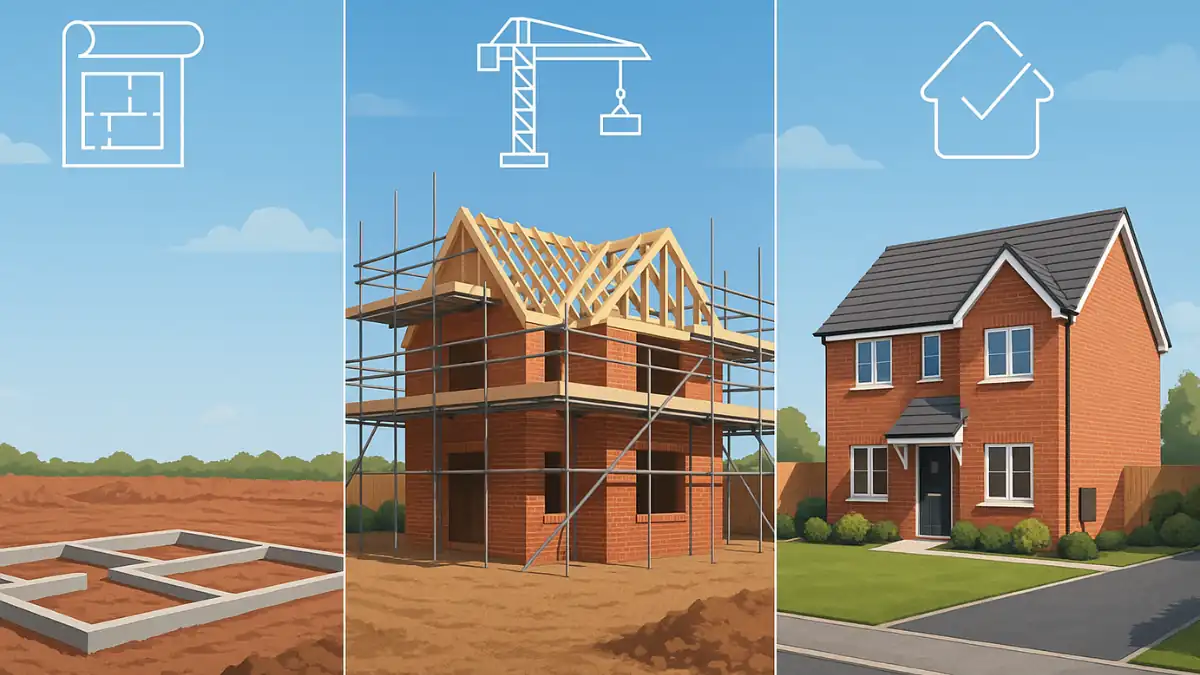
A typical UK new build project breaks down into four main phases:
- Pre-construction: feasibility, design, planning permission and building regulations.
- On-site shell: groundworks, foundations, walls, floors and roof.
- Internal works: first fix, second fix, plaster, kitchens, bathrooms and finishes.
- Completion: final inspections, certificates, snagging and handover.
Key facts snapshot – new build stages UK timeline
- Overall duration: often 12–24 months from first ideas to moving in, depending on size, site and contractor.
- Planning permission & design: allow 3–9 months for drawings, planning and technical design.
- On-site build: a standard 3–4 bed new build can take around 6–12 months on site in reasonable conditions.
- Building control: inspections happen at key stages and you must secure a completion certificate at the end.
- Flexibility: every project is different, so treat any new build timeline as a guide, not a promise.
If you’d like help mapping your own new build stages UK timeline — including plans, planning permission and building regulations — our team at Plans Made Easy can step in at any stage.
Building a new home is exciting, but the process can feel opaque and overwhelming. In this Support Stone guide, we break down the new build stages UK timeline so you can see what happens when, how long it might take, and where planning permission and building regulations fit in.
We’re focusing on a typical single new-build house in England, but the same principles apply across most of the UK. Timescales will always vary, yet understanding the sequence of stages will help you plan your budget, manage your builder and avoid nasty surprises from the council.
New Build Stages UK Timeline – At a Glance
Every project is unique, but most follow a similar path from first idea to keys in hand. Here’s a simple overview of the main stages in the new build journey:
- Feasibility & early planning – budget checks, site constraints, basic sketches.
- Design & planning permission – measured surveys, drawings and planning application.
- Building regulations & technical design – detailed construction drawings, structural design and building control route.
- Pre-construction – choosing a builder, contracts, programme and site set-up.
- Groundworks & foundations – site clearance, excavation, drainage and foundations.
- Superstructure – walls, floors, roof and making the shell watertight.
- First fix – internal studwork, plumbing, electrics, ventilation and heating pipework.
- Second fix & finishes – plaster, kitchens, bathrooms, joinery, decorating and flooring.
- Final inspections & completion – testing, building control sign-off, warranties and snagging.
Pre-Construction Stages in the New Build Stages UK Timeline
Before a single spade hits the ground, a lot of paper, planning and design work needs to happen. This phase is often underestimated, but it sets the tone for the whole project.
1. Feasibility, budget and site checks
First, you’ll want to confirm that your idea is realistic. This usually includes:
- Checking your budget against typical build costs in your area.
- Looking at local planning policies and any constraints such as conservation area status or listed buildings.
- Reviewing access, services, existing drains and any right-of-way issues.
- Talking to lenders or brokers if you need a self-build mortgage.
Our complete planning permission guide is a useful starting point if you’re unsure how permissive your local authority is likely to be.
2. Design, drawings and planning permission
Once you’re confident the project is viable, you’ll need proper drawings. These might be prepared by an architect, architectural technologist or specialist design team.
For most new builds you will need planning permission, rather than relying on permitted development. That typically involves:
- Measured survey of the site.
- Proposed plans, elevations and sections.
- Site layout and location plans.
- Design and access statement, and sometimes additional reports (for example, ecology or flood risk).
Local authorities aim to decide most applications within eight weeks, but some take longer. You can read more about typical council timescales in our dedicated guide to planning decision timing.
3. Building regulations, structural design and tender
With planning permission in place, attention turns to how the house will actually be built. This is where building regulations come in, covering structure, fire safety, insulation, drainage and more.
You will usually need:
- Detailed construction drawings and specifications.
- Structural calculations for beams, foundations and load-bearing elements – see our guide to structural calculations for what’s typically required.
- Energy and insulation design to meet current Part L standards.
- A decision on whether to use a local authority or approved inspector for building control.
Many homeowners go down the “full plans” route for building regulations approval, because it gives you a clear yes/no decision on paper before construction begins. Our guide to building regulations plans explains what needs to be shown.
Once drawings are coordinated, your designer or project manager can issue a tender package to builders so you can compare like-for-like quotes and agree a realistic programme.
On-Site Construction Stages – From Groundworks to Roof
With permissions and technical design in place, the physical build can begin. This is the part of the new build stages UK timeline that most people imagine, but it only runs smoothly if the earlier paperwork has been properly handled.
4. Site set-up, groundworks and foundations
Typical tasks in this stage include:
- Setting up welfare facilities, storage and security on site.
- Clearing vegetation, demolishing existing structures if needed, and stripping topsoil.
- Excavating foundations to the depth agreed with your engineer and building control.
- Installing drainage runs, manholes and any required connections.
- Pouring concrete foundations or constructing ground beams and sub-structure walls.
Your building control inspector will visit at key points, usually before concrete is poured and before the ground floor is sealed up.
5. Superstructure – walls, floors and roof
Once foundations and sub-structure are complete, the building starts to take shape above ground:
- External walls go up – masonry, timber frame, SIPs or steel frame depending on the design.
- Intermediate floors and stair openings are formed.
- Roof trusses or structure are installed and the roof is tiled or finished.
- Windows and external doors are fitted.
The goal here is to make the house watertight so that internal trades can start work without weather delays.
6. First fix services and internal layout
“First fix” covers everything that will be hidden behind plaster once the house is finished. That often includes:
- Stud partition walls and basic room layouts.
- Plumbing pipework for bathrooms, kitchen, heating and hot water.
- Electrical cabling for sockets, lighting, smoke alarms and data points.
- Ventilation ductwork and any MVHR system.
Building control may carry out further inspections here to check fire protection, means of escape and compliance with Part B fire safety rules.
Internal Works, Second Fix and Finishing Stages
Once first fix is complete and inspected, the build moves into the more visible stages where your new home really starts to look finished.
7. Plastering, insulation and internal linings
Internal insulation, plasterboard and vapour control layers are installed, followed by plastering or dry-lining. This stage can take time to dry, especially in colder months, so it’s worth building that into your new build stages UK timeline.
8. Second fix carpentry, plumbing and electrics
“Second fix” is where the visible fittings go in:
- Internal doors, skirting boards, architraves and stair balustrades.
- Light fittings, switches, sockets and smoke/heat detectors.
- Radiators, sanitaryware, taps and shower valves.
- Kitchen and utility units, worktops and appliances.
9. Decorating, flooring and external works
Finally, the house is decorated and the outside tidied up:
- Painting, wall tiling and final finishes.
- Flooring – tiles, carpet, timber or LVT.
- Driveways, paths, patios, fencing and landscaping.
- Any remaining external detailing such as cladding or balconies.
Final Inspections, Certificates and Handover
The last stage brings together legal sign-offs, paperwork and snagging before you actually move into the new home.
10. Testing, commissioning and building control completion
Before handover, key systems are tested and commissioned. This often includes:
- Pressure testing and balancing of heating and hot water systems.
- Electrical testing and certification (Part P).
- Air-tightness testing where required by building regulations.
- Fire alarm and smoke detector checks.
When your inspector is satisfied, they will issue a building regulations completion certificate. Lenders and solicitors usually insist on this document, along with the other certificates and compliance documents for the project.
11. Snagging, warranties and moving in
Even the best builds will have minor defects. Snagging is the process of listing these and having them put right, either before you move in or within an agreed defects period afterwards.
You should also receive warranty information (for example, NHBC, LABC or similar), operation manuals for systems, and as-built drawings if available. Keeping this paperwork safe will make any future alterations and eventual sale of the property much easier.
How Long Do the New Build Stages Take in the UK?
No two projects are identical, so think of any new build stages UK timeline as a guide rather than a guarantee. That said, homeowners often find the following ballpark ranges helpful:
- Feasibility & early design: 1–3 months.
- Planning application (including prep): 3–6 months, depending on complexity and council speed.
- Building regulations and technical design: 2–4 months, overlapping with the end of planning.
- On-site build for a typical 3–4 bed house: around 6–12 months from breaking ground to completion, assuming no major interruptions.
- Snagging and defects period: 2–12 months after practical completion.
Weather, material shortages, design changes and delays in decision-making can easily stretch these figures. Having clear drawings, approvals and a realistic programme at the outset is the best way to stay close to your ideal timeline.
How Plans Made Easy Can Help Keep Your New Build on Track
New builds involve a lot of moving parts — from planning applications and getting the right drawings produced through to building regulations compliance and liaison with building control.
Our team can help you:
- Clarify whether you need planning permission and advise on strategy.
- Prepare or coordinate the planning drawings and technical plans needed for approvals.
- Map out a realistic programme for your project so you know what should happen when.
- Deal with queries from building control and keep inspections running smoothly.
If you’d like a calm, experienced team on your side from the first sketch to the completion certificate, get in touch with Plans Made Easy. We’ll help you plan each stage of your new build the right way, so you can focus on the exciting part — moving into a home that’s been properly designed, approved and built to last.
FAQs: New Build Stages UK Timeline
For a standard single new-build house, many projects run somewhere between 12 and 24 months from the first conversation with a designer to moving in. The on-site build itself often takes around 6–12 months, while design, planning permission and building regulations approvals make up the rest of the timeline. Complex sites, bespoke designs or finance delays can stretch this further, so it’s wise to build some contingency into your programme.
Most new builds follow a similar sequence: feasibility and early design; planning permission; detailed design and building regulations; groundworks and foundations; superstructure (walls, floors and roof); first fix services; second fix and finishes; and finally testing, building control sign-off, snagging and handover. Planning and building control run alongside the physical build, so you’ll be dealing with drawings and inspectors throughout the process.
Planning permission is usually sought early, once outline designs are prepared but before detailed technical design. Building regulations approval follows, based on more detailed drawings and specifications. In practice, elements of design, planning and building regulations will overlap. Our planning permission guide and building regulations approval explainer set out what’s involved at each step.
The biggest delays usually come from late decisions, unclear drawings and changes once work has started. To keep things moving, make sure your plans are properly coordinated before tendering, agree a realistic programme with your builder, and avoid last-minute design changes where possible. Having a clear written scope of works and using experienced professionals for drawings and approvals will also help your project stay closer to its planned timeline.
Some self-builders manage large parts of the process themselves, but most benefit from professional help at key points — especially for drawings, planning applications, building regulations submissions and structural design. A good designer or planning consultant will spot issues early, coordinate information and help you avoid costly missteps with the council or building control. Plans Made Easy can support you with exactly the level of input you need, from one-off advice to full plan and application packages.

Performance Verified ✅
This page meets PME Optimisation Standards — achieving 95+ Desktop and 85+ Mobile PageSpeed benchmarks. Verified on

