
Share this post:
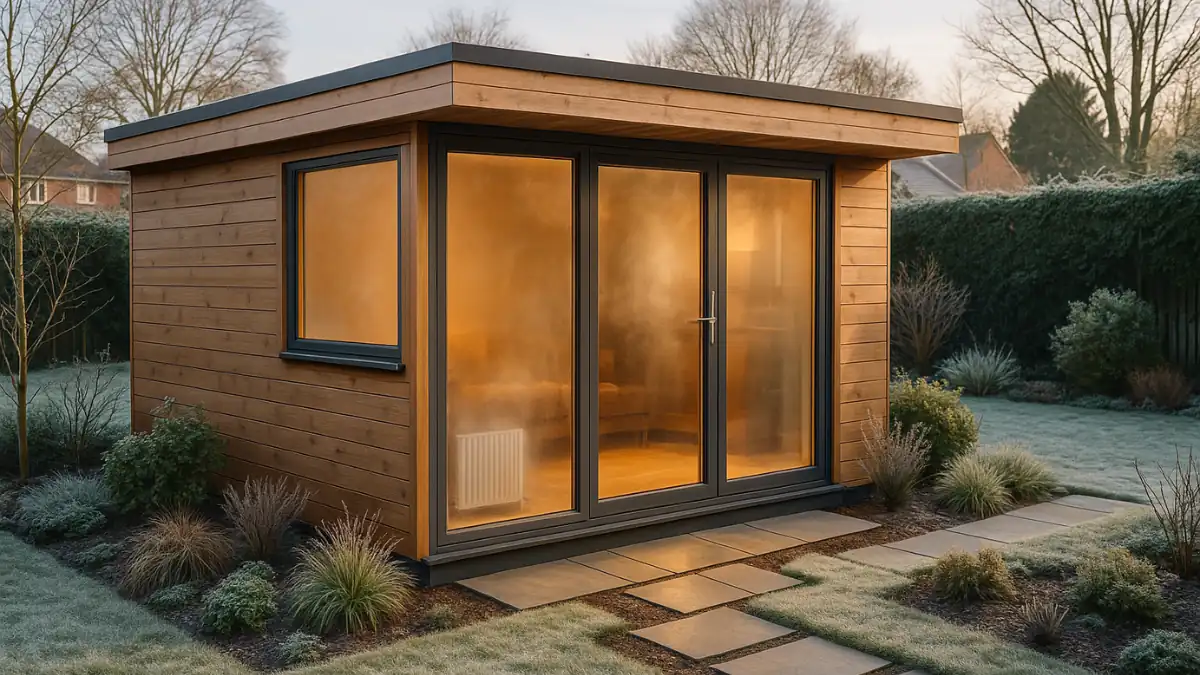
Heating a garden room properly can make the difference between a cosy year-round retreat and a cold, under-used space. Whether you’re turning your garden room into an office, gym, or guest suite, the right heating solution ensures comfort, efficiency, and compliance with Building Regulations.
This guide from Plans Made Easy breaks down your best heating options — from electric radiators to underfloor systems — and explains how insulation and design choices affect long-term running costs.
Designing a garden room?
We can prepare compliant plans and Building Regulation drawings for your project — ensuring your heating choice meets UK energy standards.
Why heating a garden room matters
Without proper heating, your garden room can feel unusable for much of the year. Even high-quality insulated structures lose heat quickly in winter and can overheat in summer. Choosing the right heating system will depend on how often you’ll use the room, how well it’s insulated, and whether it’s connected to mains power or renewable energy.
Note: If your garden room is used year-round, Building Regulations Part L (energy efficiency) apply. You’ll need suitable insulation levels and a controllable, efficient heating system.
Top heating options for garden rooms
There’s no one-size-fits-all answer to heating a garden room, but these are the most practical and efficient methods for UK homeowners:
1. Electric radiators
Modern electric radiators are quick to install, easy to control, and perfect for occasional use. Many models include smart thermostats and timers, allowing you to pre-warm your space before use.
- Fast to heat up
- No plumbing required
- Wall-mounted or free-standing
- Ideal for smaller garden offices or studios
2. Infrared panel heaters
Infrared heating warms objects and people directly, not the air. This makes it energy-efficient for well-insulated garden rooms where fast comfort is needed without drying the air.
- Slimline panels blend with décor
- Low maintenance
- Energy-efficient if used correctly
3. Underfloor heating
If you’re building your garden room from scratch, underfloor heating offers an invisible, evenly distributed heat source. It pairs beautifully with laminate or tiled floors and frees up wall space.
Tip: Consider electric underfloor mats for smaller spaces — they’re easier to install than water-based systems and offer precise control.
4. Air conditioning (with heat pump function)
Many homeowners now choose compact air-to-air heat pumps or reversible air conditioners. These provide heating in winter and cooling in summer — ideal for offices or gyms.
- Energy-efficient (A++ rated models)
- Provides both heating and cooling
- Higher upfront cost, but low running costs
5. Log burners and bioethanol stoves
If you prefer a more rustic or off-grid solution, a small log burner or bioethanol stove can create instant atmosphere. You’ll need proper ventilation and fire-safe installation — and in some cases, Building Control sign-off.
Important: Never install a wood burner in a garden room without a flue and fire-resistant surround. Always check with Building Control if permanent heating or fuel storage is involved.
Not sure which heating system suits your garden room?
Our team can review your plans and advise on insulation, layout, and compliant heating options before you build.
Don’t overlook insulation and Building Regs
Good heating starts with good insulation. Without it, even the most advanced heater will waste energy. Ensure your walls, roof, and floor meet Building Regulations standards for U-values. If your garden room includes sleeping accommodation or year-round use, you may also need a Building Control application.
- Use insulated wall panels or SIPs for best performance
- Fit double- or triple-glazed windows
- Seal gaps around doors and sockets
Note: Efficient heating and insulation together can reduce your garden room’s running costs by 40% or more.
Typical costs and running efficiency
Here’s a quick guide to what you can expect to spend when heating a garden room in the UK (2025 figures):
- Electric radiator:£150–£400 installed
- Infrared panel:£200–£500 installed
- Electric underfloor heating:£400–£800 (depending on floor area)
- Air-to-air heat pump:£1,200–£2,000 installed
Running costs depend on insulation quality and energy tariffs. Heat pumps and infrared systems are generally the most efficient for long-term use, while electric radiators suit intermittent heating.
Common mistakes to avoid
- Installing heating before confirming insulation levels.
- Over-sizing systems (leads to higher bills).
- Ignoring ventilation — condensation can damage interiors.
- Running extension leads instead of proper wiring — always use a qualified electrician.
Warning: If your garden room has plumbing, sleeping space, or fixed heating, you may need formal approval under Building Regulations. Our team can advise before you start.
FAQs – Heating a Garden Room
Can I heat a garden room with electric radiators only?
Yes — electric radiators are a popular and simple solution for most insulated garden rooms. Choose models with built-in thermostats to meet efficiency standards.
Do I need Building Regulations approval for heating?
If your garden room is heated and used regularly, Part L energy efficiency rules apply. Contact your local Building Control department or Plans Made Easy for advice.
Is underfloor heating expensive to run?
Not if it’s well-controlled and paired with insulation. Electric mats are efficient for smaller rooms, while heat pump systems are better for larger garden spaces.
Can solar panels power my garden room heating?
Yes, small photovoltaic panels can offset your energy use. You’ll still need mains backup for colder months unless you install battery storage.
Thinking of upgrading your garden room?
Plans Made Easy can prepare compliant drawings and help ensure your heating setup meets Building Regulations and energy standards.
Next steps & useful guides
- Planning Permission for a Garden Room
- Building Regulations for Garden Rooms
- Building Control: What It Is and When You Need It
- Extension Costs – Complete UK Guide
- Fire Safety: Part B in Domestic Extensions and Conversions
- Best all-round option:Air-to-air heat pump (heats & cools efficiently)
- Quickest to install:Electric radiator or infrared panel
- Average install cost:£200 – £1,500 (depending on system)
- Building Regulations relevance:Applies if used year-round or permanently heated
- Energy-saving tip:Combine efficient insulation with smart thermostats
External references
Ready to move your project forward?
Plans Made Easy can prepare compliant plans, manage submissions, and guide you from idea to approval.

Performance Verified ✅
This page meets PME Optimisation Standards — achieving 95+ Desktop and 85+ Mobile PageSpeed benchmarks. Verified on

