
Share this post:
Quick summary: Garden Shed Home Office
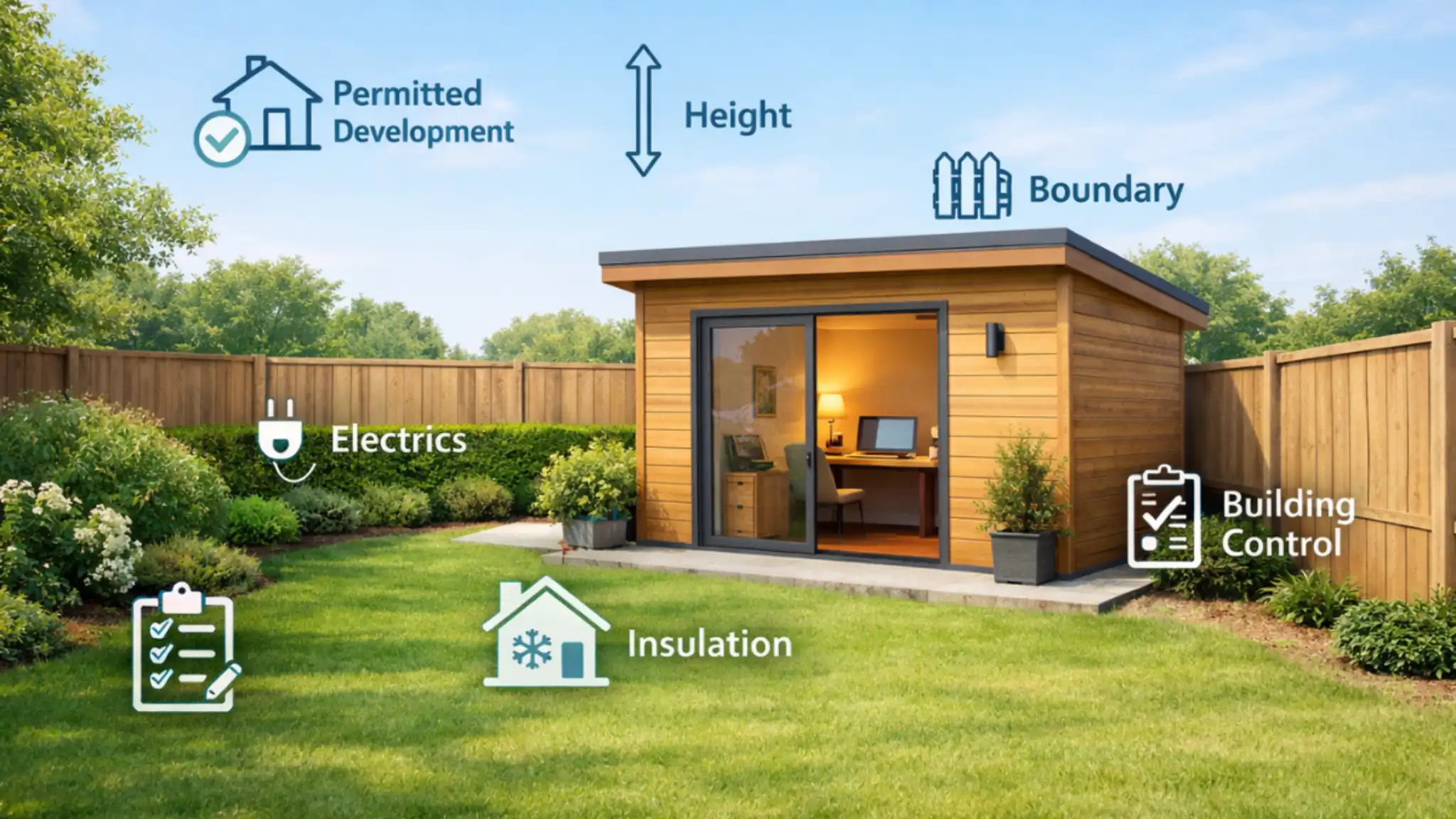
A Garden Shed Home Office can often be built under permitted development (so no full planning application), but only if it meets the rules on use, height, location and overall size. If you heat it, add electrics, or start treating it like a “real room”, Building Regulations may also come into play.
- Planning permission: many home office sheds are PD, but conservation areas, listed buildings, Article 4 directions and “non-incidental” use can change that.
- Building regs: not always required for a simple shed, but electrics, insulation/heating, foundations and fire safety often need careful handling.
- Big risk: the shed is “fine” on paper, but becomes non-compliant because it’s too close to the boundary, too tall, or effectively used as living accommodation.
- Best practice: get drawings that clearly show dimensions, heights and distances, then consider a Lawful Development Certificate for peace of mind.
In the guide below, we’ll explain when you usually need planning permission, when Building Control matters, and the practical checklist that helps you avoid council headaches later.
Not sure if your home office shed needs permission?
Tell us your rough size, height and where it will sit in the garden — we’ll sense-check it against Permitted Development and flag any red-flag issues early.
Quick summary: Garden Shed Home Office
A Garden Shed Home Office can be a straightforward way to gain a quiet workspace without the disruption of an extension. The key is making sure it stays within permitted development limits (where possible), and that electrics, insulation and fire safety are handled in a way Building Control will be comfortable with if questions ever arise.
If you want maximum certainty (especially when selling), consider applying for a Lawful Development Certificate and keep your plans, specs and installation certificates safe.
Garden Shed Home Office: what councils and Building Control care about
Homeowners often start with the same question: “Can I put an office shed in the garden without planning permission?”In many cases, yes — but only if the building stays within the rules for outbuildings and its use remains genuinely linked to the house.
Councils typically focus on a few practical points:
- How it looks and where it sits (especially near boundaries and neighbours).
- Height and overall bulk (this is where lots of “nearly compliant” sheds fall down).
- Whether it’s still incidental to the main house (office use is usually fine; living accommodation is a different story).
- Whether you’re in a restricted area (conservation area, listed building setting, Article 4 direction).
If you want the wider context on what you can and can’t build without permission, start with our pillar guide:Outbuildings Explained – What You Can (and Can’t) Build Without Permission.
Garden Shed Home Office planning permission: when you do (and don’t) need it
A Garden Shed Home Office often qualifies as permitted development when it’s a normal garden outbuilding and it stays within the standard PD constraints. However, planning permission becomes more likely if any of the “deal breakers” below apply.
When a Garden Shed Home Office is usually permitted development
As a homeowner-friendly rule of thumb, a home office shed is more likely to be PD when it:
- sits within the curtilage of your house (your main garden area),
- is for a use that’s incidental to the house (a workspace, gym, hobby room),
- doesn’t dominate the garden or create overlooking/amenity issues, and
- stays within typical PD limits on height, positioning and overall coverage.
Common reasons you end up needing planning permission
- Protected areas: conservation area constraints, listed buildings, or an Article 4 direction limiting PD rights.
- Location issues: the building ends up in a position that creates neighbour impact, or it’s treated as “forward” of key elevations.
- Too big / too tall: height is the classic problem, especially close to boundaries.
- Use creep: it starts as an office, then becomes a guest room with a sofa bed, then “someone stays sometimes”. That can change how the council views it.
- Separate living accommodation: adding a bathroom/kitchen and using it like an independent unit can trigger full planning permission and potentially other consents.
If you want a deeper PD checklist specifically for sheds, our team also covers this topic in a separate homeowners’ guide:Planning Permission for a Shed — Rules, Sizes, Council Quirks & PD Checklist.(We recommend reading it alongside this article.)
Garden Shed Home Office Building Regulations: the triggers homeowners miss
Planning permission and Building Regulations are different systems. You might not need planning permission, but you could still need to think about Building Control — especially once the structure becomes a warm, powered “proper room”.
When Building Regulations are more likely to matter
- Electrics: new circuits, consumer unit changes, or outdoor supplies should be designed and installed safely (and the right certification kept).
- Insulation and heating: once you heat the space, insulation, ventilation and condensation control become important.
- Structure and foundations: heavier buildings, glazed doors, and poor ground can all make “shed bases” more technical than people expect.
- Fire safety near boundaries: materials and openings can matter more when you build close to the boundary.
- Drainage/water: adding a WC or kitchenette increases complexity fast and can trigger extra approvals.
If you want the “plain English” overview, these two guides help:Building Regulations: Complete Homeowner’s GuideandBuilding Control: What It Is, When You Need It, and How to Pass Inspections First Time.
Garden Shed Home Office design checklist (warm, secure, usable)
A lot of “garden office shed ideas” look great online, but the best results come from getting the basics right first. In practice, a comfortable Garden Shed Home Office is about structure + warmth + ventilation + power + security.
Warmth and comfort (without damp problems)
- Insulate properly (walls, floor and roof) — not just the walls.
- Manage condensation with sensible ventilation (especially if you’re on video calls all day).
- Choose heating that matches the build (a tiny heater won’t fix poor insulation).
Security (especially if it’s visible)
- Use good-quality doors and locks — “shed locks” are rarely enough for laptops and screens.
- Consider laminated glazing or more secure window specs if you’re near a public footpath.
- Think about lighting and alarms if you’ll store equipment inside.
Practical layout (the stuff you notice after week one)
- Desk depth + cable runs: plan sockets where you actually need them.
- Natural light: a bright workspace helps, but avoid excessive overlooking to neighbours.
- Internet: test Wi-Fi at the end of the garden — you may need a mesh system or wired solution.
Garden Shed Home Office cost & timelines: what to budget for
“Garden shed office cost” varies wildly because the build can range from a simple upgraded shed to a fully insulated, wired and finished mini-room.The most common budgeting mistake is pricing just the structure and forgetting the enabling works.
Quick costs snapshot: what’s usually in the total
- Base/foundations: groundworks, slab, pads or a proper timber base.
- Shell: shed/kit/build cost (materials and labour).
- Thermal upgrade: insulation, vapour control, internal lining and finishes.
- Electrics: supply, consumer unit work (if needed), sockets, lighting, certification.
- Heating & ventilation: keeping it warm without condensation.
- Planning certainty: drawings and (optionally) a Lawful Development Certificate application.
Prices depend on size, access, spec, glazing, and whether you want a turnkey finish. If you want us to sanity-check your budget, get in touch before you commit to a supplier.
Timeline-wise, many projects are quick on site but slow on decisions. In other words, the build might be a few days to a few weeks — while planning certainty, drawings, ordering, and groundwork scheduling can take longer.
Want certainty before you spend money on a kit?
We can prepare simple, compliant drawings and advise whether a Lawful Development Certificate is sensible for your shed office setup.
Step-by-step: how to plan a Garden Shed Home Office the “safe” way
If you want to avoid rework and council stress, follow this order. It keeps decisions logical and helps you prove compliance later.
Step-by-step checklist (homeowner-friendly)
- Decide the “true use”. Office/gym/hobby is usually fine. Avoid designing it as living accommodation unless you’re prepared for a different permissions route.
- Sketch a rough footprint and location. Include distances to boundaries, neighbour windows, and any big trees/drain covers.
- Check permitted development constraints. Confirm height, placement, and overall garden coverage — and whether your property has PD restrictions.
- Decide on certainty level. If you want paperwork protection, plan for an LDC and keep a clean drawing set.
- Plan the base properly. Get ground conditions and drainage in mind early — this is where costs often jump.
- Design insulation + ventilation together. A warm box without ventilation is a condensation trap.
- Sort electrics safely. Use competent installers and keep certificates — it matters for insurance and future buyers.
- Keep a simple project file. Plans, supplier spec, photos during build, and certificates. This saves stress when you sell.
Related comparisons: shed vs garden room vs extension
A Garden Shed Home Office sits in the middle ground — quicker and cheaper than an extension, usually more basic than a fully engineered garden room.These comparisons help you choose the right approach.
Garden shed vs garage (as a home office)
- Garage conversion: often more comfortable and secure, but may need Building Control detail and careful ventilation/insulation planning.
- Shed office: keeps the house untouched, but needs a good base, proper insulation and safe electrics to feel “real”.
Garden office vs extension (what suits your home?)
- Extension: best if you need permanent internal space and want a seamless home layout, but higher cost and longer process.
- Garden-based workspace: best if you want separation from the house and a faster build, with less disruption.
Garden room vs shed (where the line often sits)
- Garden room: usually higher spec from day one (insulation, glazing, finishes), with a price to match.
- Shed conversion: can be cost-effective, but only if you upgrade properly (especially floor/roof insulation and vapour control).
FAQs: Garden Shed Home Office
Do I need approval for a shed if I’m turning it into a home office?
Not always. Many home office sheds fall under permitted development, but it depends on the shed’s location, height and overall size — and whether your property has restricted PD rights (for example, conservation areas or Article 4 directions). If you want certainty, consider a Lawful Development Certificate.
Can I build a home office in my garden without planning permission?
Often, yes — as long as it meets permitted development rules and is used in a way that stays incidental to the main house. Problems usually arise when the building is too tall, too close to the boundary, or starts being used like separate living accommodation.
When does a shed need planning permission?
Planning permission is more likely if you’re in a protected area, your PD rights are restricted, the shed breaches typical PD limits, or its use goes beyond an incidental garden building. If in doubt, it’s safer to check before buying a kit.
Do Building Regulations apply to a Garden Shed Home Office?
Sometimes. A basic shed might not trigger full Building Regulations, but once you add electrics, heating, insulation, plumbing, or build close to boundaries, you should think carefully about Building Control expectations. It’s worth getting advice early if you want a warm “all-year” workspace.
Are garden sheds covered by home insurance?
It depends on your insurer and the policy wording. Some policies cover outbuildings and contents up to certain limits, while others need you to declare a high-value office setup. If you’re storing laptops, screens and tools, it’s worth calling your insurer and confirming cover in writing.
Can a Garden Shed Home Office be tax deductible in the UK?
It can be complicated. Some homeworking costs may be claimable depending on employment status and how the space is used, but claiming capital costs can have knock-on effects (including when you sell). We recommend speaking to an accountant about your specific situation.
Are garden offices warm (or do they get cold)?
Warmth comes down to insulation, airtightness and ventilation. A shed with minimal insulation will feel cold in winter and can suffer condensation. If you want year-round comfort, plan insulation in the floor, walls and roof, plus controlled ventilation and sensible heating.
Are garden offices secure?
They can be, but many basic sheds aren’t designed for valuable equipment. Upgrade doors/locks, think about glazing spec, add external lighting, and consider an alarm if the building is visible or close to public access. Also check your insurance expectations around security.
Can garden sheds be moved later?
Some can, but it depends on the base, the construction method and access through the garden. If you think you might move it, design the base and delivery route with that in mind — and avoid building in a way that makes dismantling impossible without damage.
Want a quick “yes/no” on whether your plan is PD?
We can review your proposed size, height and location and tell you what’s likely to be acceptable — and what to tweak to stay safe.
Next steps & useful guides
If you’re moving from ideas to action, these guides usually help homeowners make confident decisions:
- Permitted development and outbuilding planning permission (homeowner guide)
- Outbuilding Building Regulations explained (plain English)
- A simple Building Regulations checklist for homeowners
- How long planning decisions typically take (and what slows them down)
- Certificates and compliance documents to keep safe
- How permissions often work for garden rooms (useful comparison)
- Planning permissionOften not required if it meets permitted development rules, but restrictions apply in conservation areas, Article 4 areas, and where PD limits are breached.
- Use rule that trips people upKeep it incidental to the house (workspace/gym/hobby). Using it like separate living accommodation can change the permissions route.
- Building regs “hot spots”Electrics, insulation/heating, foundations, fire safety near boundaries, and adding any water/drainage.
- Best peace-of-mind optionA Lawful Development Certificate plus a tidy folder of plans and certificates (useful if you sell).
- Most common “gotcha”Height and measurement mistakes on sloping gardens or raised bases — easy to avoid with proper drawings.
Want us to sense-check your proposal? Message Plans Made Easy with your rough dimensions and a photo of the garden location.
Official guidance
For the latest national guidance, it’s always worth checking:
- Planning Portal – national guidance and application information
- GOV.UK – planning permission in England and Wales
How Plans Made Easy can help
A Garden Shed Home Office should reduce stress — not create it. The easiest way to avoid problems is to confirm permitted development up front,use clear drawings that show heights and distances properly, and keep electrics and insulation upgrades sensible and safe.
If you want, our team can prepare compliant plans, advise on whether a Lawful Development Certificate is worthwhile, and help you avoid the common pitfalls that lead to delays or enforcement worries.
Ready to move your project forward?
We can help you get the drawings and permissions route right — so you can build with confidence.
Performance Verified ✅
This page meets PME Optimisation Standards — achieving 95+ Desktop and 85+ Mobile PageSpeed benchmarks. Verified on

