
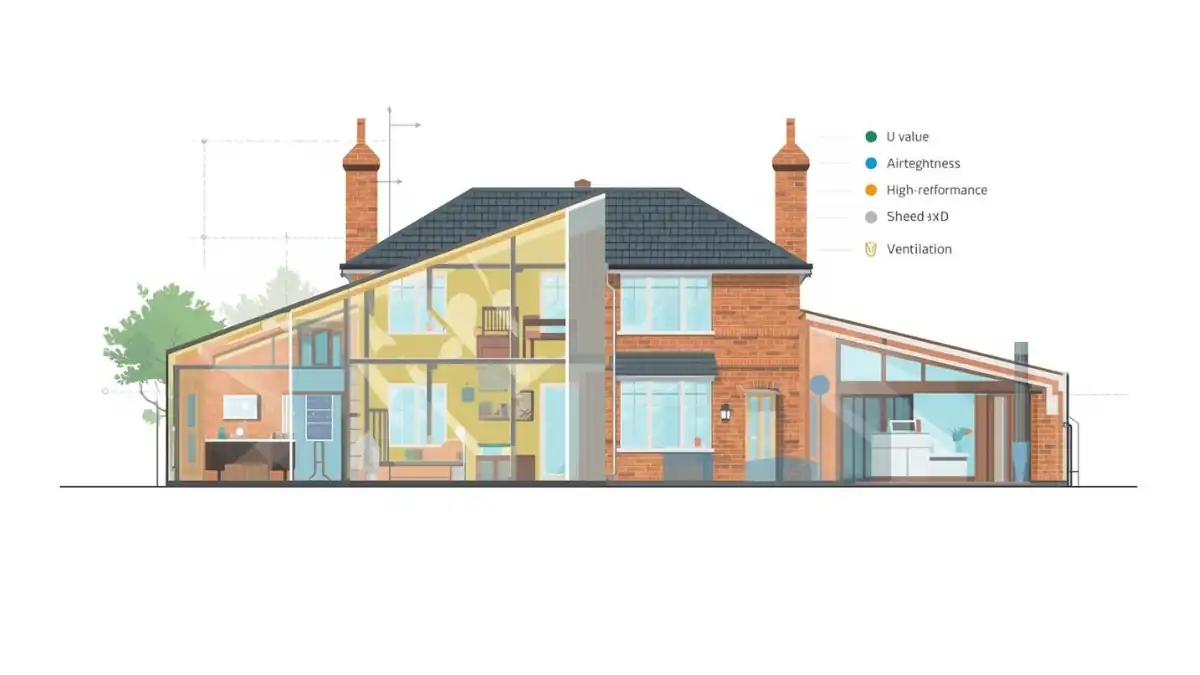
Share this post:
Quick summary: Building Regulations Part L
Building Regulations Part L is the section that focuses on energy efficiency — things like insulation, heat loss, heating systems and (in some cases) airtightness and ventilation strategy. If you’re extending, converting, replacing windows/doors, or upgrading thermal elements, Part L is often the rulebook Building Control will use to check your work is compliant.
- What it’s for: reducing heat loss and improving energy performance in new and existing buildings.
- Where homeowners get caught out: “like-for-like” assumptions on windows, under-insulating a new extension, or forgetting ventilation when making a home more airtight.
- Two volumes: Volume 1 is for dwellings; Volume 2 is for non-domestic buildings.
- Best next step: agree your approach early with Building Control so you don’t end up redesigning late in the build.
Below, we explain what Part L covers in plain English, what “U-values” really mean, how Part L links with Part F, and what changes to watch for before you start spending money.
Not sure what energy efficiency standard your project needs?
Tell us what you’re building (extension, loft conversion, window replacement, renovation) and we’ll explain what Building Control is likely to expect — before you commit to drawings or quotes.
Building Regulations Part L explained (in plain English)
If you’re improving your home, Building Regulations Part L is the part that’s trying to stop your new space becoming expensive to heat. In simple terms, it’s about conservation of fuel and power — keeping warmth in, reducing wasted energy, and making sure any new work doesn’t drag the rest of the house backwards.
Most homeowners first bump into Part L when they:
- build an extension,
- do a loft conversion or garage conversion,
- replace windows and doors,
- renovate walls, floors or roofs (for example during a full refurb), or
- change heating systems and controls.
If you want a broader overview of how the whole system works, our guide linked fromthis pageexplains what Building Control does, what gets inspected, and how sign-off normally happens.
What does Building Regulations Part L cover?
Part L covers the energy performance side of building work. That usually means a combination of:
- Insulation levels in walls, floors and roofs (new and upgraded elements),
- Heat loss through openings (windows, doors, rooflights),
- Thermal bridging (cold spots at junctions that cause heat loss and sometimes condensation),
- Airtightness (reducing uncontrolled draughts — but without creating stale air),
- Fixed building services such as heating systems and controls (and sometimes lighting and hot water efficiency),
- Evidence that the finished work matches what was designed (certificates, commissioning, test results where required).
In practice, Building Control tends to focus on two questions: (1) have you designed the work to meet the standard? and (2) can you prove it was built that way?
Part L Volume 1 vs Volume 2 (what’s the difference?)
Homeowners often search for “building regulations part l volume 1” and “volume 2” because the guidance is split:
- Volume 1 is aimed at dwellings (houses, flats, and home extensions).
- Volume 2 is for buildings other than dwellings (shops, offices, industrial units and many mixed-use buildings).
If your project is a normal home extension, loft conversion or renovation, you’re almost always dealing with the dwellings route. However, if a building has a mixed use, or you’re converting something unusual, it’s worth checking with Building Control early so the right approach is agreed.
Part L requirements for extensions, conversions and renovations
The exact compliance route depends on what you’re doing, but here’s what Part L usually means on common homeowner projects.
Extensions: making the new space “perform” properly
For extensions, Building Control will expect the new walls, floor, roof and glazing to meet modern energy standards. That affects:
- how thick insulation needs to be (and what type),
- whether junctions are detailed properly to reduce cold bridging, and
- the spec of windows/doors and rooflights.
It’s not just about comfort — a poorly insulated extension can cause condensation where warm, moist air meets cold surfaces.
Loft conversions: roof insulation and airtightness details
Loft projects often fail on the “small details”: gaps in insulation, awkward eaves areas, and unplanned air leakage paths. Good drawings help, and so does having a clear plan for ventilation (more on that below).
Renovations: upgrades to thermal elements
If you’re stripping back plaster, re-roofing, or renewing floors, you may be expected to upgrade the thermal performance where it’s reasonable to do so. This is one of the reasons Building Control involvement early can save you money — it helps you avoid rework and last-minute specification changes.
If you’re at the drawings stage, our guide onthis pageexplains what Building Regulations drawings typically include and how they differ from planning drawings.
Building Regulations Part L U-values: what they mean (and why they matter)
A big Part L search term is “building regulations part l u values” — because U-values are the simple way of describing how much heat escapes through a building element.
- Lower U-value = less heat loss = better thermal performance.
- U-values apply to things like walls, roofs, floors, windows and doors.
- They’re influenced by insulation thickness, materials, build-up, and installation quality.
Part L uses a mix of “limiting” standards for elements and an overall approach to energy performance. That means you can’t treat it as a box-ticking exercise — the detail and the whole-building outcome both matter.
If you want a plain-English breakdown (including how homeowners compare window specs), seethis guide.It’s often the quickest way to understand what your builder or supplier is quoting.
Building Regulations Part L and Part F: airtightness vs ventilation
Homeowners also search for “building regulations part l and f” (or “part l and part f”) for a good reason: making a home more energy efficient often means making it more airtight — and that changes how moisture and air quality need to be managed.
In real homes, the risk is simple:
- If you reduce draughts but don’t improve ventilation, you can end up with condensation, mould risk, and poor air quality.
- If you over-ventilate without thinking, you can lose heat and undo the efficiency gains.
If you’re unsure what inspectors actually look for on site, this page is a useful primer:read this before your first inspection.
Worried your build-up won’t pass?
Send us your project outline and we’ll flag the common Part L problem areas (insulation, junctions, windows, ventilation) before you lock in materials and quotes.
Changes to Building Regulations Part L: what homeowners should watch
Searches like “building regulations part l 2010”, “part l 2013”, “part l 2021” and even “building regulations part l 2025” usually come from one concern: which rules apply to my project right now?
The key thing to know is that the Building Regulations are updated over time, and the supporting guidance can be amended. So the “right” answer depends on:
- what sort of work you’re doing (new build vs extension vs refurbishment),
- which compliance route Building Control agrees with you, and
- the timing of your application/notice and when work genuinely started on site.
For homeowners, the practical takeaway is simple: work to the standard Building Control expects now, not the standard someone used on a project years ago. That avoids delays, redesign costs, and awkward “please change it” requests mid-build.
How to comply (step-by-step)
Here’s the process we recommend if you want a smooth pass first time.
Step-by-step: making Part L straightforward
- Confirm your route with Building Control early. Decide whether you’re using a Full Plans route or a Building Notice route. This guide helps you compare them:see the difference here.
- Get proper drawings/specifications. Good Building Regulations drawings reduce “on-site guessing” and help builders price accurately.
- Choose insulation, glazing and junction details as a package. Don’t pick windows in isolation — they interact with walls, roof build-ups and ventilation.
- Plan ventilation alongside airtightness. If you’re improving seals, also upgrade extraction and background ventilation where needed.
- Photograph and record what you install. Take photos of insulation before it’s plasterboarded, and keep datasheets and certificates.
- Expect inspections at key stages. If you don’t know what those stages look like, start here:inspection expectations explained.
- Collect your completion paperwork. It’s vital for future sale/remortgage:what the certificate is and why it matters.
If you’d like a wider context (what Parts exist, how they interlink, and what’s commonly overlooked), you’ll find it onthis overview page.
FAQs: Building Regulations Part L
What is Part L of the Building Regulations?
Part L is the energy efficiency section of the Building Regulations. It’s focused on conserving fuel and power — meaning insulation, heat loss through windows/doors, and how heating and other fixed services perform. Building Control uses it to judge whether your work meets modern energy standards.
What does Part L of the Building Regulations cover?
It covers thermal performance (walls, roofs, floors, openings), airtightness strategy (where relevant), reducing thermal bridges, and the efficiency of fixed building services such as heating and controls. It also affects what evidence you’ll need to show Building Control that the work was built as designed.
What are Building Regulations Part L requirements for a typical extension?
Typically, Building Control expects the new elements of the extension (walls, roof, floor and glazing) to meet current thermal standards, with sensible detailing at junctions. The exact spec depends on construction type and the overall design, so it’s best agreed at drawings stage rather than guessed on site.
Building Regulations Part L U-values: do I need to hit specific numbers?
Part L uses limiting standards for elements (which are often expressed as U-values) and an overall approach to performance. In other words: yes, U-values matter, but they’re not the only thing Building Control will consider. If you want to understand U-values without getting lost in jargon, start withthis explainer.
What’s the difference between Building Regulations Part L Volume 1 and Volume 2?
Volume 1 is for dwellings (houses and flats). Volume 2 is for buildings other than dwellings (non-domestic). Most homeowner projects use the dwellings route, but conversions and mixed-use buildings sometimes need extra care — Building Control can confirm which route applies.
How do Building Regulations Part L and Part F work together?
Part L pushes for reduced heat loss (often meaning better airtightness). Part F deals with ventilation. If you improve airtightness without planning ventilation properly, you can create condensation and air quality problems. The best approach is to design both together so you keep heat in while still getting healthy air exchange.
Where can I find a Building Regulations Part L PDF?
The official guidance is published online by government and also summarised by the Planning Portal. In the “External links” section below, we’ve included the two safest places to start, so you’re not relying on outdated downloads.
Next steps & useful guides
If you’re planning works where Part L is likely to apply, these guides usually help homeowners avoid the common missteps:
- How Building Control works (and what you’re actually being assessed on)
- What drawings you typically need for Building Regulations
- A homeowner-friendly guide to U-values and comparing specs
- What to expect at inspections (so you’re ready at each stage)
- Why the completion certificate matters (and what to keep)
- A wider overview of Building Regulations approval and compliance
- What Part L isThe Building Regulations section focused on energy efficiency — conserving fuel and power through insulation, heat loss control, and efficient fixed services.
- Who enforces itBuilding Control (local authority or an approved inspector), not the planning department.
- Volume 1 vs Volume 2Volume 1 is dwellings; Volume 2 is non-domestic buildings.
- Common homeowner pinch pointsExtensions, loft conversions, renovated roofs/walls/floors, and replacement windows/doors — especially where airtightness and ventilation need to be balanced.
- What helps you pass first timeGood drawings/specification, clear ventilation strategy, and keeping evidence (photos + datasheets + certificates) from the start.
External links (official guidance)
- GOV.UK — official guidance page (downloadable documents)
- Planning Portal — overview of the approved documents
Note: guidance can change over time, and different UK nations have different regimes. This article assumes England unless your Building Control body tells you otherwise.
Final thought
Part L doesn’t need to feel intimidating — but it does need to be planned. If you lock in insulation build-ups, glazing specs and ventilation early (and keep your evidence as you go), compliance becomes a straightforward checklist rather than a last-minute scramble.
Want us to sanity-check your plans before you build?
Plans Made Easy can prepare compliant drawings, help you choose a sensible specification, and guide you through Building Control so you avoid delays, redesign costs and missed paperwork.
Performance Verified ✅
This page meets PME Optimisation Standards — achieving 95+ Desktop and 85+ Mobile PageSpeed benchmarks. Verified on

