
Share this post:
Quick summary: Building Regulations Compliance Certificate
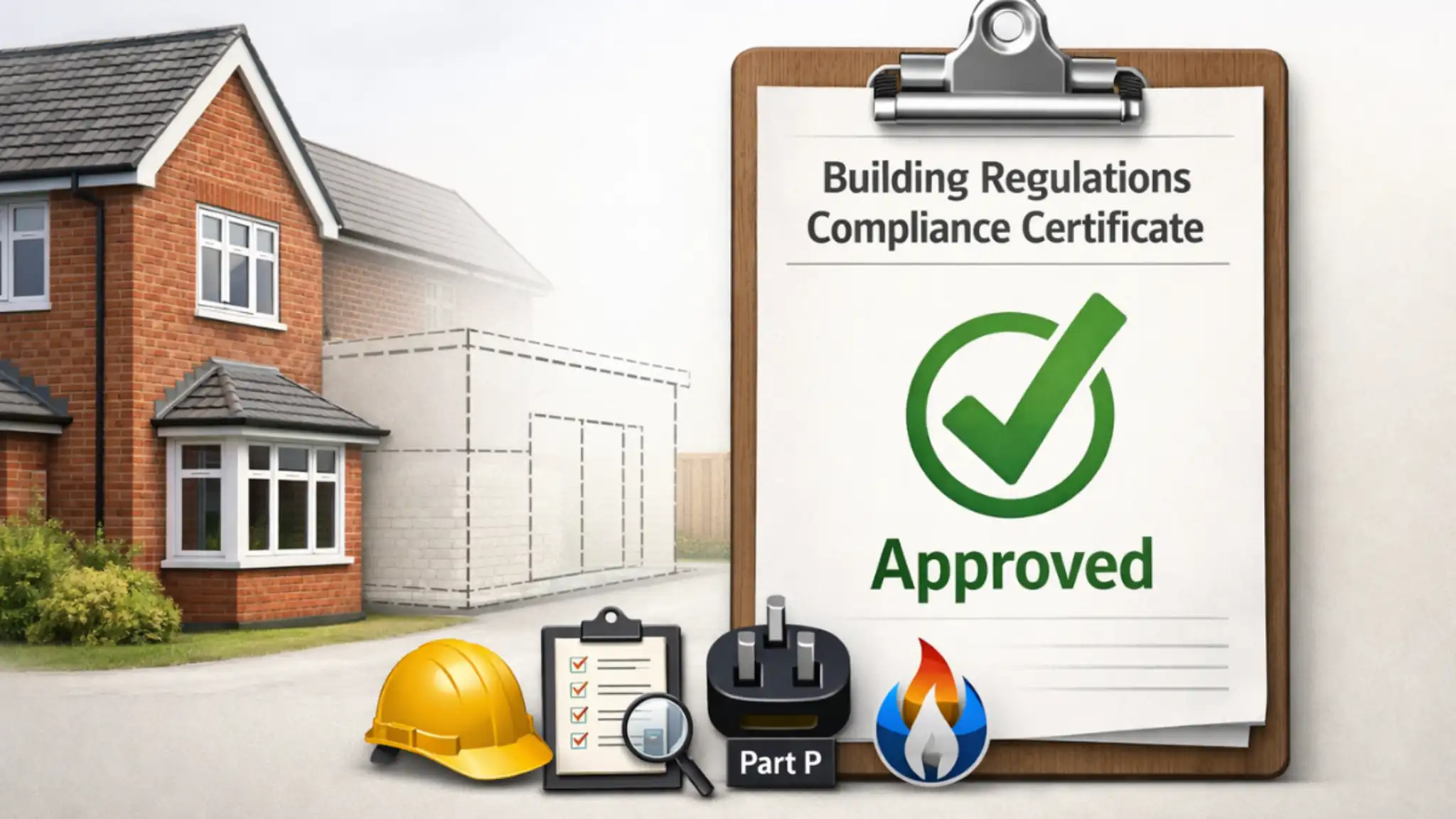
A Building Regulations Compliance Certificate is the paperwork that proves your building work was signed off as compliant by Building Control (or the relevant competent person scheme). It matters most when you sell, remortgage, insure, or if there’s ever a dispute about whether the work was done properly.
- Most common “compliance certificate” homeowners mean: a Completion Certificate from Building Control (local authority or approved inspector).
- Also common: separate certificates for electrical work (Part P) and gas (Gas Safe), plus things like glazing, boilers and heat pumps.
- If you can’t find it: you can often request a duplicate from the issuer — but if the work was never signed off, you may need a Regularisation route.
- Best time to fix it: before you sell. Leaving it until conveyancing usually creates delays and stress.
In this guide we’ll explain what the certificate actually is, when you need it, how to get a copy, and what to do if it never existed in the first place.
Not sure what paperwork you should have for past building work?
Tell us what you changed (extension, loft, conversion, structural work, electrics) and we’ll help you work out what certificates you should have — and how to get them.
Quick summary: Building Regulations Compliance Certificate
A Building Regulations Compliance Certificate is evidence that your work complied with Building Regulations and was either inspected and signed off by Building Control, or certified under an approved competent person scheme (most commonly for electrics, gas, windows and heating).
If you’re missing paperwork, the right solution depends on who signed the work off (local authority vs approved inspector vs installer scheme) and whether the work was ever properly notified and inspected.
What a Building Regulations Compliance Certificate actually is
Homeowners use the phrase “compliance certificate” in a few different ways. In practice, a Building Regulations Compliance Certificate usually means one of these:
- Building Control Completion Certificate — issued after the final inspection once the council (or an approved inspector) is satisfied the work complies.
- Compliance certificate from a competent person scheme — issued for certain types of work (for example, electrical work and window replacement) where the installer self-certifies compliance and registers the job.
- Supporting certificates — for example electrical installation paperwork, gas safety documentation, commissioning sheets and test results that Building Control may ask to see before they issue completion.
Why the name causes confusion
You might hear Completion Certificate, Final Certificate, Building Regulations Certificate, or Compliance Certificate used interchangeably. They’re all trying to answer the same question:“Was this work checked and approved?”
The safest approach is to identify who issued your paperwork and what work it relates to. Once you know that, you can work out whether you have the right document — or whether something is missing.
When you need a Building Regulations Compliance Certificate
Most people only realise they need a certificate when they sell their home — but there are other moments where it matters just as much.
1) Selling your home (or buying a home with alterations)
If you’ve done an extension, loft conversion, structural alterations, a garage conversion, or significant plumbing/electrical work, your buyer’s solicitor will usually ask for evidence the work complied.Without it, sales can stall while everyone argues about “what’s acceptable”.
2) Remortgaging or releasing equity
Lenders can request evidence that major works were properly approved — especially if a valuer spots a loft conversion, new openings, steels, or a large extension.
3) Insurance claims and disputes
If there’s a serious defect (or a neighbour dispute), being able to show that Building Control signed the work off can help demonstrate the work was handled through the correct process.
What “counts” as compliance paperwork (completion vs specialist certificates)
A common problem we see is homeowners having some paperwork, but not the one everyone expects. Here’s a straightforward way to think about it.
Building Control Completion Certificate (the big one)
This is normally the key document for larger projects. It confirms Building Control are satisfied the work complies based on inspections and evidence provided.
- Who issues it: your local authority Building Control team or an approved inspector.
- What it covers: the overall project (extension, loft conversion, structural changes, etc.).
- When you get it: after the final inspection, once any outstanding items are resolved.
Competent person scheme certificates (common add-ons)
Some work can be self-certified by a registered installer. These certificates may be separate from your completion paperwork — and sometimes Building Control will want to see them before they issue final sign-off.
- Electrical work (Part P) — typically requires proper certification and notification.
- Gas work — normally documented by the registered engineer.
- Replacement windows/doors — often certified by an installer scheme or handled via Building Control.
- Heating appliances — commissioning paperwork can be relevant where Building Control needs evidence of safe installation.
How to get a Building Regulations Compliance Certificate (and duplicates)
If the work was properly notified and signed off, getting a replacement is often straightforward. The key is working out who issued the original documentation.
Step 1: Identify who handled Building Control
Look for any old emails, letters, or invoices that mention:
- your local council’s Building Control department,
- an approved inspector company, or
- a “competent person scheme” registration confirmation (often for electrics/windows).
Step 2: Request a duplicate / copy
If it was signed off, you can usually request a copy from the issuer. In many cases there’s a small admin fee and it may take a little time to locate older records.
Step 3: Check what else should exist
Even where you have a completion certificate, it’s sensible to keep any supporting documents too — especially for kitchens, bathrooms, lofts and structural work.If you want a simple “what should I keep?” list, our team covers this in more detail here:what to keep in your home project file.
Not sure who signed off your work — or what you’re missing?
Send us the project details (address + rough year + what work was done). We’ll help you work out the most likely paperwork route and the quickest way to fix any gaps.
What if there is no Building Regulations Compliance Certificate?
This happens more often than you’d think — particularly with older extensions, rushed projects, or DIY work where the notification step was missed.The right solution depends on the reason it’s missing.
Scenario A: The work was notified, but never “closed off”
Sometimes the application exists, inspections happened, but the final visit never took place — or a couple of items were left outstanding.In that case, the quickest path is usually to contact Building Control, ask what’s needed to close it, and arrange the final inspection.
Scenario B: The work was never notified (no record)
If there’s no record, you may need to apply for a retrospective approval route (often referred to as regularisation).This can involve opening up areas of the build so an inspector can see key elements (structure, insulation, fire safety measures, drainage, etc.).
If you’re in this situation, it’s worth reading our guide onwhat to do when work was never signed offso you understand what Building Control may require.
What about indemnity insurance?
Indemnity policies are sometimes used in conveyancing, but they’re not the same as proving compliance. They also come with conditions and limitations.If the work is recent, complex, or safety-critical, the better long-term fix is usually to get the paperwork properly resolved.
Step-by-step checklist: getting compliant paperwork in place
Step-by-step: what to do next
- Write down what work was done (extension, loft, structural openings, electrics, windows, heating) and roughly when.
- Search your emails and documents for any reference to Building Control, an approved inspector, or installer registration.
- Request duplicates from the issuer if the work was signed off but you’ve lost the certificate.
- Check for “missing companion paperwork” (especially for electrics and gas work) that might be needed as supporting evidence.
- If there is no record, consider a retrospective route and be prepared for inspections and potential opening-up.
- Create a simple folder for future proofing: approvals, drawings, inspection notes, certificates and warranties.
If you’re planning new works and want to avoid problems later, it also helps to understand how Building Control inspections work in practice. This guide is a good starting point:what happens during site inspections.
FAQs: Building Regulations Compliance Certificate
Is a Building Regulations Compliance Certificate the same as a Completion Certificate?
Usually, yes — most homeowners mean the Building Control Completion Certificate. However, the phrase “compliance certificate” is also used for separate installer-issued documents (for example, electrics or windows). If you’re unsure, check who issued it and what work it references.
Can I sell my house without a Building Regulations Compliance Certificate?
Sometimes sales do still proceed, but it commonly causes delays, renegotiation, or extra legal work. If the work was safety-critical (structural changes, loft conversions, extensions), buyers and lenders often want a clear paper trail. If you can fix the paperwork before marketing the property, it’s usually far less stressful.
How do I get a duplicate if I’ve lost my certificate?
Start by identifying who signed off the work (local authority Building Control, an approved inspector, or an installer scheme). Then request a copy using your address and approximate completion date. If you can’t find who issued it, we can help you work out the most likely route based on the project type and timeframe.
What if the work was done years ago and there was never any sign-off?
You may need a retrospective route, which can involve inspections and sometimes opening up parts of the work so an inspector can verify compliance. This is one reason older “mystery conversions” can become a headache during conveyancing — it’s not always a quick admin fix.
Do I need separate certificates for electrics and gas even if I have Building Control sign-off?
Often, yes. Electrical and gas work usually has its own certification route, and Building Control may rely on those documents as part of the overall sign-off. Keeping these together in one folder is ideal.
Next steps & useful guides
If you want to go deeper (or you’re trying to “tidy up” paperwork before selling), these guides are the most relevant next reads:
- Start with the complete homeowner overview (bigger picture + common mistakes)
- Understand what the inspector actually checks (and when)
- A plain-English walkthrough of the approval routes
- If you’ve heard “building notice” mentioned, here’s what it means
- How the certificate fits into the overall process
- What completion paperwork is and why conveyancers ask for it
- If the work was never signed off, this explains your options
- What it provesThat the work was properly checked and signed off as compliant (or certified under an installer scheme).
- Most common documentA Building Control Completion Certificate for extensions, loft conversions and structural changes.
- When you’ll be asked for itTypically during sale, purchase, remortgage or where insurers/lenders query major alterations.
- If it’s lostYou can often request a duplicate from the issuer (local authority, approved inspector, or installer scheme).
- If it never existedYou may need a retrospective route (often involving extra checks and sometimes opening-up).
- Best homeowner moveFix paperwork gaps before you sell — it reduces delays and avoids last-minute negotiations.
Want us to sense-check what certificates you should have for your project? Message Plans Made Easy and we’ll point you in the right direction.
Official guidance
For wider UK planning and application guidance (useful context if your project involved permissions as well as compliance), you can also check:
- Planning Portal – national planning guidance and application information
- GOV.UK – planning permission guidance (England & Wales)
Final thoughts
If you take one thing away, let it be this: a Building Regulations Compliance Certificate is about proof. When everything is tidy, selling and refinancing is straightforward. When paperwork is missing, it tends to surface at the worst possible time.
If you’re unsure what should exist for your home, or you suspect past work was never properly signed off, we can help you work out the cleanest next step — without guesswork.
Ready to get your paperwork sorted properly?
Plans Made Easy can help you identify what certificates you need, prepare compliant drawings where required, and guide you through the right approval route.
Performance Verified ✅
This page meets PME Optimisation Standards — achieving 95+ Desktop and 85+ Mobile PageSpeed benchmarks. Verified on

