
Share this post:
Quick summary: Building Regulations Part K
Building Regulations Part K is the UK safety guidance that helps prevent people being injured byfalls, collisions and impacts in and around buildings. For most homeowners, it becomes relevant when you changestairs, add a loft conversion, fit balustrades/guarding, install certain windows, or alter internal layouts.
- Most common trigger: new or altered stairs (loft conversions, split-levels, basement access).
- Also covers: handrails, guarding/balustrades, and protection where someone could fall from height.
- Glazing safety: includes things like making large panes more visible (“manifestation”) and reducing fall risk from low windows.
- Applies through Building Control: you normally demonstrate compliance via drawings/specification and site inspections.
The “right answer” depends on your layout, floor-to-floor heights, and who will use the space (children, older relatives, guests), so it’s sensible to treat Part K as a design checklist early — not a last-minute tick-box.
Not sure if your stairs or balustrade design will pass Building Control?
Share what you’re planning and our team will flag common Part K issues early — before you pay for a staircase that needs reworking.
What Building Regulations Part K covers (in plain English)
Building Regulations Part K is about preventing injury from falling, collision and impact in and around buildings.In practice, that usually means safer stairs, sensible handrails, compliant guarding/balustrades, and safer design around windows and large panes of glass.
Part K sits within the wider Building Regulations framework (there are multiple “Parts” covering everything from structure and insulation to fire safety).So while Part K is the “stairs and guarding” one most people remember, your project may also be checked against other Parts at the same time.
Building Regulations Part K stairs: what Building Control looks for
If you’re searching for building regulations Part K stairs, you’re usually planning one of these:a loft conversion stair, a new staircase to a basement, swapping a steep flight for something safer, or changing the layout so the stair turns or lands differently.
1) Safe, predictable steps (not “trip traps”)
Building Control will want the stair to feel consistent underfoot. That typically means the rise and going are sensible and consistent,and the pitch isn’t so steep that it becomes hazardous in day-to-day use.
2) Adequate headroom where you naturally walk
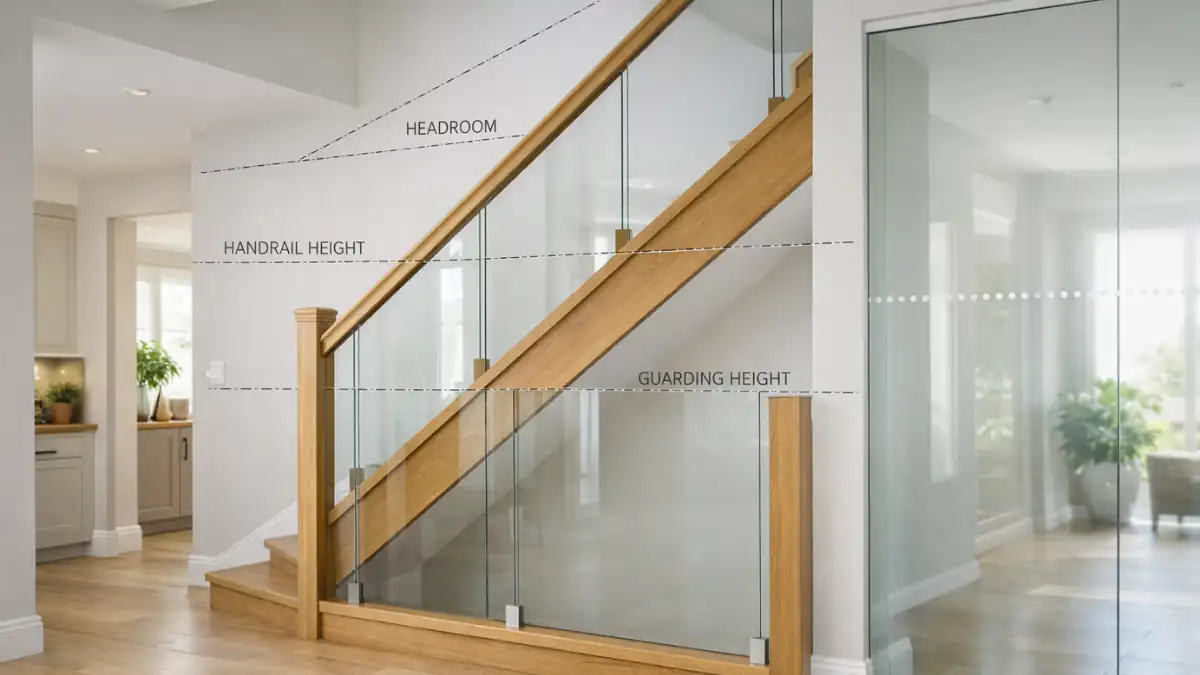
Headroom issues are very common on loft conversions, especially where the stair arrives under a sloping roof.A staircase that technically “fits” can still be rejected if people would naturally hit their head at the tightest point.
3) Landings and changes in direction
Where the stair turns, or where there’s a doorway at the top/bottom, Building Control will check that you can move safely without being forced into an awkward step.This is where good drawings help — it’s much easier to fix on paper than once the opening has been cut.
If you want a deeper stair-only breakdown (in plain English), our guide on stair requirements is a useful next read:see the stair guide here.
Building Regulations Part K handrails, guarding & balustrades
A big chunk of Part K is about protection from falling — especially on stairs, landings, balconies, and any edge where someone could drop from height.This is why you’ll also see searches like building regs Part K balustrade or building regulations Part K handrails.
Handrails: what matters most
- People must be able to grip it properly (a chunky “shelf” rail can be less safe than it looks).
- It needs to be continuous where practical, so you’re not forced to let go at the worst moment.
- Position matters — especially on narrow stairs, winders, or where the wall line changes.
Guarding & balustrades: height and gaps
Guarding is the barrier that stops someone falling from a landing, a balcony edge, or the side of a stair.Approved Document K gives typical dimensions for things like minimum guarding heights and maximum gaps (to reduce the risk of children slipping through).Your inspector will be looking for a robust, climb-resistant solution that matches the specific situation.
Glass balustrades can comply, but the specification matters (glass type, fixings, edge protection, and how it performs if impacted).For that reason, we always recommend agreeing the detail with Building Control early — and keeping paperwork from the supplier.
Building Regulations Part K windows & glazing safety (“manifestation”)
Part K isn’t only stairs. It also includes guidance on reducing injury risk around glazing — including what homeowners often call“manifestation” (making large panes obvious so people don’t walk into them).That’s why you’ll see searches like building regulations Part K windows and building regulations Part K manifestation.
Low windows and fall risk
Where a window is low and there’s a significant drop outside, Building Control may expect safety measures such as suitable guarding or opening restrictors.The exact approach depends on the height of the opening, the drop, and how the room is used (bedrooms, landings, and mezzanines are common “risk” spots).
Collision risk with large panes
Full-height glazing and large internal screens can look fantastic, but they can also be a collision hazard if they’re hard to see.Part K guidance commonly expects visible markings at the right height so people naturally notice the glass.
Part K in the UK: England vs Wales vs other nations
People often search building regulations Part K UK or building regulations Part K England because the rules can be confusing.The key point is: Building Regulations are a devolved matter.
- England: Building Control typically references the English Approved Documents (including Approved Document K).
- Wales: Wales publishes its own approved documents and updates may differ in date and wording.
- Scotland: uses the Scottish Technical Handbooks (not the Approved Documents).
- Northern Ireland: uses Technical Booklets (not the Approved Documents).
How often do Building Regulations change?
There isn’t a single timetable, which is why homeowners ask “how often are building regulations updated?” or “how often do building regs change”.Updates happen when government amends the Building Regulations or refreshes the supporting Approved Documents — sometimes across multiple Parts at once, sometimes one at a time.
The practical takeaway is simple: if you’re designing stairs, guarding, or glazing safety details, make sure your designer and Building Control are working from the current guidance for your nation.That way, you don’t get caught out by a detail that was acceptable years ago but is treated differently now.
Step-by-step: how to avoid Part K problems on your project
The easiest way to “pass” Part K is to design with it from the start. Here’s the approach we recommend for homeowners.
Part K compliance checklist (homeowner-friendly)
- Identify the risk areas early. New stairs? New landing edge? Large glazing? Low windows above a drop?
- Decide how you’re applying to Building Control. If you’re unsure, our guide explains the route that fits your project:compare the two application options here.
- Get the stair opening and headroom checked on drawings. This is where most loft stairs fail first time.
- Agree the guarding/handrail strategy. Especially with glass balustrades or open-tread designs.
- Confirm glazing safety details. Markings (“manifestation”), safety glass type, and any fall prevention measures.
- Keep product paperwork. Manufacturer specs and invoices help prove what was installed if questions come up later.
- Book inspections at the right times. Don’t wait until everything is finished — it’s harder to fix once it’s plastered and painted.
If you’re new to the process, these two guides help you understand what inspectors actually look for:see how Building Control works andwhat happens at inspections.
Want us to sanity-check your drawings before you build?
We can review your stair/guarding layout and highlight the typical Part K issues that cause delays on site.
Related comparisons homeowners often ask
When you’re dealing with Part K, you’ll often bump into other Building Regulations topics at the same time.These quick comparisons help you keep the bigger picture in view.
Part K vs other Building Regulations “Parts”
- Part K focuses on falls, collisions and impacts (stairs, guarding, glazing visibility).
- Fire safety rules can become critical in loft conversions, where escape routes and protected stair enclosures may be reviewed together with stair safety.
- Access requirements may matter where you’re altering entrances, thresholds, or creating a new habitable floor level.
FAQs: Building Regulations Part K
What is Building Regulations Part K?
It’s the part of the Building Regulations guidance focused on preventing injury from falling, collision and impact.For homeowners, it most often comes up with stairs, handrails, guarding/balustrades, and certain windows and glazing situations.
Does Building Regulations Part K apply to stairs in loft conversions?
Yes — loft conversion stairs are one of the most common triggers for Part K checks.Building Control will look closely at things like headroom, safe stepping, landings/turns, and the guarding/handrail details.Because space is tight in lofts, it’s worth designing the stair opening and arrival point early rather than trying to squeeze it in later.
What does Part K say about balustrades and guarding gaps?
Part K guidance is there to prevent falls, especially for children.In simple terms, Building Control will want guarding that is high enough, strong enough, and designed so people (and especially children) can’t easily slip through or climb it.The exact detail depends on where it is (stairs vs landing vs balcony) and the drop height.
What does “manifestation” mean in Building Regulations Part K?
“Manifestation” is making large panes of glazing obvious so people don’t walk into them.It usually means visible markings at the right height on the glass, especially for internal screens and full-height glazing that can be hard to spot.
Do Building Regulations Part K windows require opening restrictors?
Sometimes. Where there’s a fall risk from a low opening above a significant drop, Building Control may expect safety measures such as guarding or opening restrictors.The right solution depends on the heights involved and how the room is used, so it’s best agreed on drawings before installation.
How often do building regulations change — and how do I check the latest Part K guidance?
Updates don’t follow a fixed schedule.The safest approach is to check the current published guidance for your nation (England/Wales/Scotland/Northern Ireland) and confirm with your Building Control body which edition they’re applying.We’ve included official references below so you can cross-check easily.
Worried your project might fail on a “small detail”?
We can help you get the drawings and specification right first time, so inspections are calm and predictable.
Next steps & useful guides
If you’re moving from “research” to “doing”, these guides usually help homeowners avoid delays:
- Start with our complete homeowner overview
- See what drawings you’ll typically need
- Understand who approves what (and when)
- Know what to expect during site visits
- Pick the right submission route for your project
- Read the plain-English stair requirements guide
- Make sure you keep the right certificates and evidence
- What it coversProtection from falling, collision and impact — commonly stairs, handrails, guarding/balustrades, and glazing safety.
- Most common homeowner triggerLoft conversion stairs and changes to landings/open-plan layouts.
- Where it’s assessedThrough Building Control (drawings/specification + inspections).
- Common fail pointsHeadroom at tight points, inconsistent steps, weak/“climbable” balustrades, and unclear glazing safety details.
- Best way to avoid delaysDesign with Part K from day one, agree details early, and keep supplier documentation.
Official references (for extra peace of mind)
- Planning Portal — national guidance hub
- GOV.UK — planning permission in England & Wales
- GOV.UK — Approved Document K overview page
- Approved Document K PDF (England)
- Planning Portal — Part K overview
Ready to move your project forward?
Plans Made Easy can prepare compliant drawings, coordinate with Building Control, and help you avoid the common Part K delays that cost time and money.
Performance Verified ✅
This page meets PME Optimisation Standards — achieving 95+ Desktop and 85+ Mobile PageSpeed benchmarks. Verified on

