
Share this post:
Quick summary: Building Regulations UK
If you’re planning works at home, Building Regulations UK compliance is what makes sure the work is safe, structurally sound, energy efficient, and properly signed off by Building Control. Most problems homeowners hit come down to one thing: starting without a clear compliance plan (or missing an inspection along the way).
- Building Regulations and planning are different — you can be “fine for planning” and still fail Building Control.
- You usually need a route: Full Plans (best for clarity) or a Building Notice (faster, but more risk).
- Inspections matter — if key stages aren’t inspected, you can struggle to get a completion certificate later.
- Paperwork is part of passing — certificates (electrics, glazing, boilers, insulation evidence) are often what delays sign-off.
Below is our practical checklist to help you pass first time — without surprises, delays, or a last-minute scramble when you come to sell.
Not sure if your project needs Building Control sign-off?
Tell us what you’re building and we’ll explain what approval route fits best, what inspections to expect, and what evidence you’ll need to pass first time.
Quick summary: Building Regulations UK checklist
This guide is a practical Building Regulations UK checklist to help you get through Building Control smoothly — especially if you’re doing an extension, loft conversion, garage conversion, structural alterations, new windows/doors, or major electrical/plumbing work.
The aim is simple: get the right approval route, line up the right drawings and certificates, hit the inspection stages, and finish with a completion certificate you can keep with your house documents.
Building Regulations UK checklist (in plain English)
Think of Building Regulations as the safety and performance rules for building work — structure, fire safety, insulation, ventilation, drainage, electrics and more. Building Control (either your local council team or an approved professional) checks your project meets those rules.
If you want to avoid stress, the key is planning your compliance before work starts — not trying to “patch it up” at the end when an inspection is missed or a certificate can’t be found.
When Building Regulations UK rules apply (and common exemptions)
Homeowners often ask whether Building Regulations are “only for big jobs”. In reality, the trigger is usually the type of work, not how expensive it feels.
Building Regulations commonly apply to
- Extensions (single or double storey), including foundations, structure, insulation and glazing.
- Loft conversions (stairs, structure, fire safety, insulation, escape routes).
- Garage conversions (thermal upgrades, ventilation, fire separation, drainage changes).
- Structural work (steel beams, removing load-bearing walls).
- New windows/doors and significant glazing changes (energy and safety standards).
- Electrics in controlled areas and certain installations (often via competent person certification).
- Drainage alterations and new bathrooms/kitchens where waste/ventilation is affected.
Common “it depends” exemptions (where people get caught out)
- Small detached outbuildings can be exempt in some situations, but electrics, plumbing, sleeping accommodation, boundary proximity and size can change the picture.
- Like-for-like replacements are sometimes treated differently from alterations — however, the moment you change structure, layout, drainage or thermal performance, compliance usually comes back into play.
Building Regulations UK approval routes: Full Plans vs Building Notice
To pass Building Control first time, you need the right route. The two main options for typical domestic work are Full Plans and a Building Notice.
Full Plans (best for clarity and fewer surprises)
- You submit drawings/specification up front.
- Building Control checks the plans and confirms what they expect to see.
- It’s usually the best option for extensions, loft conversions, structural changes and anything more complex.
Building Notice (faster to start, but higher risk)
- Less information is submitted at the start.
- Compliance is assessed mainly through inspections and evidence during the build.
- It can work for simple, straightforward jobs — but it’s easier to get caught out if details weren’t agreed early.
If you want a deeper explanation of which route suits your project, see our guide comparing the two routes:Full Plans vs Building Notice.
Want to pass inspections first time — without guesswork?
We can advise on the best approval route, prepare a compliant drawing pack, and help you line up certificates so Building Control can sign off smoothly.
Documents you need to pass Building Control first time
A lot of “failures” aren’t dramatic structural issues — they’re missing information. Building Control needs enough evidence to confirm compliance.
1) Drawings / specification (especially for Full Plans)
- Existing and proposed plans and elevations
- Key sections and construction build-ups (floors, walls, roof insulation)
- Structural intent (and how loads are supported)
- Ventilation, drainage and fire safety notes where relevant
If you’re not sure what level of detail you need, our guide on what to prepare explains it clearly:what drawings you’ll need for approval.
2) Structural calculations (when structure changes)
If you’re adding steel beams, opening up rooms, changing roof structure, or building an extension with new foundations, Building Control will usually expect structural calculations and details.
Helpful read if you’re planning structural alterations:when calculations are needed and why.
3) Certificates and test evidence (the “sign-off” paperwork)
These vary by project, but commonly include:
- Electrical certification (often via a competent person)
- Glazing certification (if windows/doors are replaced)
- Boiler/heating commissioning evidence (where applicable)
- Insulation evidence (product specs, photos, thicknesses)
- Fire safety details where relevant (especially loft conversions)
We also recommend keeping a tidy “project file” as you go. This guide shows what to keep and why:what documents you should hold onto.
Building Control inspections: the stages homeowners miss
Inspections vary by project, but most domestic jobs follow predictable checkpoints. Missing one is a common reason sign-off becomes difficult later.
Typical inspection stages (examples)
- Start / commencement (especially if you’re on a notice route)
- Excavations / foundations before concrete is poured
- Damp-proof course / damp-proof membrane and oversite
- Drainage before it’s covered up
- Structural elements (steel beams, joists, roof alterations)
- Insulation before plasterboard goes on
- Final inspection and completion evidence review
If you want a clearer “what to expect” run-through, this guide breaks down inspections in homeowner terms:what inspectors look for and when.
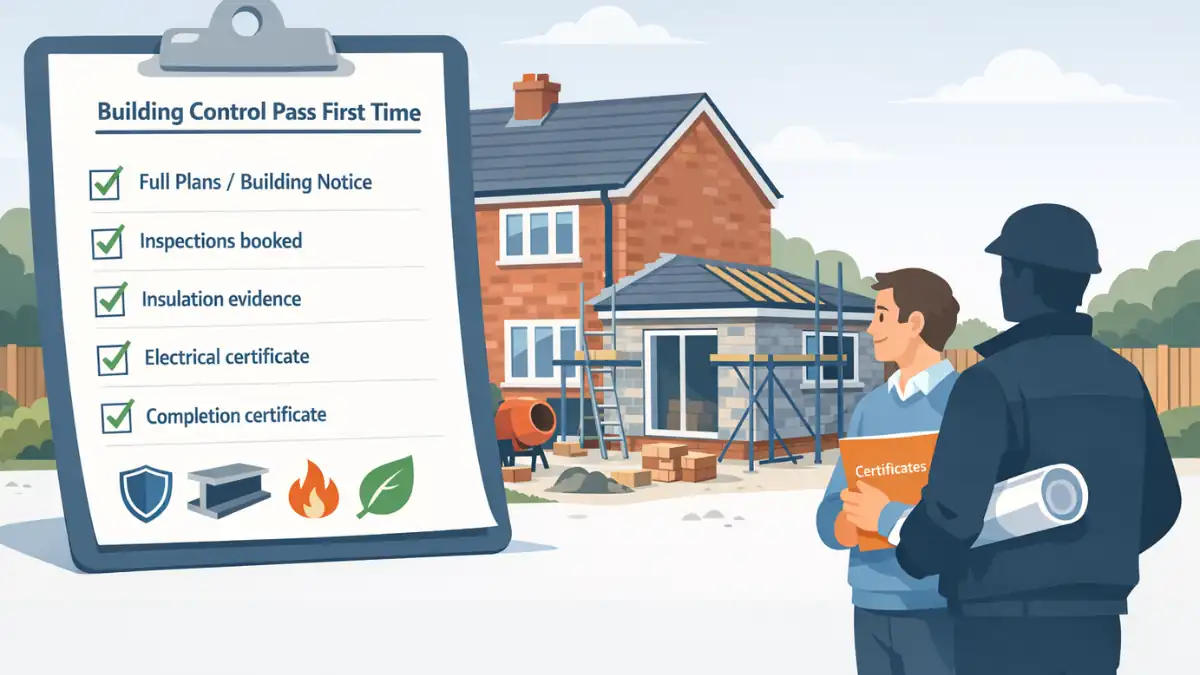
Step-by-step: Building Regulations UK pass-first-time checklist
Here’s the exact checklist we recommend for homeowners who want a smooth approval and a clean completion certificate at the end.
Pass-first-time checklist (save this)
- Confirm whether the work is controlled. If it changes structure, fire safety, drainage, ventilation, electrics, glazing, or thermal performance, treat it as likely needing approval.
- Choose the right route early. Full Plans for clarity on complex jobs; Building Notice only where the detail risk is low.
- Sort drawings/specification before you start. The clearer the information, the fewer surprises on site.
- Line up structural input where needed. Don’t leave steels/foundations to “figure out on the day”.
- Book inspections before covering work up. Foundations, drainage, and insulation are the big ones homeowners miss.
- Collect certificates as you go. Electrics, glazing, commissioning — keep them together in one folder.
- Photograph hidden work. Insulation thickness, membranes, drainage runs — photos help if questions come up later.
- Request the completion certificate promptly. Don’t leave it “for later” once the builder has moved on.
Pitfalls & gotchas that trigger rework
If you want to avoid expensive fixes, keep an eye on these common failure points:
- Insulation details not matching the design (or missing evidence once it’s covered).
- Ventilation overlooked in bathrooms/kitchens and new airtight spaces.
- Drainage changes done without inspection before backfilling.
- Stairs and escape routes not resolved early enough on loft conversions.
- Starting work without an approval route — then trying to “regularise” later under pressure.
Related comparisons homeowners often Google
A few common “comparison” searches come up again and again. These quick clarifications help avoid the wrong assumptions:
- Building Regulations vs planning permission: planning is about whether you can build it in principle; Building Regulations are about how it’s built and safety/performance.
- Building Control vs Building Regulations: Building Regulations are the rules; Building Control is the checking/approval process.
- “Like-for-like” vs alterations: small replacements can be simpler, but as soon as you change performance, structure or layout, compliance usually matters again.
FAQs: Building Regulations UK
When are Building Regulations needed in the UK?
Building Regulations are commonly needed for extensions, loft/garage conversions, structural alterations, drainage changes, significant electrical work, and many window/door replacements. The safest approach is to confirm early, because the approval route and inspection stages need to be planned before work is covered up.
Are Building Regulations a legal requirement?
Yes — if your work falls within the types of “controlled work”, compliance is required. Even if a project doesn’t need planning permission, Building Regulations can still apply, and Building Control may still need to inspect and sign it off.
What happens if you don’t get Building Regulations approval?
The immediate risk is delays and rework if issues are found. Longer term, the bigger problem is often paperwork: missing approval or a completion certificate can complicate selling, remortgaging, or insurance queries. If the work is already done, you may need a process to prove compliance afterwards.
What is Building Control in the UK?
Building Control is the checking and sign-off process that confirms your work meets the Building Regulations. It usually involves plan checks (for Full Plans) and site inspections at key stages, followed by a completion certificate once everything is compliant and evidence is provided.
Who enforces Building Regulations in the UK?
Building Regulations are enforced through the Building Control process. Depending on the route and project, this may involve your local authority Building Control team (council) or another authorised route. The key for homeowners is to follow the agreed process and keep evidence tidy throughout the build.
How much do Building Regulations fees cost in the UK?
Fees vary depending on the type and size of the work, as well as the route you choose. A simple job will usually be less than an extension or loft conversion where more inspections and checks are required. If you want, share your project scope and we can explain the typical fee band and what’s included.
How long are Building Regulations approvals valid for?
This can depend on the type of approval route and how the project progresses. The practical issue is that if work stalls for a long time, standards and expectations can change — and you may need updated details to complete sign-off. It’s best to keep Building Control informed if your programme changes significantly.
Which buildings are exempt from Building Regulations?
Some smaller detached buildings and certain minor works can be exempt in specific circumstances, but exemptions are very conditional (size, use, proximity to boundaries, services like electrics/plumbing, sleeping accommodation, and more). If you’re not sure, get it checked before you build — it’s an easy place to make an expensive assumption.
How often do Building Regulations change in the UK?
Updates happen periodically, and parts can be amended as standards develop (especially around energy efficiency and safety). That’s another reason it’s worth confirming requirements at the start of your project — and not relying on what a friend did “a few years ago”.
Worried you’ll miss an inspection or a certificate?
We can map out the approval route, inspection stages and required paperwork for your project — so you can avoid delays and get a clean completion certificate.
Next steps & useful guides
If you’re moving from “research” to “doing”, these guides will help you plan the process properly:
- how the approval process works from start to finish
- what to expect at inspections (and when to book them)
- what drawings and detail levels usually pass first time
- a practical homeowner guide to fire safety requirements
- why completion certificates matter (and how to get one)
- how planning and compliance overlap on extensions
- how planning fits into the wider project journey
- What they areMinimum standards for safety and performance (structure, fire safety, insulation, ventilation, drainage, electrics and more).
- What “passing” meansChoosing an approval route, meeting inspections, supplying evidence, and receiving a completion certificate.
- Most common reason for delaysMissing inspections or missing certificates once work is covered up.
- Best homeowner strategyUse clear drawings/specification, confirm key details early, and keep a tidy folder of evidence throughout the build.
- If work is already doneYou may need a separate route to prove compliance later — and it’s often harder once finishes are in place.
Want us to tailor this checklist to your project? Send us a brief and we’ll tell you what to do next.
Official guidance
For national guidance and the most up-to-date public information, it’s worth checking:
- Planning Portal – national guidance and application information
- GOV.UK – planning permission in England and Wales
How Plans Made Easy can help
Passing Building Control is rarely about “luck” — it’s about having the right information, at the right time, and making sure inspections and certificates are managed properly. That’s exactly where many homeowner projects get delayed.
Plans Made Easy can prepare compliant drawings, help you choose the best approval route, and guide you through the inspection stages so you can finish with the right certificates and a clean completion sign-off.
Ready to move your project forward?
We can prepare compliant plans, guide you through Building Control, and help you get signed off without last-minute stress.
Performance Verified ✅
This page meets PME Optimisation Standards — achieving 95+ Desktop and 85+ Mobile PageSpeed benchmarks. Verified on

