
Share this post:
Starting a home project?
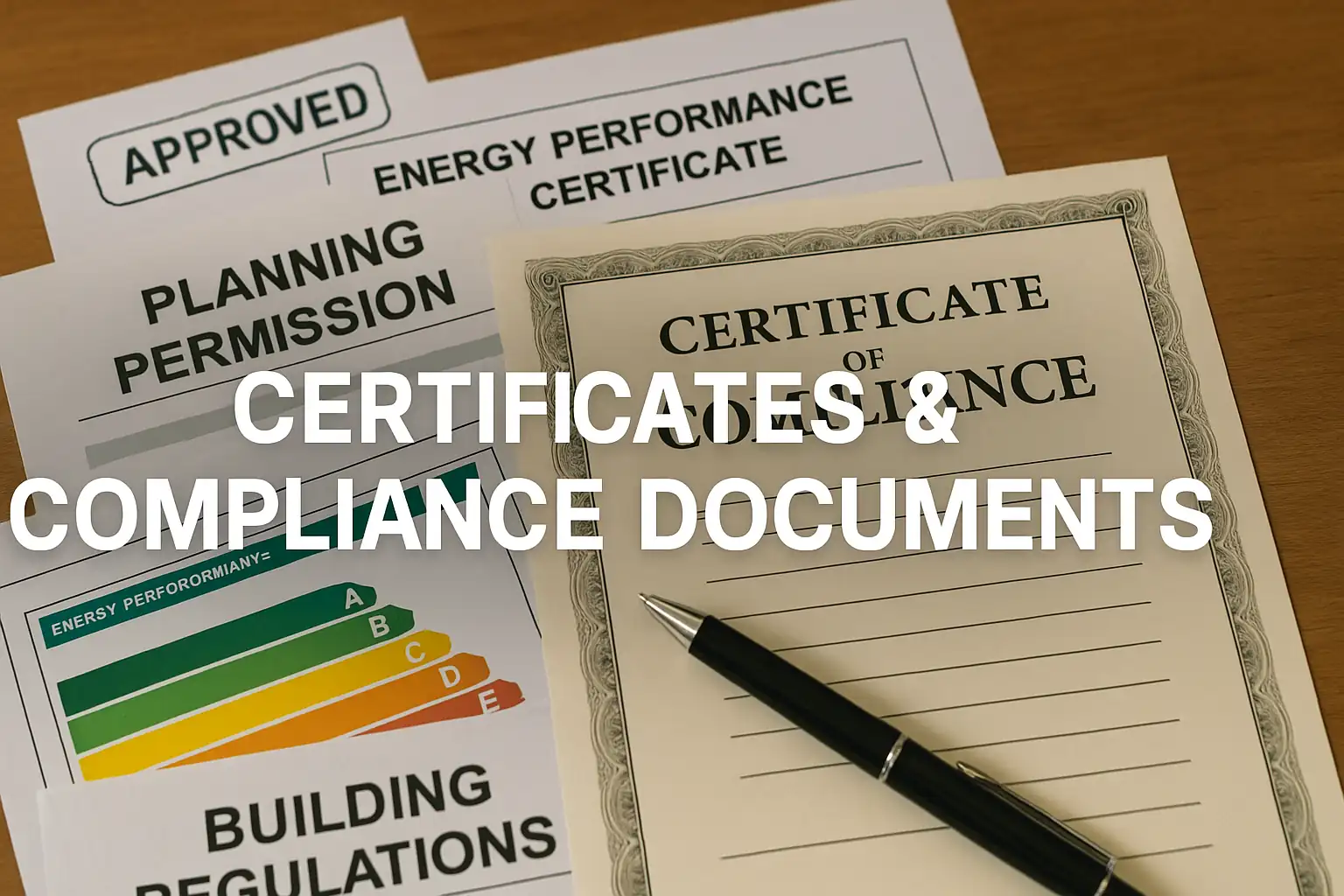
Make sure you know which certificates & compliance documents you need — and which to keep safe for resale and council checks.
Quick Answer: Certificates & compliance documents are the official paperwork proving your project meets UK planning and building regulations. Councils, lenders and future buyers will often require them. Missing documents can delay sales, cause enforcement notices or invalidate insurance.
Overview – Why Certificates & Compliance Documents Matter
Every building project leaves a paper trail. Councils, mortgage lenders and future buyers want proof that your extension, loft conversion or major alteration followed the rules. Certificates & compliance documents provide that proof.
Key Certificates & Compliance Documents in the UK
The main documents homeowners encounter include:
- Planning Permission Decision Notice – issued by the council confirming approval.
- Lawful Development Certificate – proof that work falls under Permitted Development.
- Building Regulations Completion Certificate – issued by Building Control after final inspection.
- Building Notice / Full Plans Approval – confirmation of compliance route chosen.
- Electrical & Gas Certificates – e.g. Part P, Gas Safe compliance.
- Energy Performance Certificate (EPC) – required on sale or let.
- Completion & Compliance Letters – from councils or private inspectors.
When Certificates Are Needed (Planning vs Building Control)
Not all projects need planning permission, but most need Building Regulations approval. Certificates confirm:
- Planning Stage: Certificate of Lawfulness or Planning Approval Notice.
- During Works: Interim inspection reports from Building Control.
- After Works: Completion Certificate from the council or approved inspector.
Not sure if your project has the right paperwork?
We’ll review your documents and advise if anything is missing before it becomes a problem.
Council Quirks & Local Variations
While national rules apply, every council interprets documentation requirements slightly differently:
- Buckinghamshire: More rigorous on heritage checks, often request extra compliance reports.
- Milton Keynes: Known for strict Building Control sign-off timelines — delays can stall completion certificates.
- Guildford: Council often asks for energy efficiency certificates alongside Building Regulations sign-off.
How Long to Keep Certificates & Records
Homeowners should keep all compliance paperwork for the life of the building. At minimum, keep:
- Planning & Building Certificates: Indefinitely.
- Gas & Electrical Certificates: Until replaced by a newer safety check.
- Completion Certificates: Always — essential for selling or remortgaging.
Costs, Timelines & Penalties
Certificates are usually included in planning or Building Control fees. However, costs vary by council:
- Planning certificates: £100–£300 (application fees).
- Building Control Completion Certificate: Included in inspection fee, typically £500–£900 for extensions.
- Specialist compliance (gas, electrics): £50–£200 each.
Timeline: Most certificates are issued within 2–8 weeks of works completing, but delays happen if inspections are missed.
Frequently Asked Questions
What is a compliance license?
In UK housing, a compliance “license” usually refers to official approval (planning or Building Control) showing that your project meets regulations.
What is compliance paperwork?
It’s the collection of certificates, decision notices and inspection reports proving you’ve met legal requirements.
What documents prove building compliance?
A Building Regulations Completion Certificate is the most common proof, along with electrical and gas certificates.
Do I need certificates when selling my house?
Yes. Solicitors and buyers will ask for compliance documents. Missing certificates can delay or derail sales.
How do I replace lost compliance documents?
Contact your local council’s Building Control or Planning department. They can provide copies, usually for a small fee.
Ready to move your project forward?
Plans Made Easy can prepare compliant plans, manage submissions, and guide you from idea to approval.
Next Steps & Useful Guides
- Planning Permission (UK): The Complete Homeowner’s Guide
- Planning Permission Drawings: A Complete Guide for Homeowners
- Building Regulations: Complete Homeowner’s Guide
- Building Control: What It Is, When You Need It, and How to Pass Inspections First Time
- Building Control Inspections – What to Expect
- Planning Permission Timelines (UK Guide)
- House Extensions – Complete UK Guide
Performance Verified ✅
This page meets PME Optimisation Standards — achieving 95+ Desktop and 85+ Mobile PageSpeed benchmarks. Verified on

